Articles

Renters Now Represent 80% of Household Growth

Renters accounted for roughly four-in-five new households last year, demonstrating how much rental demand has climbed while the for-sale housing market remains soft. Based on an analysis of U.S. Census Bureau data, Arbor Realty Trust and Chandan Economics examine how rental and homeowner growth in 2025 compare and outline the economic factors supporting the rise in demand across multifamily and single-family rental (SFR) housing.

Current Reports

Top Markets for Multifamily Investment Report Spring 2026

Arbor Realty Trust’s Top Markets for Multifamily Investment Report, developed in partnership with Chandan Economics, weighed 25 variables within 10 categories to pinpoint the large metropolitan areas that are this spring’s most attractive locations for commercial real estate investment.

Articles

Top Multifamily Markets for Eco-Friendly Commutes

In many urban areas, densely concentrated housing, strong transit networks, and walkable neighborhoods offer residents viable environmentally friendly commuting alternatives. Using data from the U.S. Census Bureau’s American Community Survey, Arbor Realty Trust and Chandan Economics examined commuting patterns of workers living in multifamily rental housing in the nation’s largest metropolitan areas to identify where renters rely least on private cars to travel to the office.

Articles

Arbor Expands Mentorship Initiative with Two Spring Project Destined Programs

Arbor Realty Trust, a long-term partner of Project Destined, is once again reaffirming our commitment to the next generation of commercial real estate leaders by participating in two new programs this spring that will provide students with invaluable insight into multifamily real estate and single-family rental (SFR) financing.

Investment

Special Report Spring 2026: The State of Rental Housing

Arbor Realty Trust and Chandan Economics’ latest Special Report leverages industry-leading data analysis to interpret key multifamily real estate trends as the sector moves from recalibration to stabilization. With occupancy levels remaining strong and loan originations rebounding sharply, this biannual report outlines why now is an opportune time to deploy capital.

Articles

America’s Aging Rental Stock is Driving Demand for Smarter Capital Solutions

The nation’s rental housing is older than at any point on record, with a median age of 45 years, according to the 2026 America’s Rental Housing report from Harvard’s Joint Center for Housing Studies (JCHS). America’s aging housing stock has created unique opportunities as the need for capital investments to rehabilitate and preserve affordable housing units rapidly rises.

Current Reports

Single-Family Rental Investment Trends Report Q1 2026

Arbor’s Single-Family Rental Investment Trends Report Q1 2026, developed in partnership with Chandan Economics, spotlights how market shifts, including the rising cost of living and historically high build-to-rent activity, have fueled record rental household growth.

Articles

Top Markets for Multifamily Building Permits

Multifamily permitting trends indicate continued national stability amid local recalibration. Across the country, issuances were steady, rising just 2.6% in 2025. At the metropolitan level, trends diverged sharply, with some markets accelerating and others pulling back. Per-capita leaders continued to cluster around high-growth Sun Belt and regional hubs, while year-over-year market-level fluctuations suggest that more pipelines have become increasingly selective and, in some cases, more concentrated in large-scale projects.

General: 800.ARBOR.10


Overview

Multifamily real estate’s durable demand and central role in the nation’s housing needs continue to make it stand out as an investment class. With competition high, investors are increasingly focused on identifying favorable conditions and finding new opportunities within metropolitan areas.

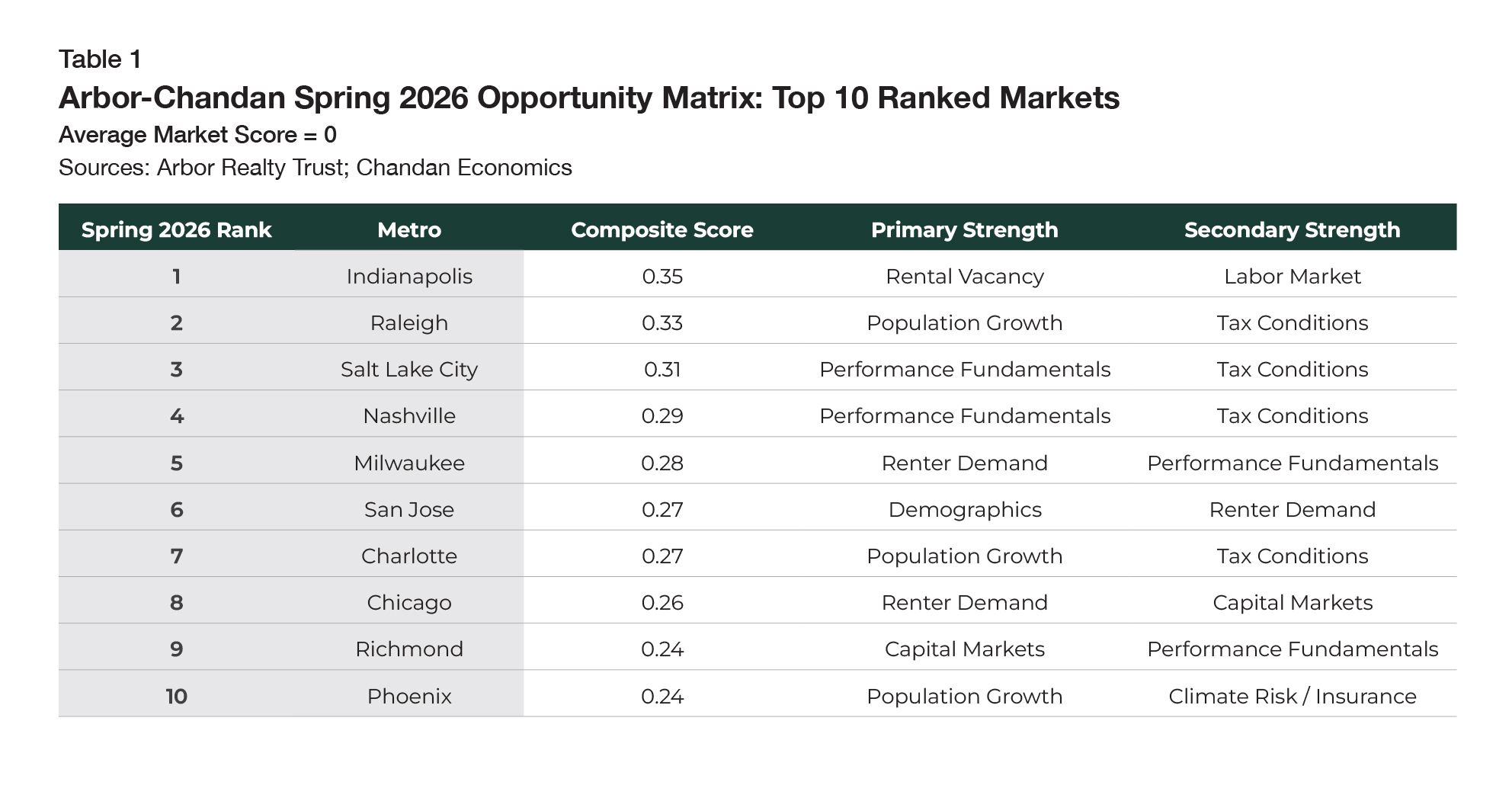
The Spring 2026 Arbor Realty Trust–Chandan Economics Multifamily Opportunity Matrix (Chart 1) evaluated the nation’s 50 largest metropolitan areas to pinpoint the most attractive areas for investment right now.

After examining a wide range of factors that influence multifamily performance and investment conditions — including liquidity, supply absorption, renter demand, affordability, labor market momentum, and demographic trends — our matrix reveals the U.S. metropolitan areas that are bursting with opportunity.

From the stable cash flows of the Midwest to the population magnets of the Sun Belt — and everything in between — this biannual report highlights the markets where economic resilience, investor activity, and housing demand align most favorably for multifamily investors.

Key Findings

  • Indianapolis, IN, ranked first in Arbor’s Spring 2026 Opportunity Matrix, supported by strong labor market conditions, tight occupancy levels, and a favorable affordability profile.

  • Midwestern markets, which feature stability, affordability, and steady renter demand, were well represented, capturing seven of the top 20 spots.

  • High-growth Sun Belt and Mountain West markets ranked highly, with Raleigh, NC, Salt Lake City, UT, and Nashville, TN, all in the top five, underscoring the importance of economic expansion and demographic momentum.

PDF link below

Metro-Level Trends

Midwest Stability Shines

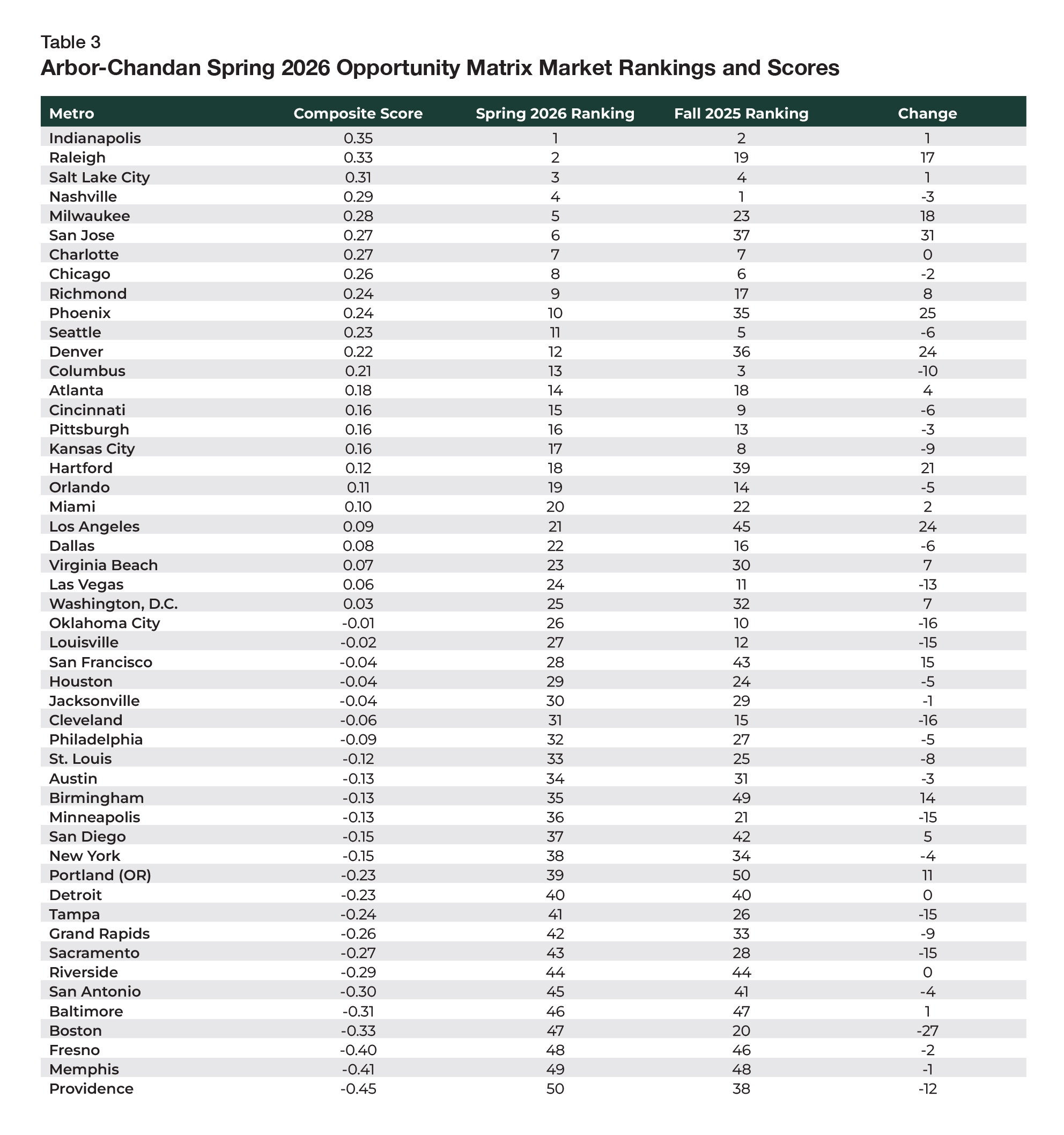
Midwestern metropolitan areas continued to perform well in the Arbor-Chandan Opportunity Matrix. Indianapolis remained the overall leader, while Milwaukee, WI, and Chicago, IL, both placed within the top 10. Cincinnati, OH, Columbus, OH, and Kansas City, MO, remained firmly in the upper tier (Table 1). Multifamily markets in the Midwest continued to benefit from a combination of strong rental affordability, stable labor market conditions, and relatively attractive yields.

For a full breakout of the Spring 2026 scores and rankings, see Table 3 in the Appendix.

While population growth in the Midwest typically trails faster-growing regions, steady demand supported by diversified employment bases, including healthcare, logistics, and advanced manufacturing, has helped maintain consistent absorption and occupancy levels. As investors place greater emphasis on income durability and downside protection, Midwestern markets remain compelling for their blend of stability and cash flow.

Growth Markets in the Sun Belt Continue to Compete

The Sun Belt remains a central force in the multifamily investment landscape, with several high-growth markets ranking near the top of this year’s matrix. Raleigh, NC, Salt Lake City, Nashville, Charlotte, NC, and Phoenix, AZ, all placed within the top 10, reflecting the continued strength of their demographic and economic fundamentals.

These metro areas benefit from sustained population inflows, relatively young renter bases, and expanding employment in sectors such as technology, advanced manufacturing, and business services. Importantly, strong renter demand — as reflected in elevated engagement and search activity — continues to support high leasing activity even as new supply has expanded. For investors, Sun Belt markets can provide exposure to long-term growth, supported by durable demand drivers and favorable demographic trends.

Demand Strength Lifts Select Coastal Markets

While many high-cost coastal markets continued to rank in the middle or lower tiers of the Opportunity Matrix, some benefited from stronger renter demand and labor market fundamentals. San Jose, CA, ranked in the top 10 this spring, while Seattle, WA, and Los Angeles, CA, also placed in the upper tier. Coastal cities are still facing structural challenges, including higher operating costs and lower affordability compared to interior markets. However, strong income growth, deep labor markets, and elevated renter demand have supported leasing activity and stabilized performance in these markets.

As a result, the highest-ranked markets increasingly reflect a balance between demand intensity and economic stability. For multifamily investors, the report’s findings suggest that while affordability remains important, markets with strong underlying demand still offer attractive opportunities despite higher costs.

Multifamily Absorption

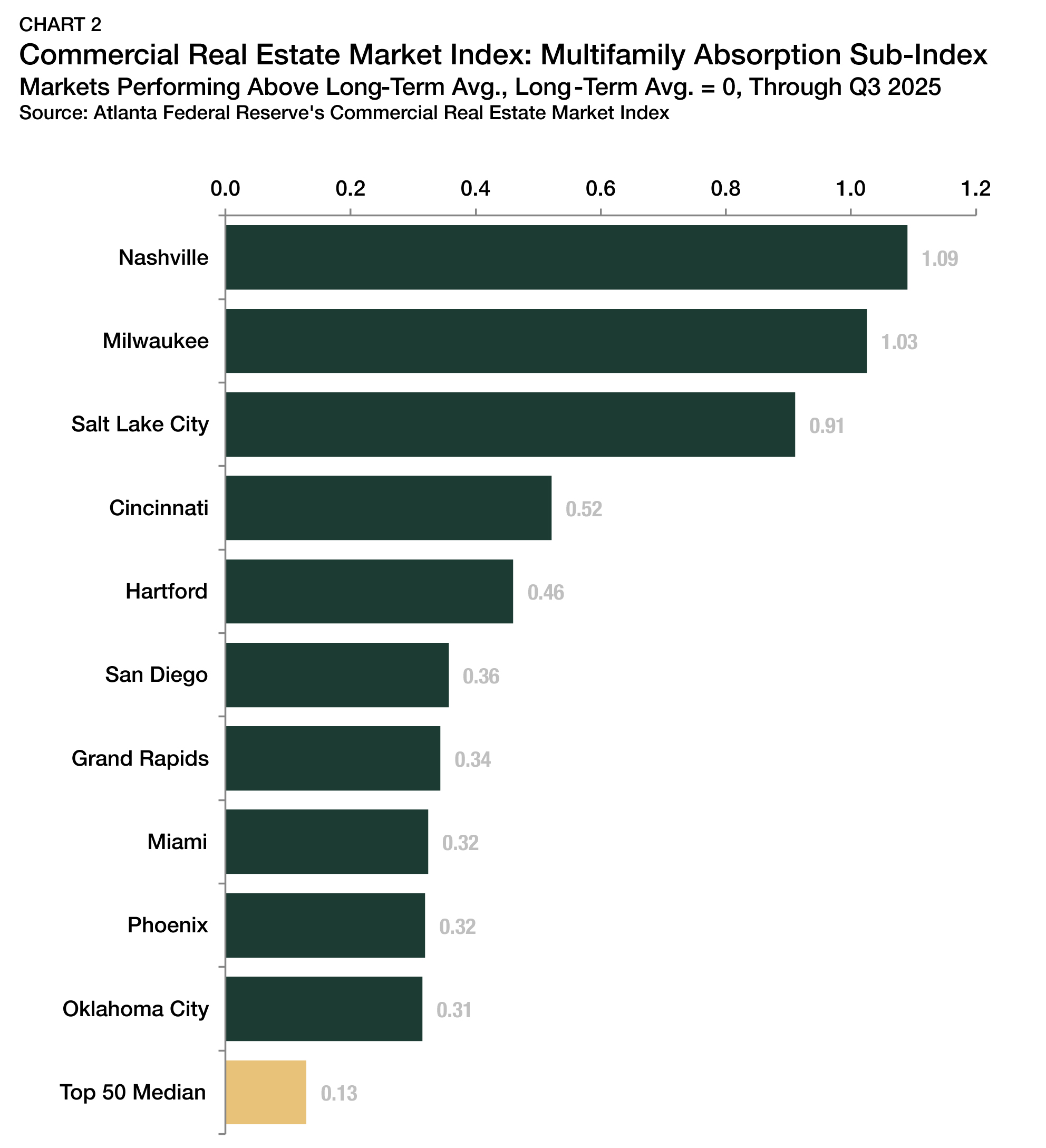
The Federal Reserve Bank of Atlanta’s Commercial Real Estate Market Index (CREMI) tracks a comprehensive set of metro-level indicators to gauge multifamily sector conditions. For this analysis, the Opportunity Matrix incorporated three of CREMI’s underlying subcomponents (absorption, net operating income (NOI) growth, and changes in asset values) to help gauge market momentum and the strength of local multifamily fundamentals.

Among these subcomponents, absorption provides a particularly clear signal of how multifamily markets are balancing new supply with rental demand. A handful stood out for having absorption levels well above historical averages. Nashville, Milwaukee, and Salt Lake City led the way, each posting significantly elevated absorption scores (Chart 2). Cincinnati and Hartford, CT, also scored highly, reflecting robust demand conditions relative to new supply. As new inventory continues to be delivered, absorption trends will remain a critical indicator of how well markets are adjusting to shifting supply-demand dynamics.

Labor Market

In all cycles, labor market conditions are a foundational driver of rental housing demand, influencing household formation, rent-paying capacity, and tenant stability. The Opportunity Matrix evaluated metro-level labor performance by analyzing job growth, unemployment, changes in unemployment, and wage growth to determine the strength and durability of local economies.

After several years of robust expansion, labor market momentum has slowed. National job growth stalled at the start of 2026, with private payrolls turning negative in February and total net job gains for the year slightly exceeding 100,000, a sharp downshift from the pre-pandemic period.

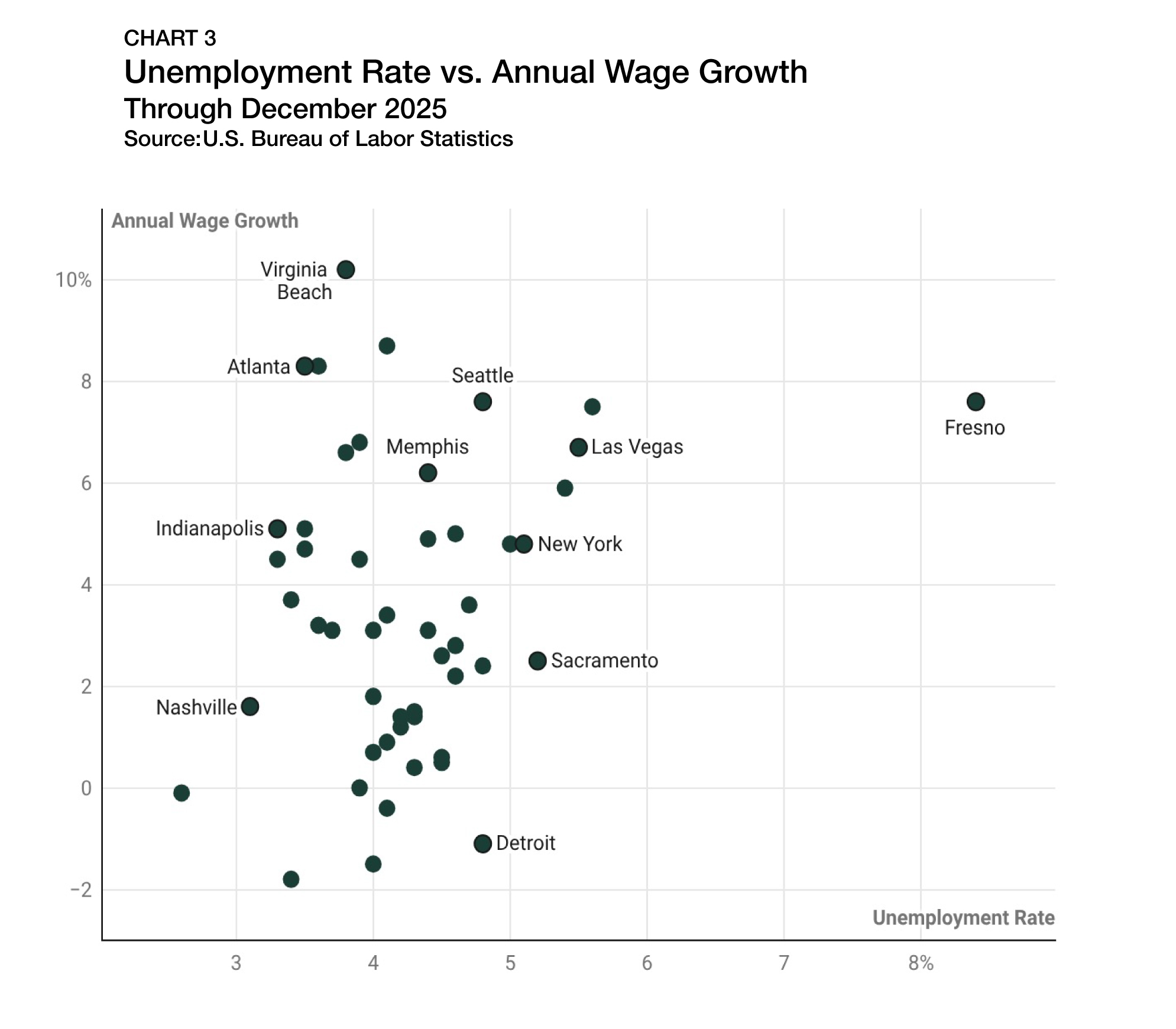
While national level growth slowed, several markets continued to demonstrate strong labor fundamentals. Salt Lake City, Raleigh, and Nashville stand out for both solid employment growth and relatively low unemployment rates, reflecting a balanced and expanding labor profile.

A separate group of markets, including Virginia Beach, VA, Atlanta, GA, and Indianapolis, is distinguished for a different reason: the combination of wage growth and low unemployment. In these markets, strong income growth paired with relatively tight labor conditions has reinforced tenants’ rent-paying capacity and overall demand stability (Chart 3). In an environment where demand is expected to remain durable but expand less, the combination of income growth and labor market tightness provides a particularly supportive backdrop for rental housing demand.

Demographics

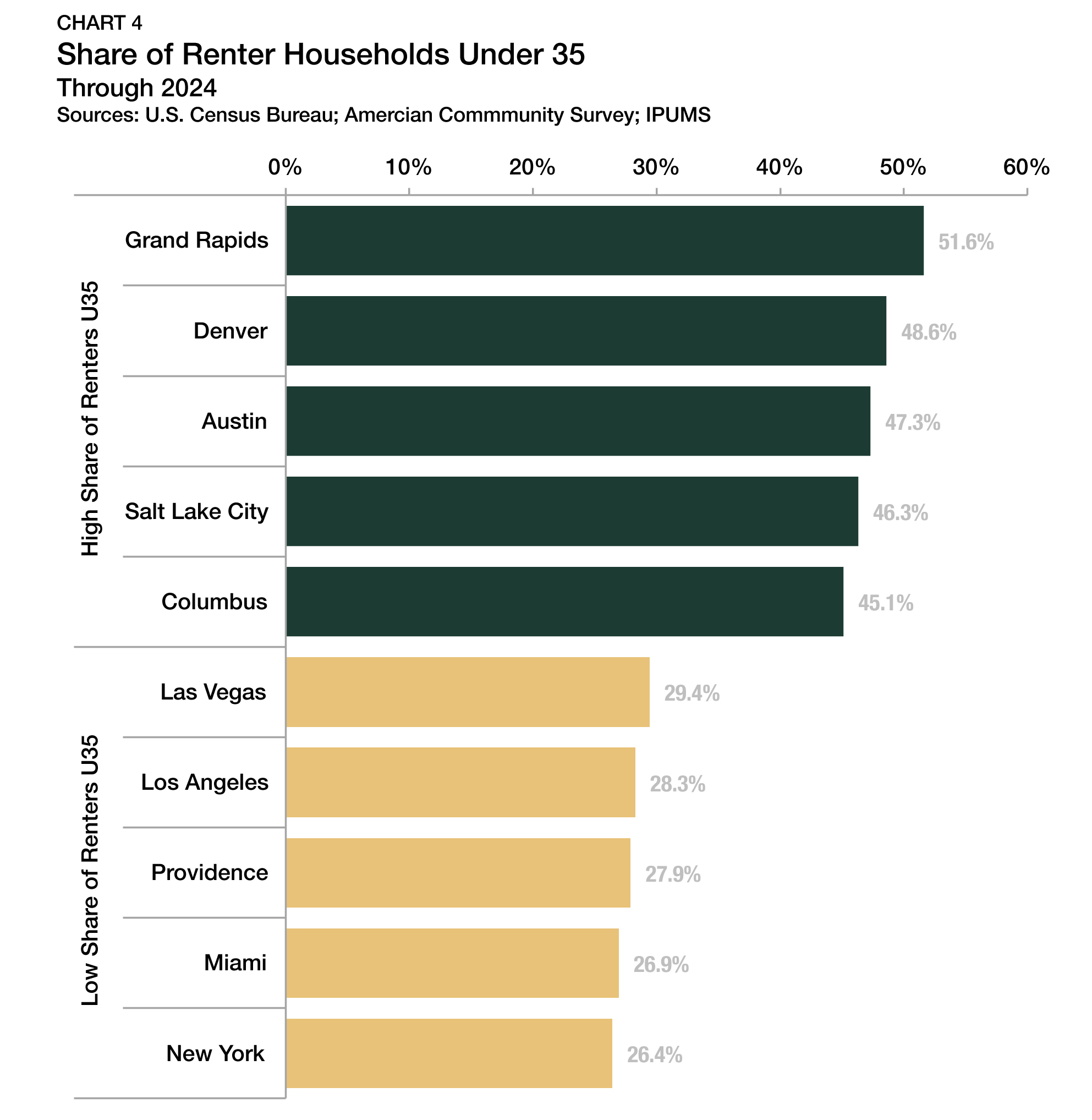
Demographic trends are critical to understanding long-term rental housing demand, particularly through the age distribution and income profile of renter households. The Opportunity Matrix evaluated these dynamics using a range of indicators, including rentership rates, renter incomes, and the share of renters under age 35, a key signal of future demand.

Several interior and high-growth metro areas, including Grand Rapids, MI, Denver, CO, Austin, TX, and Salt Lake City, posted the highest shares of renters under 35 (Chart 4). By contrast, high-cost coastal markets, such as New York, NY, and Los Angeles, ranked highly in demographic strength due to higher average incomes and large renter bases. Although markets like these tend to have lower shares of young renters, they tend to have larger overall populations under 35.

Renter Demand

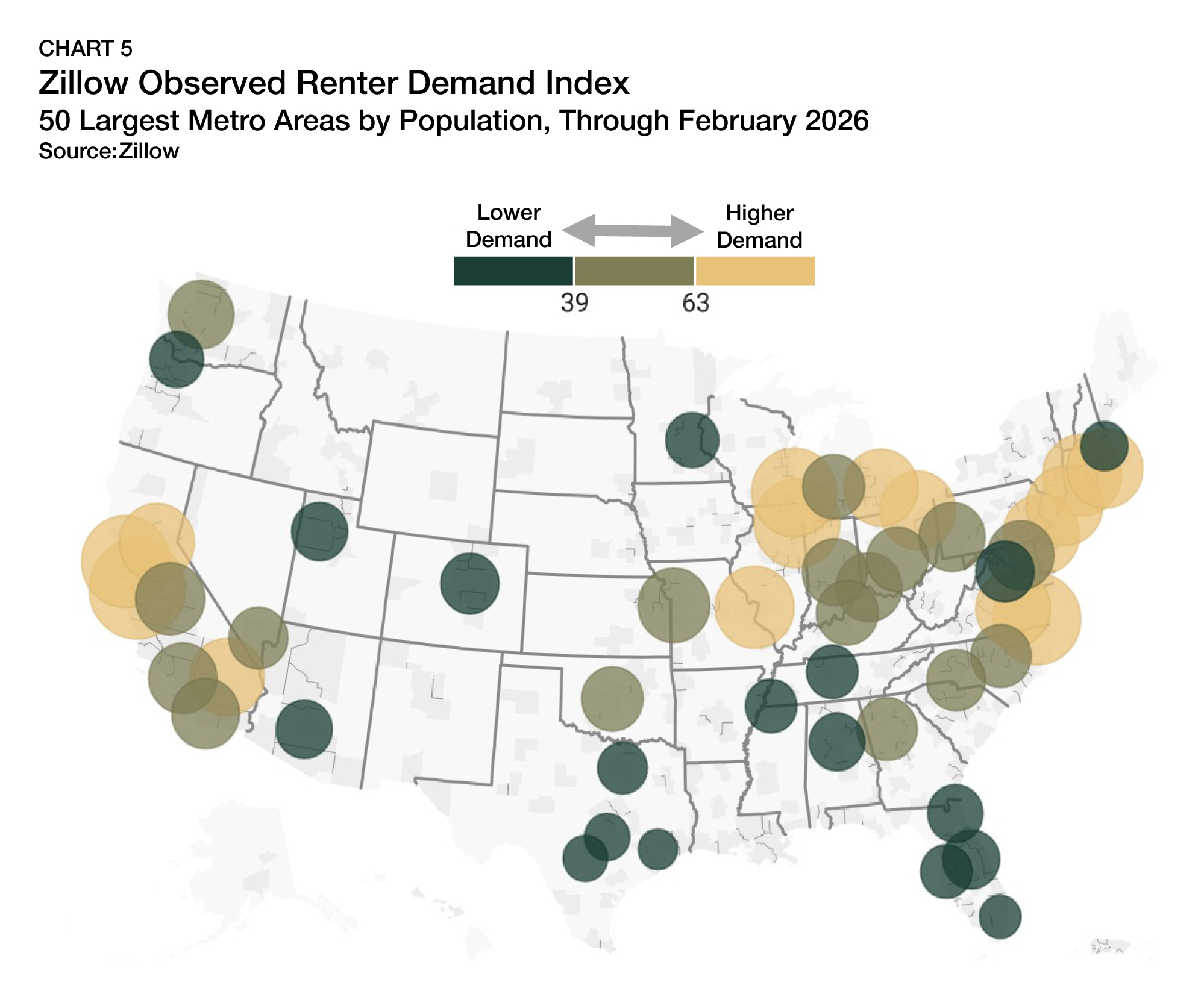
To illustrate demand-side momentum in rental housing markets, the Opportunity Matrix incorporated Zillow’s Observed Renter Demand Index (ZORDI), which tracks relative levels of renter search activity.

Supported by stabilized pricing and return-to-office trends, coastal and gateway markets were the strongest performers of early 2026. San Jose and San Francisco, CA, led this ranking, with elevated demand also observed in Chicago and several Northeast metro areas, including Hartford and Philadelphia, PA (Chart 5).

By contrast, several high-growth Sun Belt markets, particularly in Florida and Texas, posted comparatively weaker renter demand signals. In many cases, the shift reflects the cumulative impact of recent supply expansions in emerging markets. As a whole, our analysis points to a partial rebalancing in renter demand, with momentum shifting back toward supply-constrained markets.

Rental Affordability

Housing affordability continues to shape renter behavior. According to an analysis of the U.S. Census Bureau’s Current Population Survey, housing-related factors, including the search for lower-cost units, improved housing quality, or more desirable neighborhoods, account for more than one-third of renter moves.

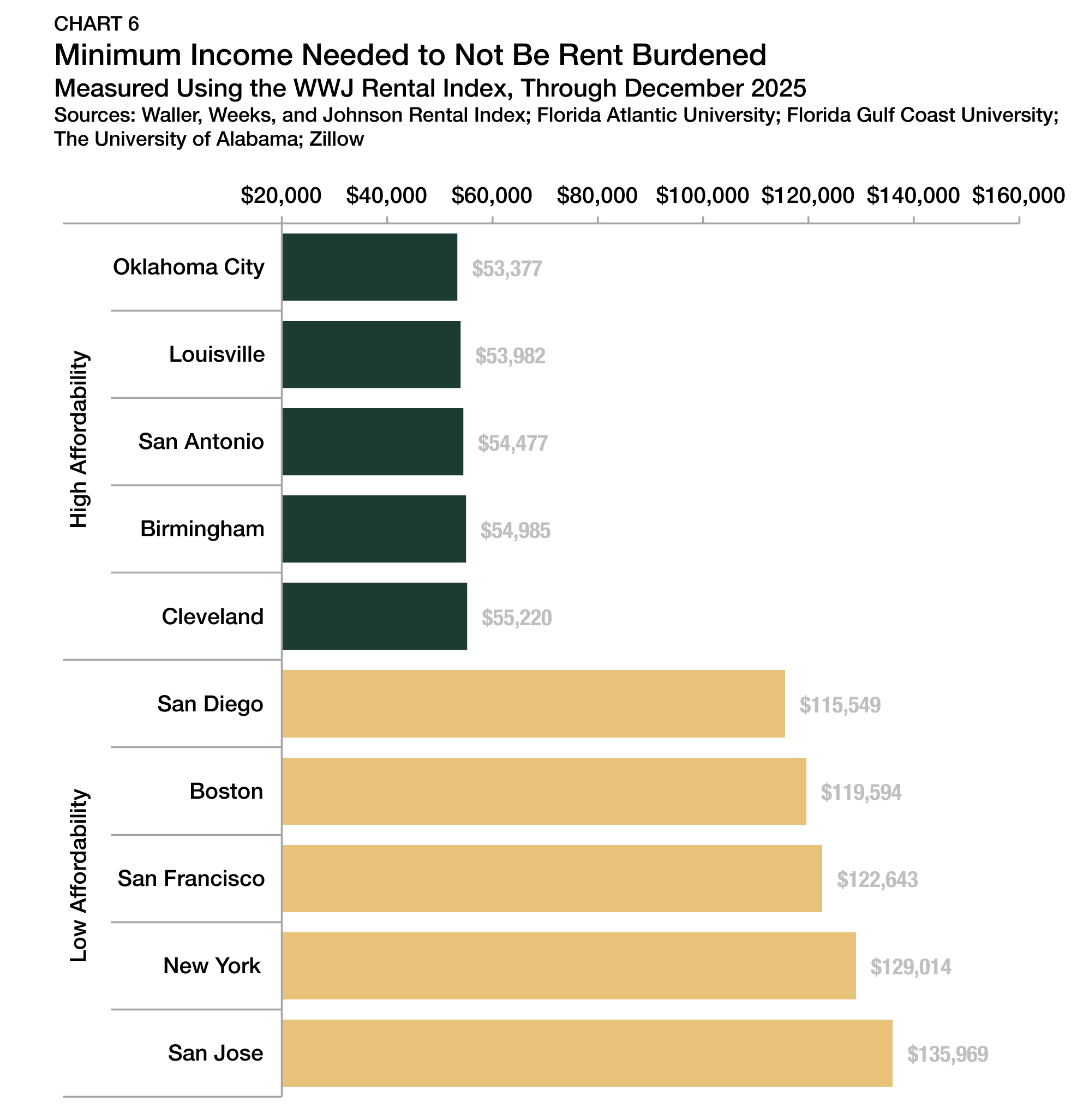
Within the Opportunity Matrix, rental affordability is measured using the Waller, Weeks, and Johnson Rental Index, which estimates the minimum income required for a household to avoid being rent-burdened in each metropolitan area. Markets with lower income thresholds ranked more favorably, reflecting stronger accessibility for a broader base of renters.

Midwestern and Southern metro areas continue to lead the nation on affordability. Oklahoma City remained the most affordable market, where a household earning $53,377 is not considered rent-burdened (Chart 6). Louisville, KS ($53,982), San Antonio, TX ($54,477), Birmingham, AL ($54,985), and Cleveland, OH ($55,220) also ranked among the most affordable markets.

By contrast, affordability pressures have remained most acute in high-cost coastal markets. In New York, a household must earn $129,014 to avoid being rent-burdened, while the threshold in San Jose is now $135,969. San Francisco ($122,643), Boston, MA ($119,594), and San Diego, CA ($115,549) are also among the least affordable markets in the country. The disparity in affordability underscores the persistent divide between lower-cost interior markets and high-cost coastal markets, key drivers of migration patterns and renter demand.

Market Spotlight: Indianapolis

Indianapolis ranked as the top market in our Spring 2026 Opportunity Matrix, and its position is rooted more in balance than outsized growth. Although it does not lead the nation in job creation, Indiana’s capital has maintained a steady labor market profile, with relatively low unemployment and consistent wage gains. At a time when the national labor market is cooling, Indianapolis’ stability has become increasingly valuable.

Indianapolis’ operating fundamentals are another one of its differentiators. According to U.S. Census Bureau data, it recorded the largest increase in rental occupancy among the 75 largest U.S. markets in 2025, up 7.9 percentage points year-over-year. A lower vacancy rate reflects a market where demand has kept pace with — and in many cases outstripped — new supply, pushing conditions toward tight equilibrium. As a result, Indianapolis now ranks among the tightest rental markets in the country.

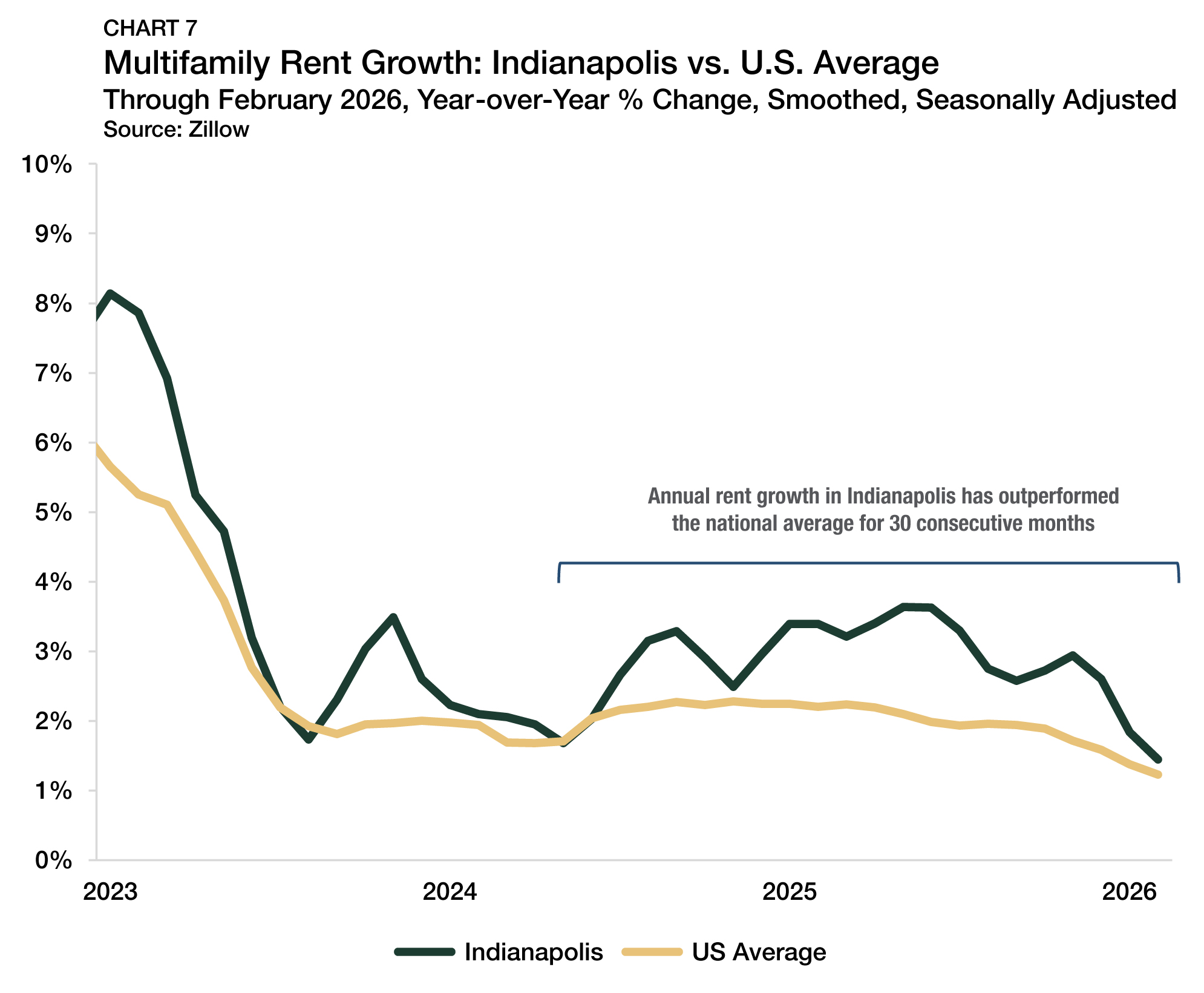
High occupancy rates have influenced local rent performance as well. As national rent growth moderated, Indianapolis outperformed, with annual rent growth exceeding the U.S. average for 30 consecutive months through early 2026 (Chart 7). This trend demonstrates the sustained relative strength of the market, a significant distinction in the current phase of the cycle.

Affordability remains a central part of Indianapolis’ recent success. Relative to coastal cities, it offers a significantly lower cost of entry for renters, supporting both in-migration and household formation. A renter household would need to earn $59,776 annually to comfortably afford the market’s average rent of $1,494 per month. Its relative affordability is paired with strong quality-of-life fundamentals, contributing to Indianapolis ranking as the 11th most livable city in the U.S. in a recent RentCafe analysis.

At the same time, the metro area’s economic base broadened. Indianapolis has a diverse mix of industries — including logistics, healthcare, advanced manufacturing, and life sciences — which helped to insulate it from sector-specific volatility. Recent investments, including

Eli Lilly’s expansion initiatives and the development of the LEAP Innovation District in nearby Lebanon, further reinforced the region’s long-term trajectory by anchoring high-quality job growth within commuting distance of its urban core.

In today’s economic climate, Indianapolis’ market balance — between growth, affordability, and operating performance — is a valuable characteristic for multifamily investors.

Outlook

America’s rental housing is in a period of growing stability. With a supply surge largely in the rearview, rents are once again growing in a broad share of markets, with nearly 9-in-10 metro areas posting year-over-year gains. Altogether, cyclical headwinds are easing, and operating conditions have become more balanced.

For markets with the right blend of stability, affordability, and economic momentum, the alignment of structural and cyclical forces could position 2026 as a year of steady progress. At the same time, macro and demographic conditions have shifted. Job growth has cooled, and U.S. population growth is expected to slow amid a sharp decline in net international migration.

In this environment, demand is expected to remain durable but less expansive. As growth moderates, cross-market competition for residents is likely to intensify, making precise market selection — not just asset selection — a defining factor for performance in the current cycle.

How the Opportunity Matrix Measures Markets

  1. Capital Markets: measured as a proxy for the availability of debt financing, overall liquidity, cash-flow opportunity, and a market’s ability to support additional multifamily investment. Both acquisitions and refinancing are tracked in this analysis.
  2. Performance Fundamentals: measures core indicators of multifamily operating performance, including net operating income (NOI) growth, asset price appreciation, and absorption.
  3. Tax Conditions: tax burdens for firms, properties, and individuals — measuring monetary and human capital attractiveness.
  4. Labor Market: topline profile of key labor market performance indicators, including market growth, unemployment rate, change in the unemployment rate over the past year, and wage growth.
  5. Population Growth: overall growth of a metropolitan area over the short and medium term.
  6. Demographics: spending power and age profile of existing renters (higher household incomes and younger householders assumed as conducive to higher levels of multifamily demand).
  7. Rental Vacancy: measures the current market tightness for all existing metro-level rental inventory.
  8. Renter Demand: measures rental demand using Zillow’s Observed Renter Demand Index (ZORDI), which tracks relative levels of renter search activity across metropolitan areas.
  9. Affordability: minimum income needed to rent an apartment without being rent-burdened, included to capture a market’s attractiveness for incoming rental demand.
  10. Climate Risk / Insurance: a mix of property insurance prices and coverage rates offers a market-based proxy for how risk and cost exposure may affect operating margins, long-term asset resilience, and liquidity.

Methodology

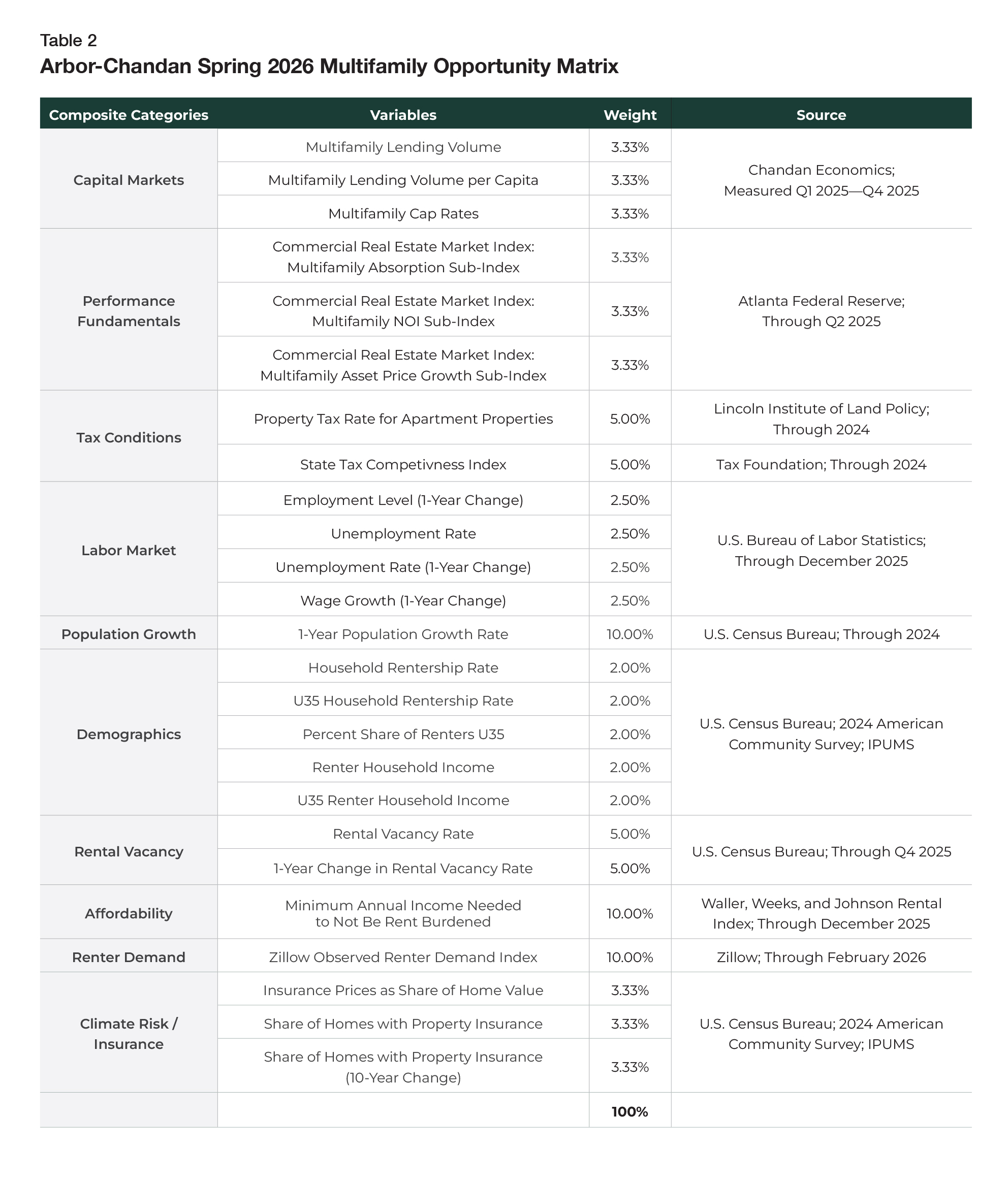
This report presents an analytical framework to develop a cross-market comparison for opportunistic multifamily investments. The largest 50 U.S. metropolitan areas  are ranked using the Arbor-Chandan Multifamily Opportunity Matrix based on a weighted average of performance metrics. It considers how well metro-level economies have maintained strength over the past year and their ability to handle shifting market conditions through 2026 and beyond. The Multifamily Opportunity Matrix includes factors a multifamily investor might consider in their market selection process. All 10 categories received equal weighting. In categories with more than one variable, each variable received equal weighting.

1 The top 50 metros are based on population estimates. All metros are reported at the Metropolitan Statical Area (MSA) level.

Appendix

About Us
Arbor Realty Trust, Inc. (NYSE: ABR) is a nationwide real estate investment trust and direct lender, providing loan origination and servicing for multifamily, single-family rental (SFR) portfolios, and other diverse commercial real estate assets. Headquartered in Uniondale, New York, Arbor manages a multibillion-dollar servicing portfolio, specializing in government-sponsored enterprise products. Arbor is a leading Fannie Mae DUS® lender, Freddie Mac Optigo® Seller/Servicer, and an approved FHA Multifamily Accelerated Processing (MAP) lender. Arbor’s product platform also includes bridge, CMBS, mezzanine, and preferred equity loans. Arbor is rated by Standard and Poor’s and Fitch. In June 2023, Arbor was added to the S&P SmallCap 600® index. Arbor is committed to building on its reputation for service, quality, and customized solutions with an unparalleled dedication to providing our clients excellence over the entire life of a loan.

Disclaimer
This report is intended for general guidance and information purposes only. This report is under no circumstances intended to be used or considered as financial or investment advice, a recommendation, or an offer to sell, or a solicitation of any offer to buy any securities or other form of financial asset. Please note that this is not an offer document. The report is not to be considered as investment research or an objective or independent explanation of the matters contained herein and is not prepared in accordance with the regulation regarding investment analysis. The material in the report is obtained from various sources per dating of the report. We have taken reasonable care to ensure that, and to the best of our knowledge, material information contained herein is in accordance with the facts and contains no omission likely to affect its understanding. That said, all content is provided herein “as is” and neither Arbor Realty Trust, Inc. or Chandan Economics, LLC (“the Companies”) nor their affiliated or related entities, nor any person involved in the creation, production and distribution of the content make any warranties, express or implied. The Companies do not make any representations or warranties, express or implied, as to the reliability, usefulness, completeness, accuracy, currency nor represent that use of any information provided herein would not infringe on other third-party rights. The Companies shall not be liable for any direct, indirect, or consequential damages to the reader or a third party arising from the use of the information contained herein. There may have been changes in matters which affect the content contained herein and/or the Companies subsequent to the date of this report. Neither the issue nor delivery of this report shall under any circumstance create any implication that the information contained herein is correct as of any time subsequent to the date hereof or that the affairs of the Companies have not since changed. The Companies do not intend and do not assume any obligation to update or correct the information included in this report. The contents of this report are not to be construed as legal, business, investment, or tax advice. Each recipient should consult with its legal, business, investment, and tax advisors as to legal, business, investment and tax advice. The information contained herein may be subject to changes without prior notice. This report is only intended for the recipients, and should not be copied or otherwise distributed, in whole or in part, to any other person.