Articles

Dr. Sam Chandan’s State of Rental Housing Spring 2026

In a new video, Dr. Sam Chandan, a leading commercial real estate scholar, expands on the findings of Arbor Realty Trust’s latest Special Report, developed in partnership with Chandan Economics. He shares his expert insight into the state of rental housing in spring 2026. Chandan notes that multifamily is moving toward a state of balance as supply pressures ease and growth trends turn positive. The result, he said, is that selective opportunities are emerging for well-positioned investors in a climate “defined less by dislocation” and “more by normalization.”

Articles

Renters Reassess Homeownership as Affordability Challenges Persist

Homeownership has been an aspiration of generations of Americans, but elevated prices, mortgage rates, and financing hurdles are complicating the typical path to owning a home. According to the Federal Reserve Bank of New York’s 2026 Survey of Consumer Expectations Housing Survey, renters are continuing to experience difficulty with mortgage financing and have more measured views about homeownership’s current investment potential. As households reassess the housing market, rental housing demand is the beneficiary.

Current Reports

Small Multifamily Investment Trends Report Q2 2026

Arbor Realty Trust’s latest Small Multifamily Investment Trends Report, developed in partnership with Chandan Economics, evaluates what’s driving this sector’s ongoing stability as macroeconomic conditions remain mixed. Loan originations rose last quarter, and valuations are rebounding, signaling that normalization is taking hold.

Articles

Where Labor Market Momentum Outpaces the National Average

Labor market conditions are a foundational driver of rental housing demand, influencing tenant stability and household growth. While the national pace of hiring has moderated, the economies of many metropolitan areas continue to outperform. Expanding on Arbor’s latest Top Markets for Multifamily Investment Report, our research teams highlight the local dynamics supporting growth in several of the country’s strongest-performing multifamily markets.

Analysis

U.S. Multifamily Market Snapshot — May 2026

The U.S. multifamily sector continued to build momentum at the start of 2026. Rent growth moved into positive territory, and a moderating construction pipeline showed that vacancy may have reached its cycle peak.

Articles

Fannie Mae, Freddie Mac Rank Arbor Among Top Multifamily Lenders for 2025

Arbor’s track record of top finishes across multifamily agency rankings reflects the depth of our financing capabilities, the strength of our industry partnerships, and our disciplined, detail-driven approach to execution. Longstanding relationships with Fannie Mae, Freddie Mac, and the Federal Housing Administration (FHA) — built over many years of close collaboration — enable our team to deliver strong borrower outcomes across market cycles, reinforcing Arbor’s position as one of the top multifamily lenders in 2025.

Articles

Senior Renters Prefer Multifamily Housing and City Living

Senior renters are increasingly choosing multifamily housing, with more than half now living in these rental properties, according to new data from the U.S. Census Bureau’s American Community Survey. Where they live — both by property type and by metropolitan area — provides insight into how housing preferences, local market conditions, and migration patterns shape rental housing demand.

General: 800.ARBOR.10

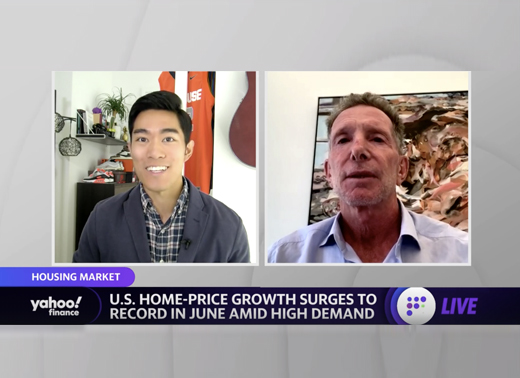
Ivan Kaufman Talks Housing’s Return to Pre-Pandemic Levels on Yahoo Finance Live

Arbor on Yahoo Finance

Arbor Realty Trust’s CEO discusses the for-sale and for-rent markets, seeing rents returning to pre-pandemic levels

All sectors of the housing market are seeing price appreciation, “whether it be for-sale, for-rent…multifamily or single-family,” noted Ivan Kaufman, founder, chairman and CEO of Arbor Realty Trust, Inc. (NYSE: ABR), in an interview on Yahoo Finance Live with Seana Smith and Brian Cheung.

The S&P CoreLogic Case-Shiller U.S. National Home Price Index saw an 18.6% increase in June, a level not seen in more than 30 years. Kaufman attributes this boom to pent-up demand meeting limited inventory.

“There’s just not enough supply and with the pandemic having happened, everyone wanted to go out and buy a home and move out to the suburbs,” Kaufman said.

The Sun Belt markets have certainly been the top performers during the pandemic, benefitting from significant in-migration of those looking for more space and a lower cost of living.

The biggest surprise so far this year, however, has been the strength of the urban areas, he noted, with rents returning to pre-pandemic levels in several markets. As many companies delay their return-to-office plans, people are putting a bigger emphasis on their accommodations, Kaufman said.

Even with the rise of the Delta variant, renters are returning to cities as schools, restaurants, retail and other entertainment options reopen.

“Let’s face it, people want to get back to the city. They enjoy the city…So, I think there was a time out, that time out is coming to an end,” Kaufman said. “There’s a transition period of time, but make no mistake about it, people are running back to the city.”

Watch the full interview here.