Articles

Seven Facts About FHA Multifamily Loans

The Federal Housing Administration (FHA), a part of the U.S. Department of Housing and Urban Development (HUD), is one of the largest mortgage insurers in the world. The agency insures mortgages on affordable housing, multifamily properties, single-family homes, and healthcare facilities. Since 1934,  FHA has financed over 50,000 multifamily mortgages nationwide. Whether you’re interested in acquiring, refinancing, or rehabilitating an affordable housing property, FHA multifamily loans are a financing route you need to know about.

FHA 232/223(f)

FHA® 232/223(f): Healthcare Refinance, Acquisition or Mod Rehab  

Articles

Top States for Population Growth

Despite a national slowdown, population growth remained concentrated in a small group of states in 2025, where strong net domestic migration inflows, economic opportunity, and in some cases elevated birth rates drove the annual increases. Overall, 14 states had an annual population growth rate above 0.75%, while 12 states had less than 0.1%, according to a Chandan Economics analysis of the U.S. Census Bureau’s 2024 American Community Survey.

Articles

Arbor’s Build-to-Rent Financing: 10 Reasons to Choose a Premier Lender

Build-to-rent (BTR), a compelling solution to the U.S. housing market’s evolving needs, is experiencing record growth. BTR accounted for 8% of all single-family rental (SFR) construction starts in the 12 months that ended in the first quarter of 2024, according to Arbor’s Single-Family Rental Investment Trends Report Q2 2024. As the need for quality rental units remains high, borrowers have much to gain from partnering with an experienced lender who specializes in build-to-rent financing.

Articles

Nearly All Metros Post Positive Rent Gains

National rent growth in the single-family rental (SFR) sector remained strong and consistent in 2025 as market-level pricing momentum was broad-based and robust, according to an analysis of newly released data from the Zillow Observed Rent Index. Year-end annual rent gains averaged 2.9%, down from 4.1% in 2024, marking the most modest increase since 2015. But even as the intensity of SFR rent growth abated last year, its reach was extensive, with 98 of the 100 largest markets posting year-over-year gains.

Current Reports

Small Multifamily Investment Trends Report Q1 2026

Arbor Realty Trust’s Small Multifamily Investment Trends Report Q1 2026, developed in partnership with Chandan Economics, shows that lending activity in the sector increased for the second consecutive year amid a sharp increase in refinancings. Even with persistently high interest rates and rigorous underwriting standards, small multifamily entered the first quarter on steady footing.

General: 800.ARBOR.10

Small Multifamily Investment Trends Report Q4 2025

Asset Valuations Edge Higher Amid Increased Refinancing Activity

Key Findings

  • Small multifamily asset pricing valuations continued to move higher.

  • Cap rates extended their exceptional streak of stability.

  • LTVs fell amid increased refinancing activity as borrowers began to take advantage of lower rates.

State of the Market

The small multifamily market is on firmer footing as measures of asset pricing and performance have started to rebound following a two-year period of recalibration. Nationally, home affordability remains strained, and sustained high rental demand supports tight occupancy levels. Healthy fundamentals, paired with a gradual improvement in capital market activity, have set the stage for a sustained recovery.

Across the multifamily sector, tailwinds and headwinds both remain visible. In markets where construction levels have been high, supply imbalances are now suppressing rent growth, while pipelines remain strong in metros with declining rent prices. At the same time, national tenant rent collections data has painted a picture of improvement and cautious optimism.

As the Federal Reserve resumes a cycle of interest rate reductions, credit markets should see further normalization into 2026. While a sector-wide stabilization has undoubtedly begun, third-quarter progress was uneven. Small multifamily lending standards have re-tightened, and new origination activity remained roughly in line with last year’s cadence. However, asset pricing returned to growth, and operating expenses began to normalize.

Looking beyond short-term economic instability, the long-term outlook for small multifamily remains decisively positive — supported by attractive pricing and strong demand for market-rate housing.

Lending Volume

Small multifamily originations activity fell further in line with last year’s pace. Through the third quarter of 2025, the annualized estimate of new multifamily lending volume on loans with original balances between $1 million and $9 million1 (including loans for apartment building sales and refinancing) sat at $55.0 billion (Chart 1). The annualized 2025 estimate, as of the end of the third quarter, was 0.8% lower than 2024’s year-end total. Although lending volumes remained well below the low-interest-rate-fueled highs of 2021 and 2022, the pace of lending has stayed consistent with pre-pandemic norms.

All data, unless otherwise stated, are based on Chandan Economics’ analysis of a limited pool of loans with original balances of $1 million to $9.0 million and loan-to-value ratios above 50%.

Loans by Purpose

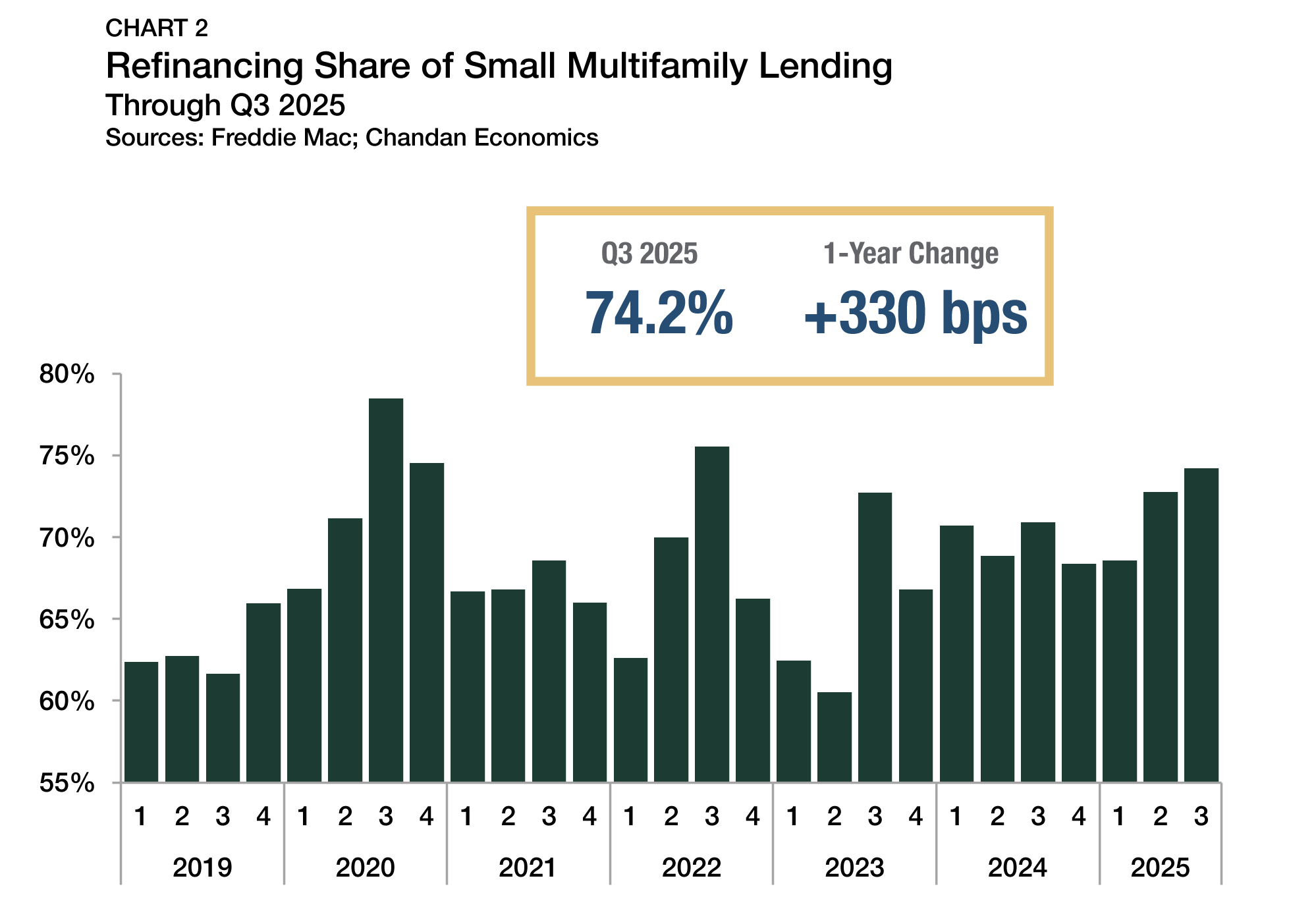
With interest rates falling in recent months, more opportunities for borrowers to strategically refinance have re-emerged. The refinancing share of small multifamily hit a three-year high in the third quarter of 2025, rising to 74.2%. The share peaked at 75.6% in the third quarter of 2022 before falling to a low of 60.5% in the second quarter of 2023, after the Federal Reserve began a tightening cycle (Chart 2). Even with interest rates elevated, the refinancing share of lending has accounted for a majority of origination volume.

Arbor Small Multifamily Price Index

During the third quarter, asset valuations increased 1.8% from a year earlier and quarter-over-quarter (+0.8%), underscoring the sector’s building momentum. Prior to second- and third-quarter price gains, valuations fell year-over-year for eight consecutive quarters, according to the Arbor Small Multifamily Price Index (Chart 3).

Higher average rents, which support gains in operating revenues, drove the index higher during the quarter. Operating expense ratios ticked down and occupancy rates improved, both of which reinforced net income. However, cap rates ticked up a mere two basis points (bps), slightly weighing on price momentum.

Cap Rates & Spreads

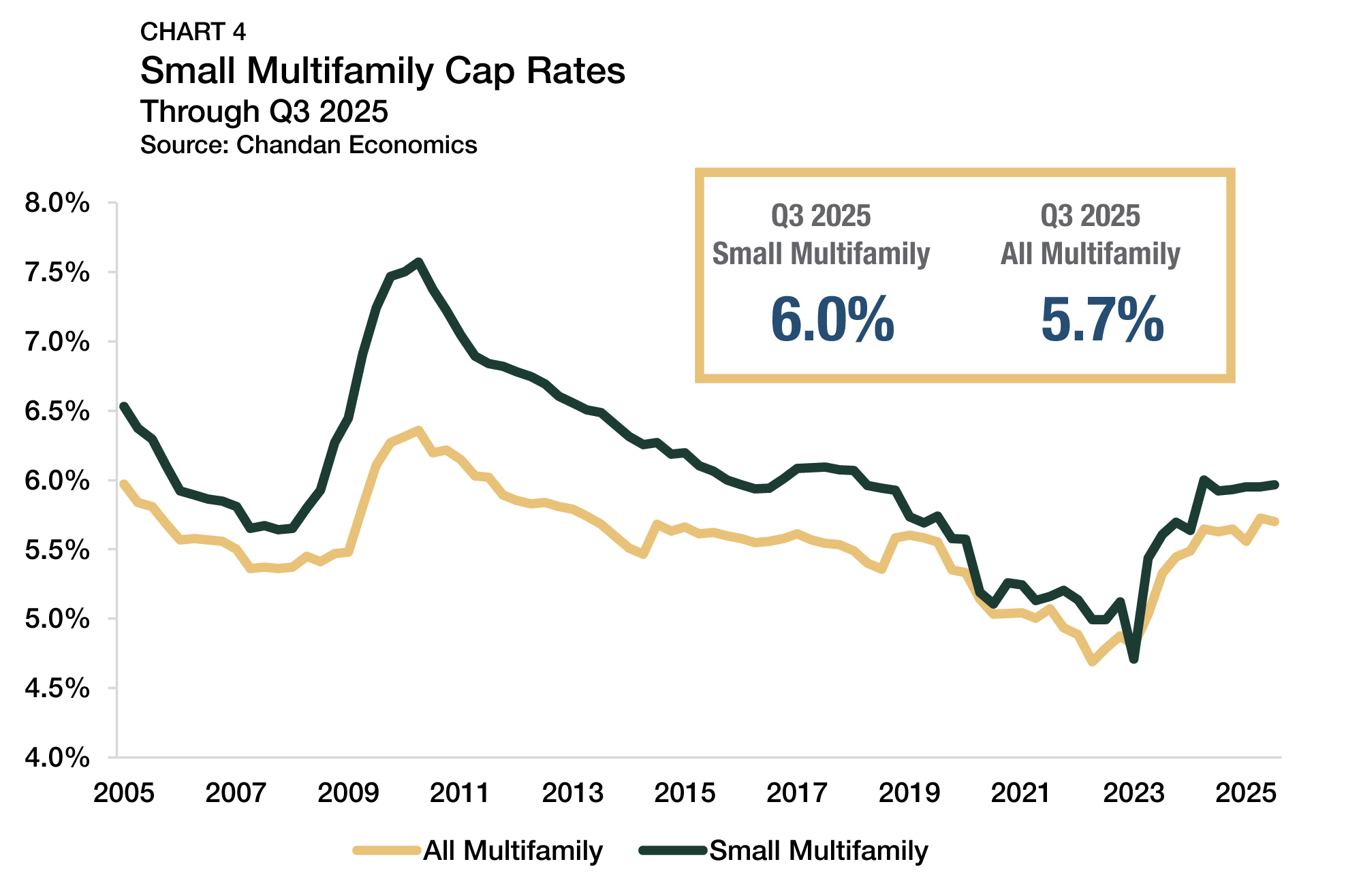
Small multifamily cap rates averaged 6.0% during the third quarter of 2025, holding flat from the first and second quarters (Chart 4). After cap rates rose rapidly in late 2023 and early 2024, the key metric has been stable amid broader sector volatility. Over the past six quarters, small multifamily cap rates remained in an exceptionally narrow eight bps range. However, this trend toward stability is more recent. Compared to the cyclical low point of 4.7% in the first quarter of 2023, cap rates have climbed by 126 bps. Although elevated cap rates have weighed negatively on asset valuations over the past two years, they have also improved the sector’s return profile.

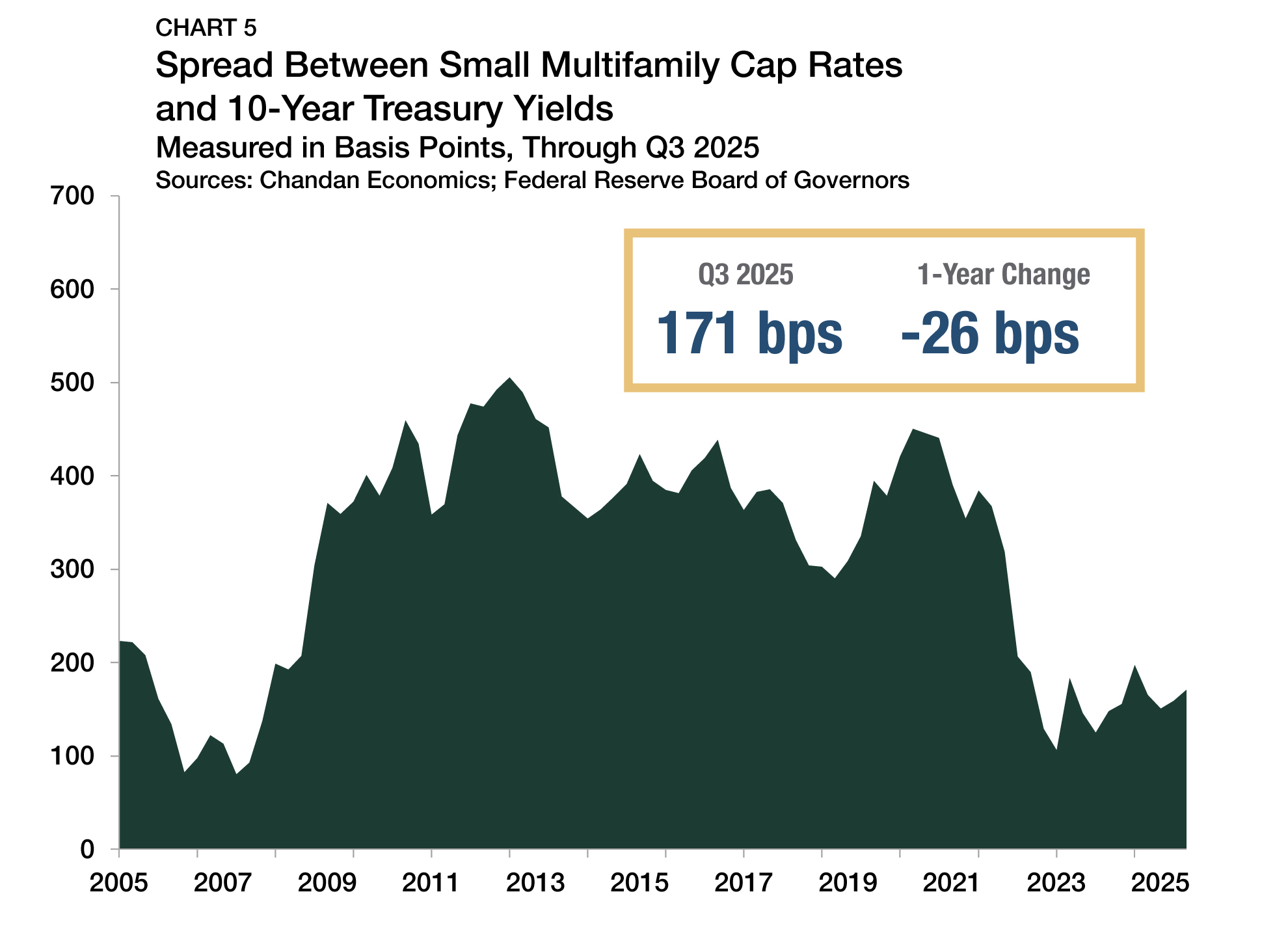
The small multifamily risk premium, measured by comparing cap rates to the yield on the 10-year Treasury, approximates the additional compensation investors require to account for higher risk levels. This risk premium increased by 12 bps in the third quarter of 2025 to reach 171 bps (Chart 5). The increase occurred as 10-year Treasury yields averaged 4.3% between July and September 2025, down from 4.4% during the second quarter.

Up until the Federal Reserve’s October rate cut, 10-year Treasury yields had remained above 4% for more than two years, keeping the small multifamily risk premium well below pre-pandemic norms. Between 2015 and 2019, the small multifamily risk premium averaged 369 bps — more than double the current spread. The small multifamily/Treasury risk premium has been below 200 bps for the past 13 consecutive quarters.

At the same time, the cap rate spread between small multifamily assets and the rest of the multifamily sector, a measure of the risk unique to smaller properties, widened by five bps during the third quarter to reach 27 bps (Chart 6). As liquidity for small multifamily improved after the 2008 financial crisis and property management software technologies enhanced operational efficiency, small multifamily risk premiums have resettled slightly above those of all multifamily properties. Over the past 10 years, this risk premium for small multifamily assets relative to the rest of the sector has averaged 30 bps — less than half the average risk premium typical during the preceding decade (70 bps).

Expense Ratios

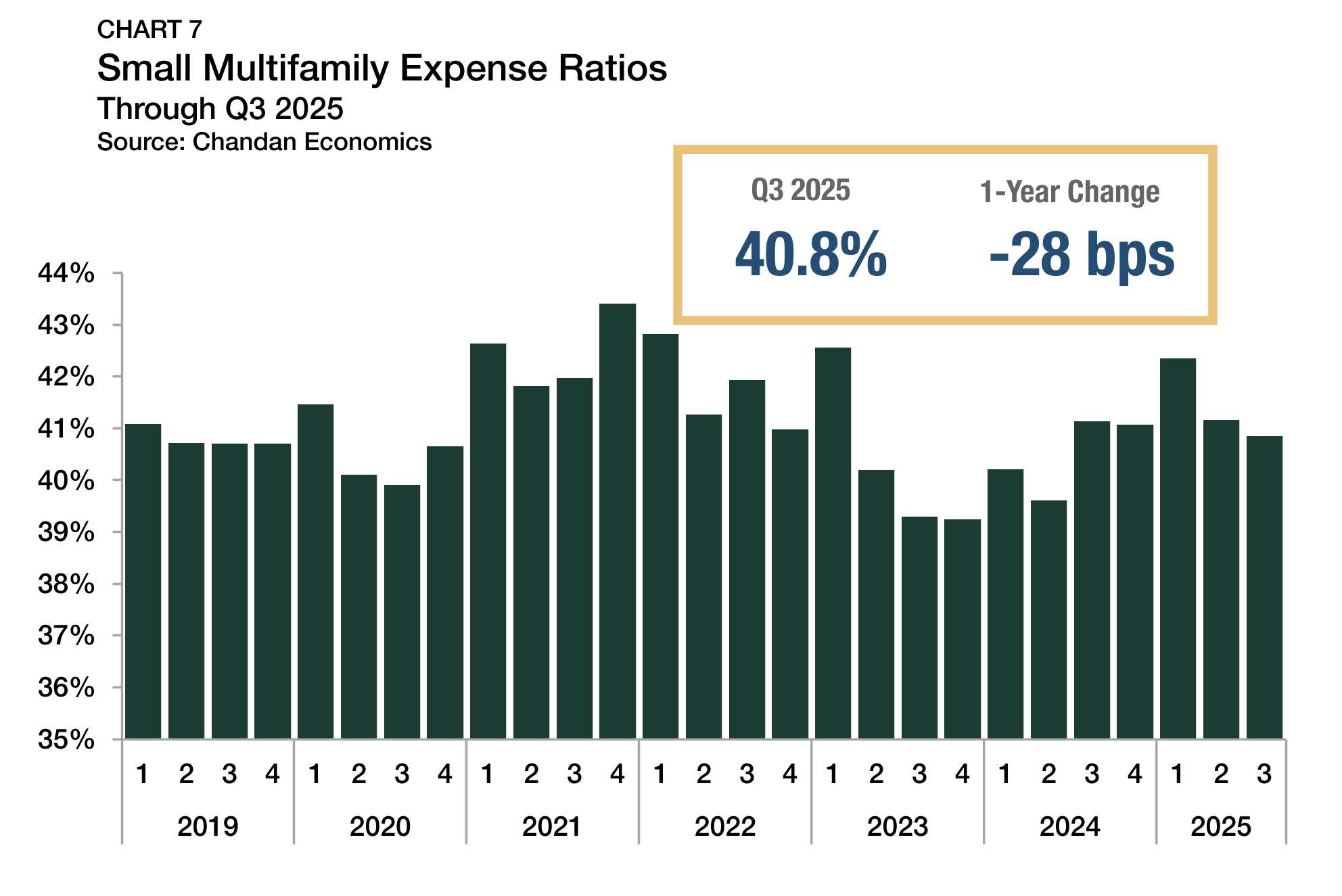
Expense ratios, measured as the relationship between underwritten property-level expenses and gross income, fell by 32 bps in the third quarter of 2025 to 40.8% (Chart 7). Between the end of 2023 and early 2025, expense ratios gradually ticked up by 311 bps to a recent peak of 42.4%, reflecting a more costly operating environment brought about by higher input and insurance prices. However, the third-quarter decline indicates that operating cost pressures have eased slightly, allowing for property incomes to catch up and the expense ratio to normalize.

Occupancy Rates

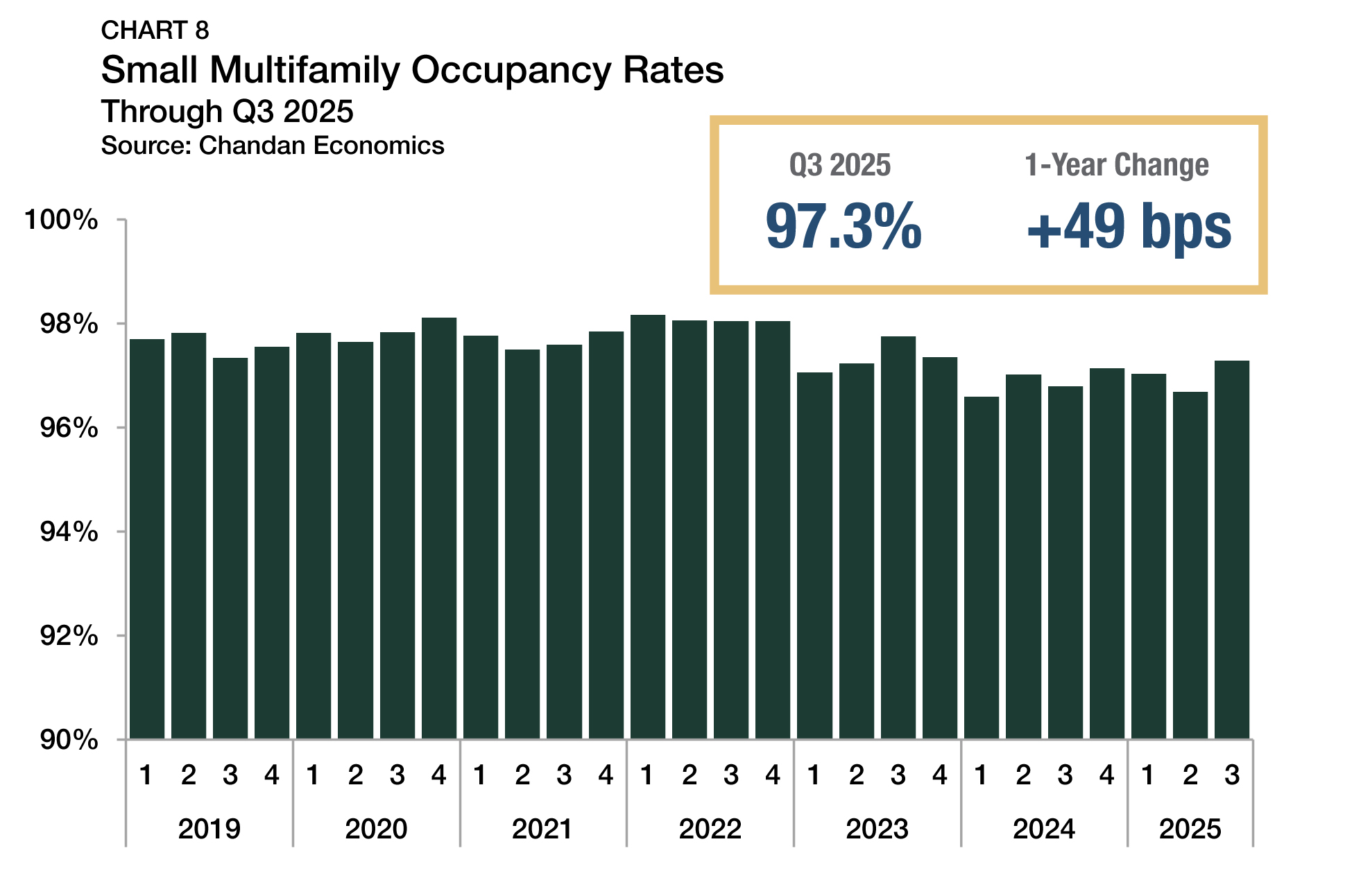
Occupancy rates in small multifamily properties that received financing during the third quarter averaged 97.3% (Chart 8). Compared with the previous quarter, occupancy increased by a healthy 59 bps. Occupancy rates are now up by about half a percentage point (49 bps) from the same time last year. Over the past 11 quarters, occupancy rates remained stable between 96.7% and 97.7%, positioning the sector on solid ground.

Small multifamily occupancy rates routinely outperform, tracking about 2% higher than the average across all multifamily properties, which may result from closer tenant-landlord relationships. According to a recent report by the Terner Center for Housing Innovation at UC Berkeley, a majority of small multifamily property owners reported that at least half of their rental units have been leased at below-market rents, a strategy used to retain quality tenants.

By and large, small multifamily households are moving less today. A recent Chandan Economics analysis of the U.S. Census Bureau’s American Community Survey found that 58.3% of existing small multifamily households have lived in their current unit for at least two years — 3.4 percentage points higher than in large multifamily (50+ units) properties.

Leverage & Debt Yields

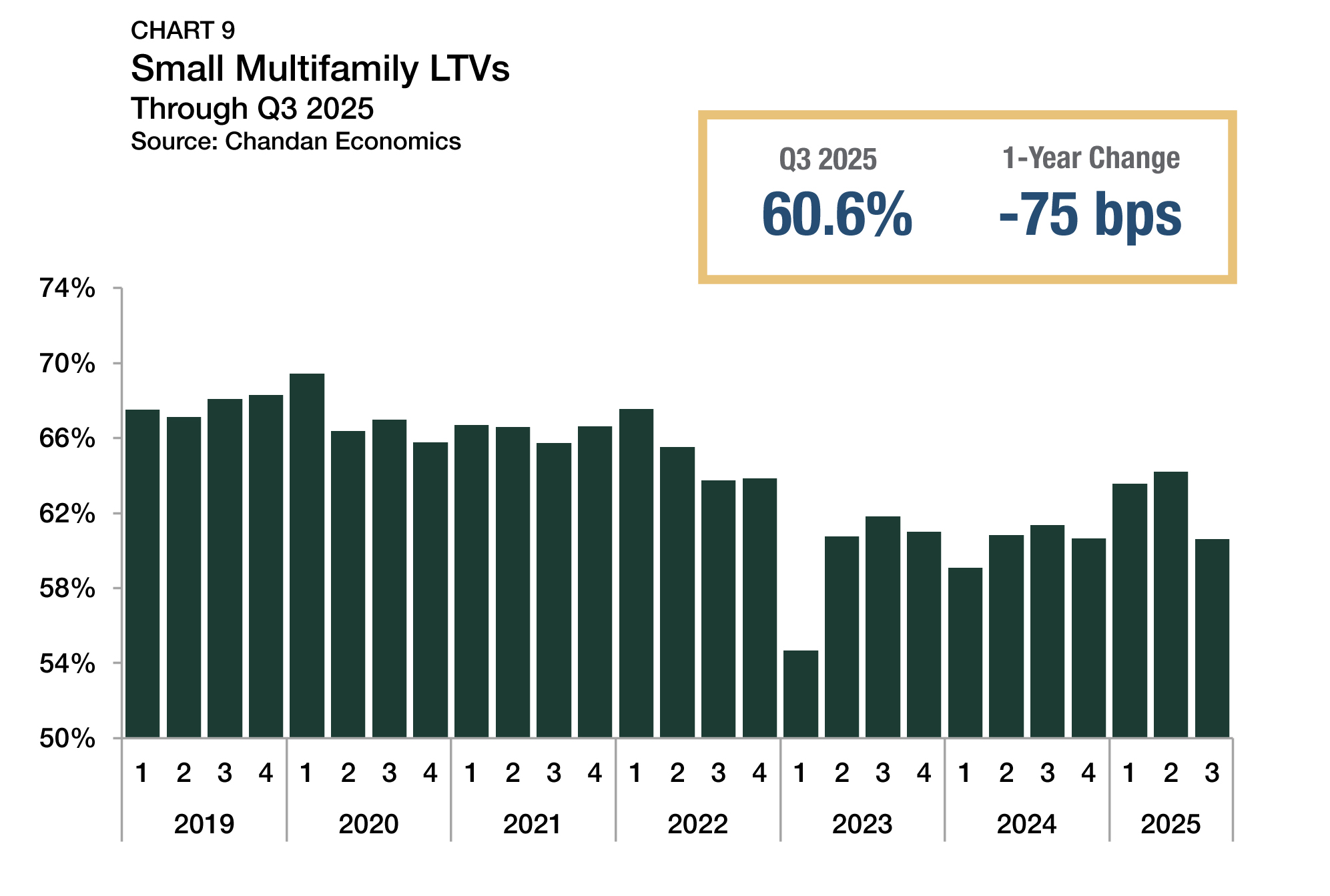
After easing slightly to begin the year, small multifamily underwriting trends tightened in the third quarter. Loan-to-value ratios (LTVs) fell between the second and third quarters by a significant 362 bps to reach 60.6% (Chart 9). The mix of loans was a factor in the quarterly decline. LTVs on loans for small multifamily acquisitions tend to be about five percentage points higher than those for refinanced loans. With the refi share of lending ticking up by 144 bps in the third quarter, it modestly weighed down average LTVs across the sector.

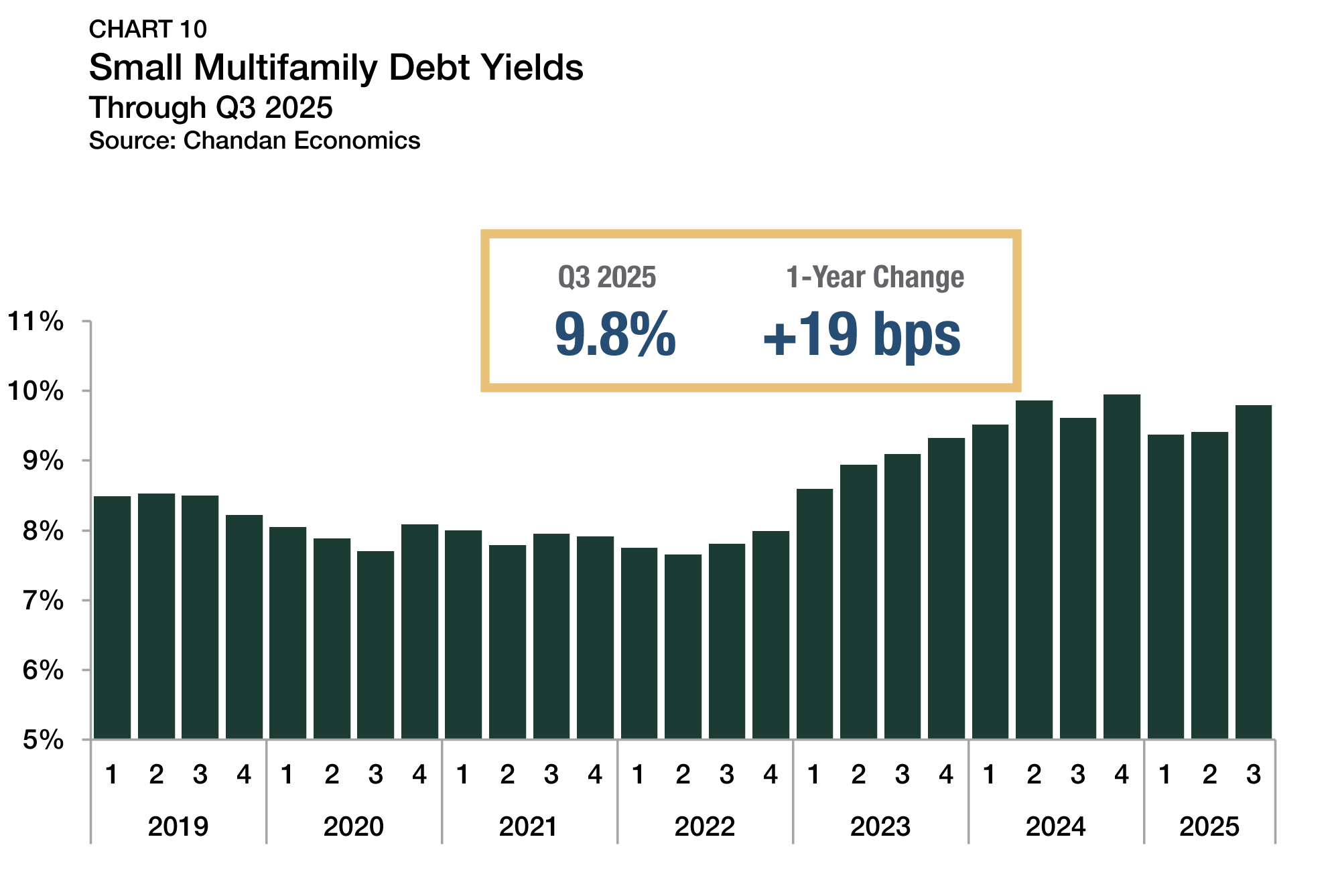
Debt yields, which consider the relationship between net operating income (NOI) and loan balance, are conceptually thought of as a lender’s cap rate. Debt yields rose modestly in the third quarter (+39 bps), settling at 9.8% (Chart 10). After sliding in the first and second quarters, the third-quarter increase brings small multifamily debt yields back within 15 bps of their 10-year high.

The inverse of debt yield, measured as debt per dollar of NOI, decreased moderately. Small multifamily borrowers secured an average of $10.21 in new debt for every $1.00 of property NOI during the quarter — down $0.42 from the second quarter and $0.20 from the same time last year.

With cap rates effectively holding steady (+2 bps) and debt yields rising more substantially, the spread between them widened. The debt yield/cap rate spread increased to 383 bps, rising 37 bps from the prior quarter and 14 bps from the same time last year (Chart 11).


Compared to levels seen before the Federal Reserve began tightening monetary policy, the debt yield/cap rate spread has remained significantly elevated. From 2015 to 2022, the spread remained in a narrow range of 247 to 311 basis points. The wider spread, which has persisted for the past three years, indicates that lenders have updated their yield requirements more than buyers.

Outlook

Entering the final quarter of the year, small multifamily is poised to take another step forward. Following a recent period of asset value recalibration, the sector is positioned to thrive in the next growth cycle, with attractive entry points available to buyers. Compared to early 2023 highs, small multifamily asset values now sit at a 16% discount, encouraging well-positioned investors to take advantage of opportunities.

While many signals are promising, the normalization of credit trends is unlikely to happen in a straight line. However, with pricing momentum gaining steam, confidence in underwriting is likely to follow. Although many U.S. metros are facing housing supply imbalances, roughly 7 in 10 multifamily markets registered positive rent growth through September 2025, suggesting a strengthening supply pipeline. Looking ahead, the small multifamily sector’s demand fundamentals are positioned to drive returns, especially as borrowing costs ease. A combination of attainable price points, stable rent rolls, and diverse financing options places the sector in a position to outperform through the next leg of the real estate cycle.

While short-term fluctuations could cause trepidation, normalization and resilience are likely to override other concerns. Entering 2026, small multifamily is one of the few asset classes where value and operating performance are moving in the same positive direction, supporting its signature brand of stable growth.

For more small multifamily research and insights, visit arbor.com/research

Disclaimer

This report is intended for general guidance and information purposes only. This report is under no circumstances intended to be used or considered as financial or investment advice, a recommendation or an offer to sell, or a solicitation of any offer to buy any securities or other form of financial asset. Please note that this is not an offer document. The report is not to be considered as investment research or an objective or independent explanation of the matters contained herein and is not prepared in accordance with the regulation regarding investment analysis. The material in the report is obtained from various sources per dating of the report. We have taken reasonable care to ensure that, and to the best of our knowledge, material information contained herein is in accordance with the facts and contains no omission likely to affect its understanding. That said, all content is provided herein “as is” and neither Arbor Realty Trust, Inc. or Chandan Economics, LLC (“the Companies”) nor their affiliated or related entities, nor any person involved in the creation, production and distribution of the content make any warranties, express or implied. The Companies do not make any representations or warranties, express or implied, as to the reliability, usefulness, completeness, accuracy, currency nor represent that use of any information provided herein would not infringe on other third-party rights. The Companies shall not be liable for any direct, indirect or consequential damages to the reader or a third party arising from the use of the information contained herein. There may have been changes in matters which affect the content contained herein and/or the Companies subsequent to the date of this report. Neither the issue nor delivery of this report shall under any circumstance create any implication that the information contained herein is correct as of any time subsequent to the date hereof or that the affairs of the Companies have not since changed. The Companies do not intend, and do not assume any obligation to update or correct the information included in this report. The contents of this report are not to be construed as legal, business, investment or tax advice. Each recipient should consult with its legal, business, investment and tax advisors as to legal, business, investment and tax advice. The information contained herein may be subject to changes without prior notice. This report is only intended for the recipients, and should not be copied or otherwise distributed, in whole or in part, to any other person.