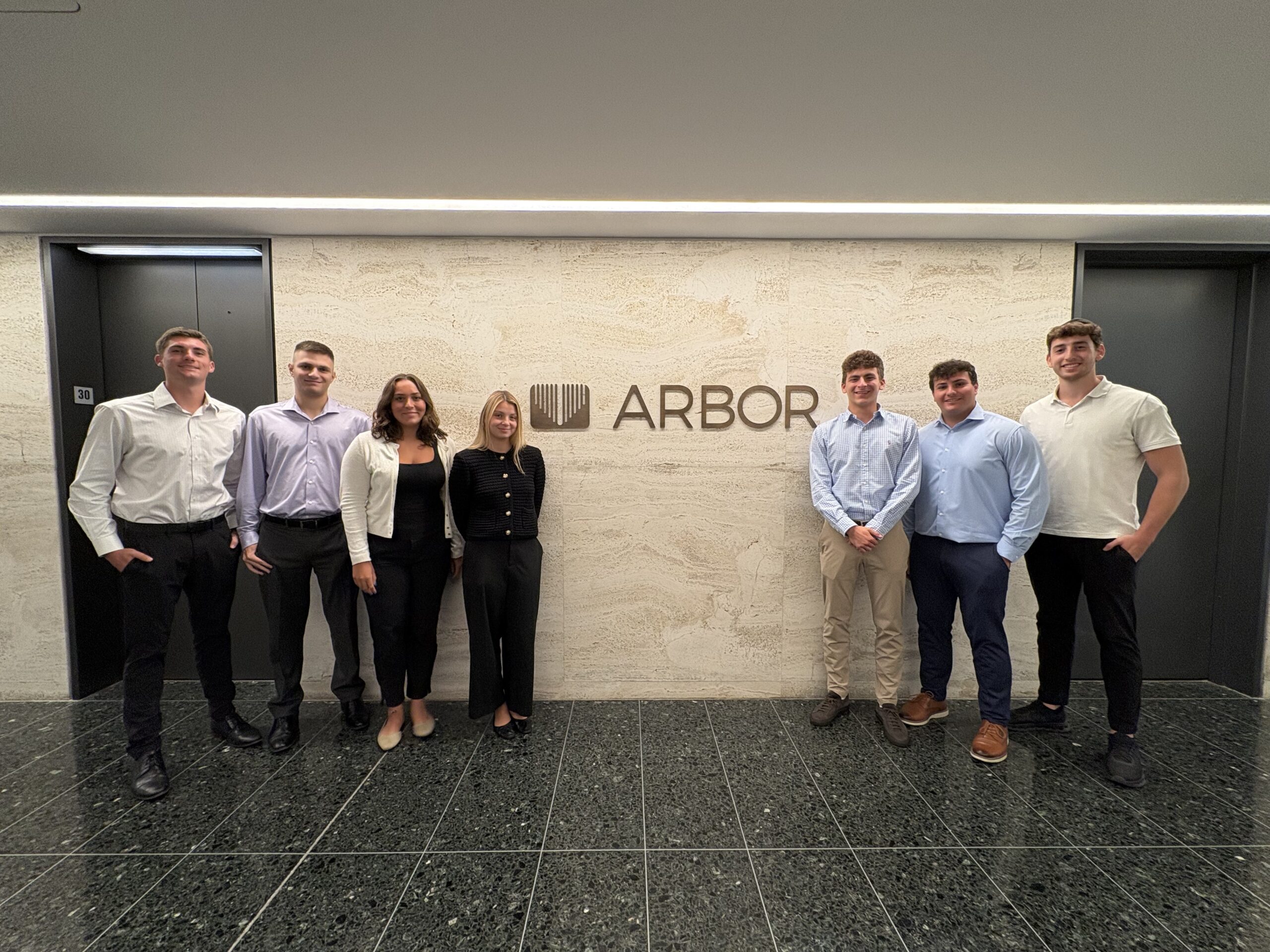
Marisa Mamak
Marisa Mamak, from Queens, New York, is a rising senior at the College of the Holy Cross. She has been an intern at Arbor Realty Trust for the last two summers.

Arbor Realty Trust’s Affordable Housing Trends Report, developed in partnership with Chandan Economics, explores a year marked by one of the most significant policy shifts in decades, with consequential developments in both the marketplace and the political arena. Our annual report finds that although affordability continues to present challenges, this year’s new initiatives are set to rebuild tomorrow’s pipeline.
The U.S. Department of Housing and Urban Development (HUD) recently announced a significant policy change that expands Federal Housing Administration (FHA) mortgage insurance eligibility to qualifying build-to-rent (BTR) communities. Effective immediately, professionally managed rental developments consisting of detached single-family homes, duplexes, and triplexes are eligible for FHA-insured financing under the same general framework as traditional multifamily properties.
Single-family rentals (SFR) now house 41% of the U.S. renter population, according to Rentometer Mid-Year Report 2025: National Trends in Single-Family Rental Markets. Arbor provides investors with short-term and long-term SFR financing to meet this growing demand. Whether a sponsor is developing a build-to-rent (BTR) community, holding an SFR portfolio long-term, or acquiring assets to rehab, Arbor finances build-to-rent (BTR) communities across construction, lease-up, and stabilization under one lender relationship, backed by the strength of an $802 million BTR collateralized loan obligation Arbor closed in May 2025.
Single-family rental (SFR) fundamentals remained strong throughout the first half of 2026, supported by high occupancy, positive rent growth, and an elevated construction pipeline.
Every multifamily lender says it underwrites conservatively, but few follow a truly disciplined approach. Arbor Realty Trust’s own record is a case in point, with 19 consecutive years in the Top 10 Fannie Mae Multifamily DUS Lenders, a top-three ranking in Freddie Mac’s Conventional Small program, and an upgraded Commercial Special Servicer rating from Fitch Ratings in January 2026.
Arbor Realty Trust’s Special Report Fall 2026, developed in partnership with Chandan Economics, leverages data-driven research to detail the state of the rental housing market. Amid headwinds, multifamily remained resilient in a selective investment environment favoring disciplined underwriting and market selection. Attractive entry points for well-positioned investors continue to populate the road ahead.
The U.S. multifamily market remains on stable footing in a mixed macroeconomic climate. Rent growth continued to trend upward through the second quarter, while apartment fundamentals remained resilient amid slowing employment growth and elevated vacancies.