

U.S. Multifamily Market Snapshot — September 2026

The U.S. multifamily market remains on stable footing in a mixed macroeconomic climate. Rent growth continued to trend upward through the second quarter, while apartment fundamentals remained resilient amid slowing employment growth and elevated vacancies. Investor demand also held steady, supported by attractive cap rates and a gradually improving transaction environment.
Multifamily Moves Closer to Equilibrium
After navigating a historic wave of new supply, the industry is moving closer to equilibrium. While vacancies remain elevated relative to long-term averages, steady rent gains and continued demand for rental housing suggest the multifamily sector is well positioned as market conditions normalize.
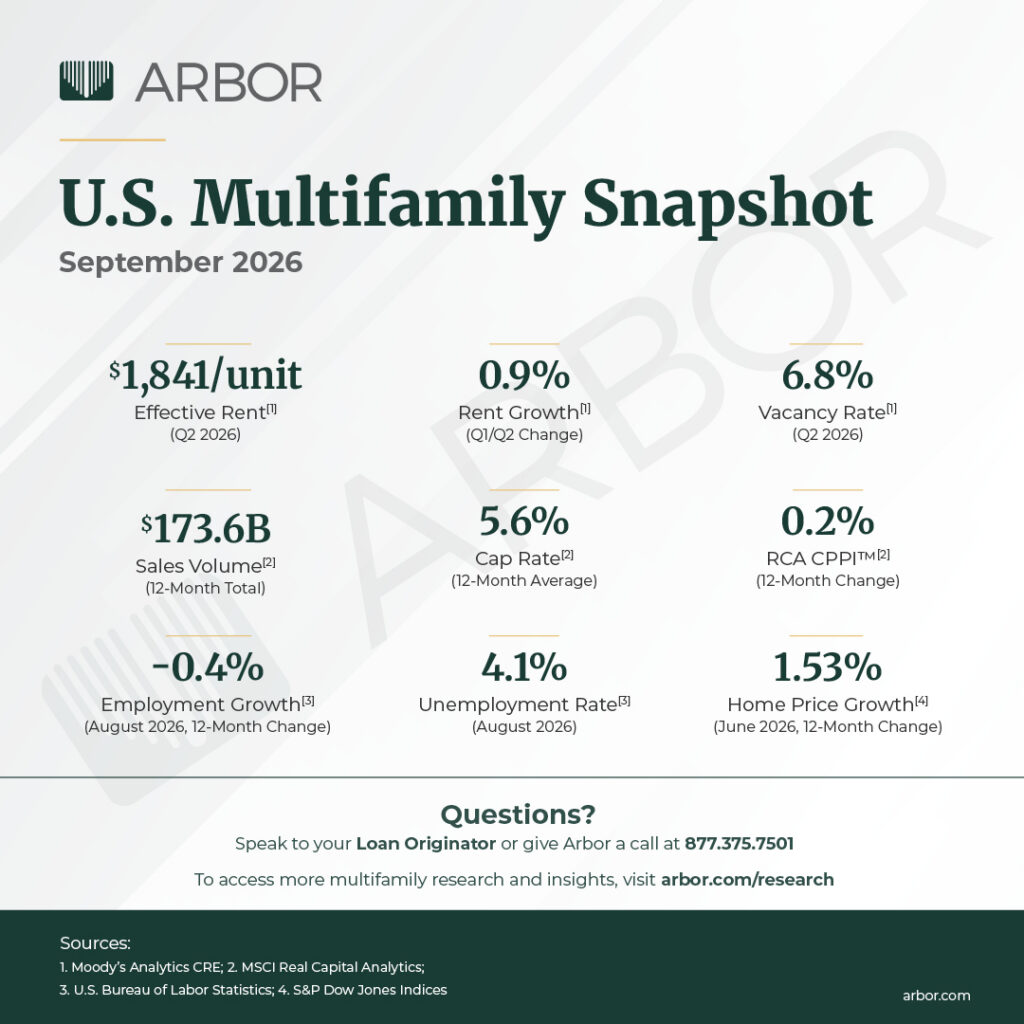
Effective rents reached $1,841 per unit in the second quarter of 2026, according to Moody’s Analytics CRE data. Quarterly rent growth was 0.9%, signaling continued pricing power despite ongoing supply pressures in several high-delivery markets. The return of consistent rent growth reinforces expectations that the multifamily sector has successfully absorbed much of the recent construction surge.
Vacancy rates stood at 6.8% in Q2 2026, unchanged from levels reported earlier in the year. While elevated vacancies continue to reflect the impact of new deliveries entering the market, stable occupancy trends and slowing development activity indicate that market fundamentals are gradually rebalancing. As the construction pipeline continues to moderate, operators are expected to benefit from improvements in supply/demand dynamics over the coming quarters.
Sales Volume Remains Strong
Investment activity has remained healthy throughout the year. MSCI Real Capital Analytics reported $173.6 billion in multifamily sales volume during the previous 12 months, reflecting sustained investor interest in the asset class. Apartment cap rates averaged 5.6%, remaining competitive relative to other commercial real estate sectors and reinforcing multifamily’s long-term investment appeal.
Property values also showed signs of stabilization. The RCA Commercial Property Price Index for apartments increased 0.2% over the past 12 months, suggesting that pricing has largely found a floor after a period of adjustment driven by higher interest rates and changing capital market conditions.
Meanwhile, the for-sale housing market continued to face affordability challenges. National home prices increased 1.53% year-over-year through June 2026, according to the S&P Dow Jones Indices. Combined with elevated mortgage rates and limited inventory, affordability constraints continue to encourage many households to remain renters, supporting demand for multifamily housing.
The Road Ahead
Multifamily enters the final months of 2026 from a position of relative strength. Consistent rent growth, stable occupancy trends, active investment volume, and ongoing affordability challenges in the housing market continue to underpin demand. The sector’s fundamentals suggest it remains one of the most resilient and attractive commercial real estate asset classes for investors.
Interested in the multifamily real estate investment market? Contact Arbor today to learn about our array of multifamily, single-family rental, and affordable housing financing options and view our multifamily articles and research reports.