

Build-to-Rent Activity Remained Elevated Amid Policy Uncertainty
- SFR/BTR housing starts totaled 63,000 during the year that ended in the second quarter of 2026, as development activity continued to normalize.
- BTR accounted for 6.9% of all single-family starts, significantly above historical norms.
- After a period of uncertainty, the final version of the 21st Century ROAD to Housing Act included an exception for qualifying BTR programs that has created new momentum.
Build-to-rent (BTR) development remained resilient in a complicated operating environment last quarter as production continued to normalize, according to newly released U.S. Census Bureau data. Despite political uncertainty, higher capital costs, and other headwinds, BTR maintained a historically high share of new single-family construction.
What is the Current SFR/BTR Construction Pipeline?
SFR/BTR starts totaled 63,000 units in the 12 months that ended in June 2026 (Chart 1), as detailed in Arbor’s Single-Family Rental Investment Trends Report series, developed in partnership with Chandan Economics.
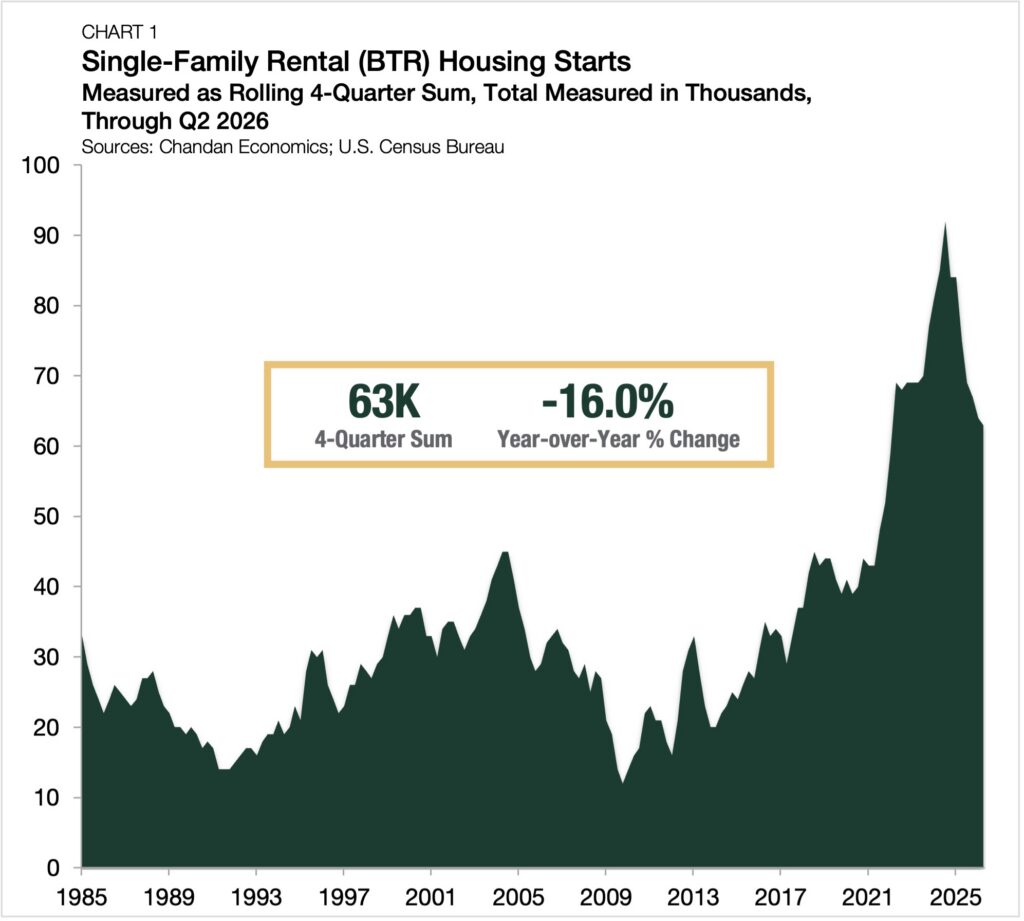
The SFR/BTR construction pipeline has continued to moderate through the second quarter. Since reaching an all-time high of 92,000 in the third quarter of 2024, SFR/BTR starts have normalized, edging lower in six of the past seven quarters. Compared to the same time last year, the rolling sum has decreased by 12,000 units (or -16.0%). But even as production slowed recently, the current level of BTR development has remained historically robust, with the latest annual tally of starts exceeding all four-quarter sums before 2022.
BTR Retained Sizable Share of Single-Family Starts
Beyond units created, the BTR share of all single-family construction remained substantial even as it moved below recent highs. During the year ending in the second quarter of 2026, BTR accounted for 6.9% of all single-family construction starts, down from 7.6% one year earlier and 9.0% at its third-quarter 2024 peak (Chart 2).
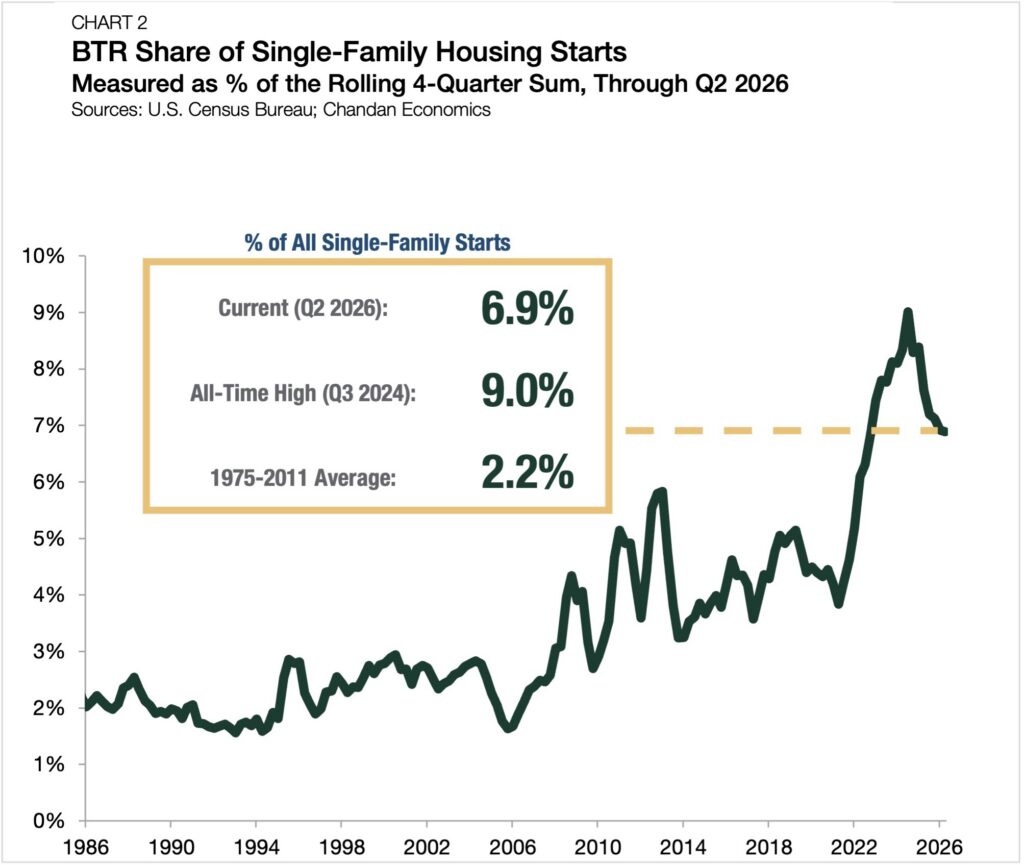
Through the second quarter, BTR’s single-family construction market share remained well above its 1975-2011 average of 2.2%. Before 2022, its market share had never exceeded 6.0%, underscoring that the sector’s share of single-family starts has remained meaningfully higher than it was a few years ago.
Lower levels of BTR construction remained consistent with a broader normalization in single-family development activity. Higher costs of capital, rising home inventory, and more cautious builder sentiment have all contributed to more selective construction. The newly released Census data indicated that BTR activity remained healthy as the sector continued its normalization following an exceptionally elevated development cycle.
SFR/BTR Durable Demand Bolsters Sector Outlook
As covered in greater detail in Arbor’s upcoming Single-Family Rental Investment Trends Report Q3 2026, the SFR/BTR sector continued to be supported by long-term demand for affordable, high-quality rental housing with modern amenities. Even amid a period of uncertainty around institutional single-family rental investment, BTR development activity remained relatively steady.
Since then, the national policy outlook became clearer. The 21st Century ROAD to Housing Act was enacted in July with restrictions on large institutional purchases scheduled to take effect 180 days later, with an exception included for qualifying BTR programs. This formal distinction should preserve development as an important channel for institutional SFR growth, while scattered-site acquisition strategies may require adjustment. Together, persistent affordability constraints and durable demand for single-family rental housing will continue to strengthen this commercial real estate sector’s longer-term outlook.
Interested in the multifamily real estate investment market? Contact Arbor today to learn about our array of multifamily, single-family rental, and affordable housing financing options or view our multifamily articles and research reports.