The small multifamily sector entered 2026 on a strong note, even as lending conditions remained shaped by persistently high interest rates and regulatory uncertainties.
Single-Family Rental Investment Trends Report Q1 2026
Cap Rate Expansion Continues as Fundamentals Hold Firm
Key Findings
-
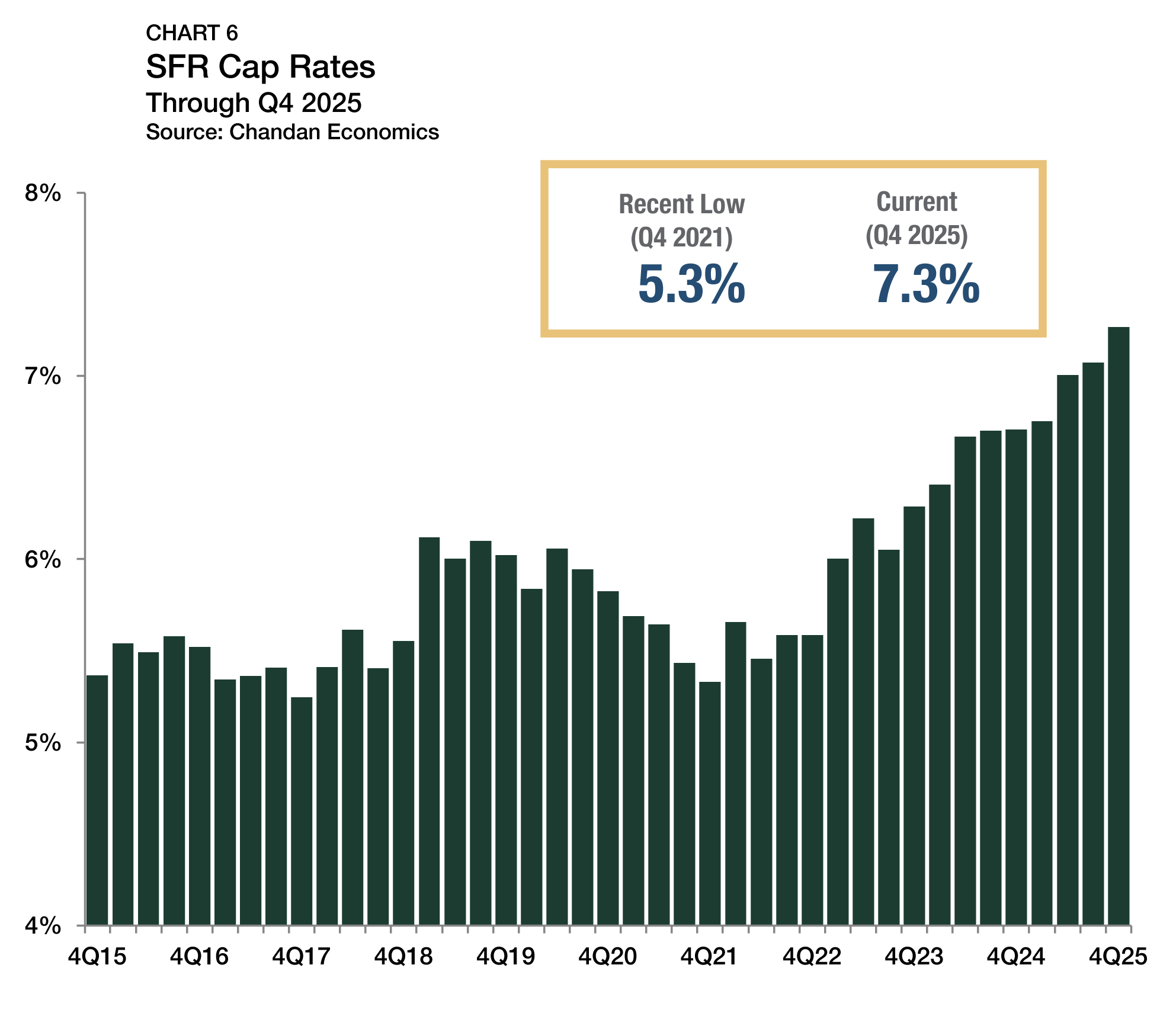
SFR cap rates, which trended higher at the end of 2025, are up nearly two percentage points since 2021.
-
Nearly all SFR markets recorded positive year-over-year rent growth.
-
CMBS issuance trends indicate that SFR capital markets are settling into a more stable rhythm.
Table of Contents
State of the Market
The single-family rental (SFR) sector continued to demonstrate resilience in early 2026, even as home price appreciation cooled. Property-level fundamentals remained stable with occupancy near long-run averages, while rent growth normalized from post-pandemic peaks. Capital markets were active and disciplined, with REIT acquisitions posting the strongest quarterly reading since 2022.
Additionally, the pace of new build-to-rent (BTR) development continued to be well above historical averages. From a cash-flow perspective, SFR’s investment profile has adjusted upward over the past two years. Cap rates have risen by nearly two percentage points since 2021, reflecting a combination of flatter home prices and sustained rent gains. The result is improved income yields relative to asset values in comparison with the peak pricing environment seen when interest rates were at all-time lows.
Homeownership affordability remains a key driver of demand for single-family rental homes. According to the Federal Reserve Bank of Atlanta, the median household needed to devote 42.0% of its income to housing payments as of December 2025 to buy a home, a historically elevated level that is constraining would-be homeowners.
Collectively, today’s housing trends are reinforcing rental demand as the number of SFR householders reached a seven-year high last year, supported by the continued growth of BTR.
Performance Metrics
CMBS Issuance
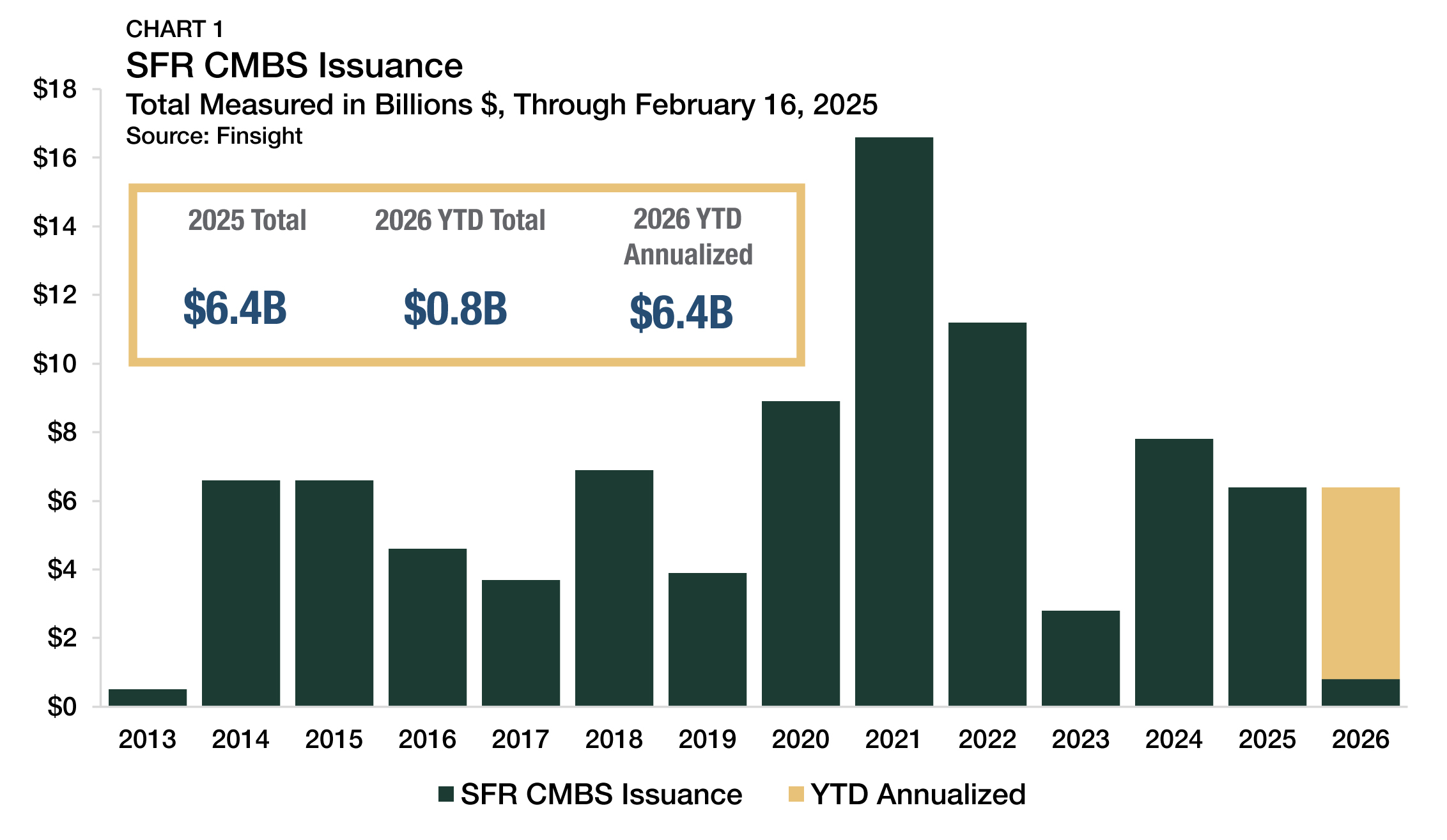
Following a notable rebound in 2024, structured SFR capital markets remained active in 2025, though issuance cooled modestly year-over-year. According to Finsight, total SFR CMBS issuance reached $6.4 billion in 2025, down from $7.8 billion in 2024 (Chart 1). Steady activity continued into 2026, with $0.8 billion issued through mid-February, broadly in line with the pace observed over the past year.
While deal flow in SFR CMBS can vary meaningfully throughout the year, recent issuance levels suggest that capital markets remain open and functional, albeit more measured than in the post-pandemic peak years. Overall, structured credit conditions continue to reflect that the sector is operating within a more normalized and disciplined financing environment.
REIT Acquisitions & Dispositions
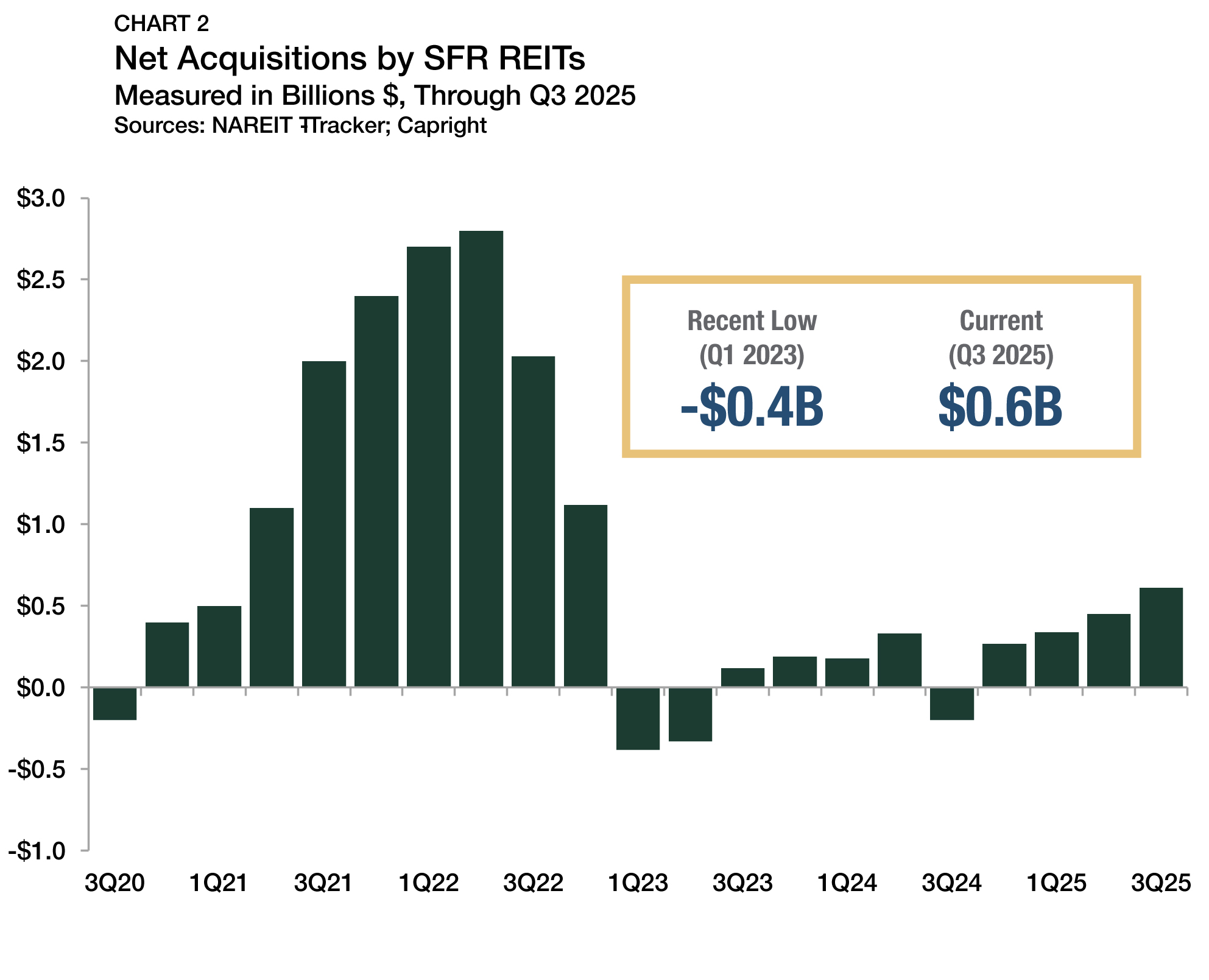
Public SFR REITs continued to increase net buying activity through the third quarter of 2025, extending a gradual return to growth following a pullback in 2022 and early 2023. A Capright analysis of Nareit data shows net acquisitions reached $0.6 billion in the third quarter of 2025, the strongest quarterly reading since mid-2022 (Chart 2). The $0.5 billion quarterly improvement reflects steady acquisition volumes alongside more measured disposition activity, as operators deployed capital selectively into higher-yielding markets and development partnerships. Additionally, large-scale asset dispositions largely retreated from 2023 levels. Overall, recent REIT activity suggests capital markets have generally normalized in line with historical averages, while remaining disciplined and measured, though still opportunistic.
Occupancy
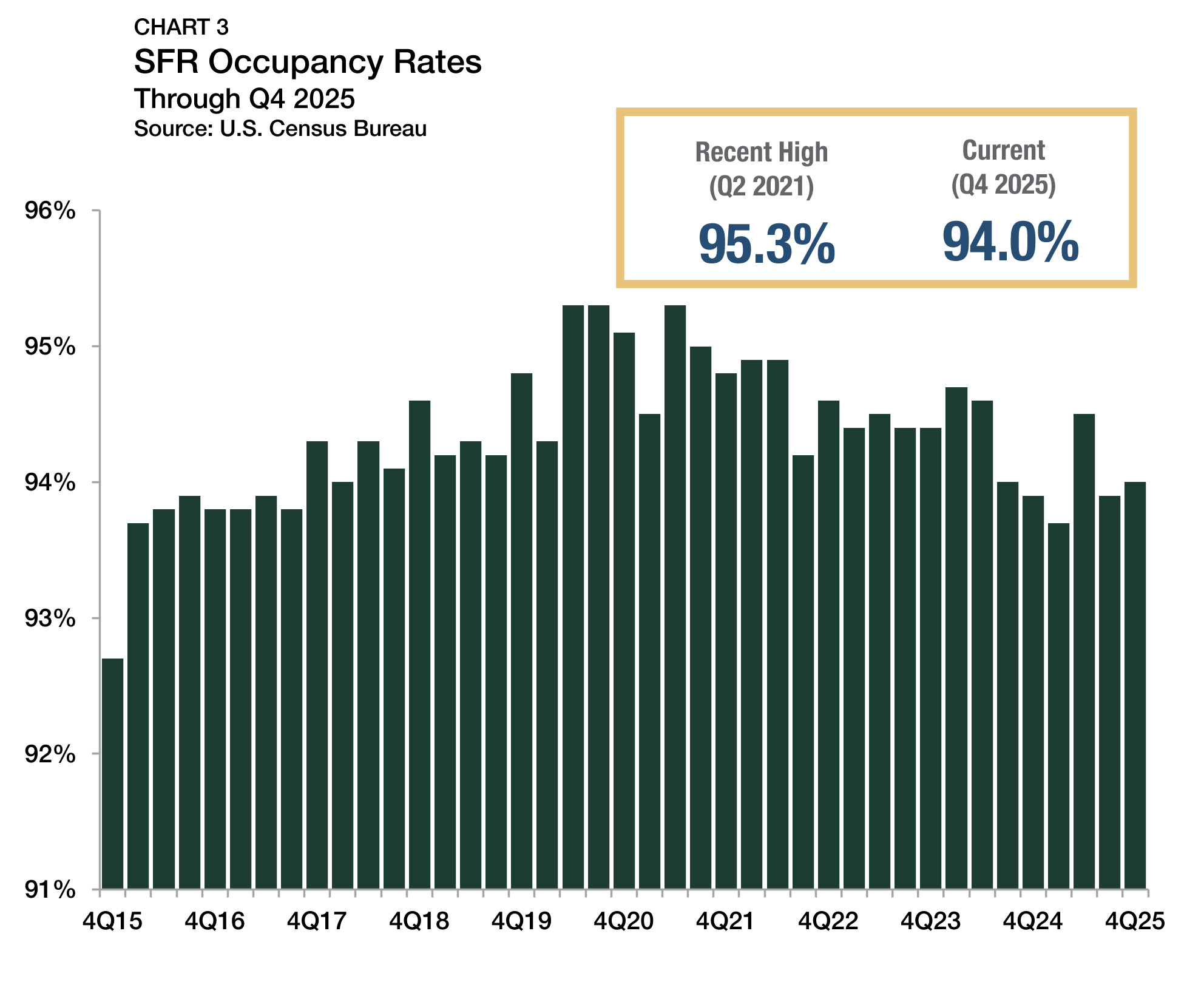
According to the U.S. Census Bureau, occupancy rates across all SFR property types averaged 94.0% in the fourth quarter of 2025 (Chart 3), up just 0.1 percentage point from 93.9% in both the previous quarter and the same point last year. While occupancy levels have moderated from their post-pandemic peak of 95.3% in 2021, they remain broadly stable by historical standards.
Between 2015 and 2019, SFR occupancy rates averaged 93.9%, placing the fourth quarter’s rate almost exactly in line with the pre-pandemic norm. Although occupancy has fluctuated modestly over the past several quarters, current levels suggest that renter demand remains strong and well within long-run historical ranges.
Rent Growth: National
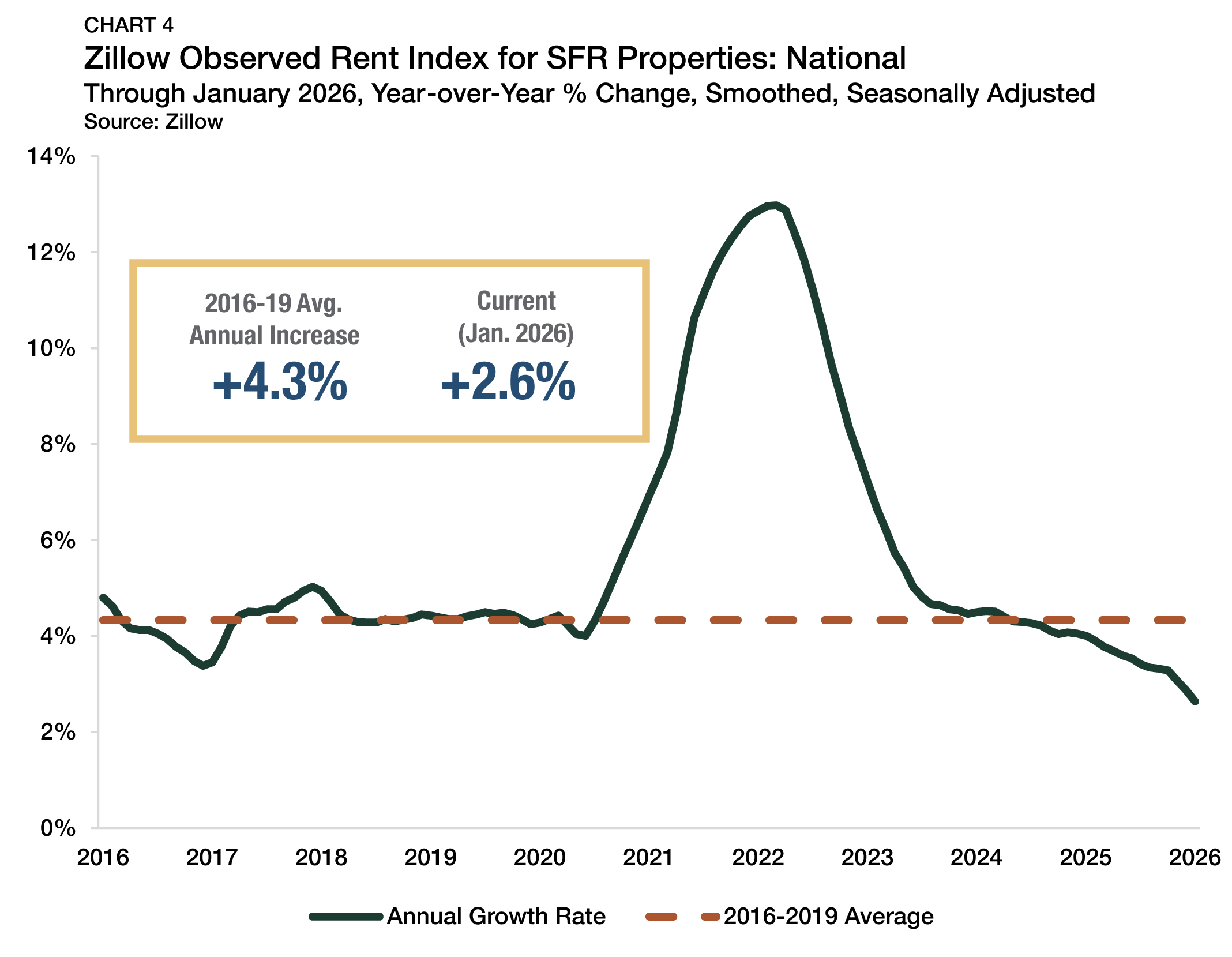
Nationally, SFR rent growth continued to moderate through the end of 2025 and into early 2026. According to Zillow’s Observed Rent Index, rents were up 2.6% year-over-year in January 2026 (Chart 4). Rent growth has normalized from its skyrocketing post-pandemic pace, when annual growth averaged 4.3% from 2016–2019. Recent moderation reflects a market that is normalizing after a period of elevated conditions as demand for rental homes continues to be supported by high mortgage rates and constrained for-sale affordability.
Rent Growth: Metros
Among the 50 largest U.S. metropolitan areas, Milwaukee, WI, led annual SFR rent growth at 6.5% as of January 2026 (Chart 5). Cleveland, OH (+5.3%), and Pittsburgh, PA (+4.9%), followed, continuing the Midwest’s strong rent growth performance, which reflects its comparatively stable demand and more balanced supply conditions.
Among markets trailing the national average in rent growth. Austin, TX, which had previously been in positive territory, slipped back into negative growth at -0.3%, making it the only major metro with declining rents year-over-year. While average rent growth at the national level has steadied, regional divergence remains pronounced, with Midwestern markets outperforming their peers.
Cap Rates
SFR cap rates continued to trend upward in the fourth quarter of 2025, rising 19 basis points (bps) to 7.3% (Chart 6). The increase reflects ongoing valuation adjustments as home price growth remains muted and rent gains moderate. Since falling to a low of 5.4% in the fourth quarter of 2021, cap rates have expanded by 194 bps, marking a sustained repricing of the asset class over the past four years. Despite the increase in pricing, investors remain attracted to the SFR sector, with investment volume in line with historical averages.
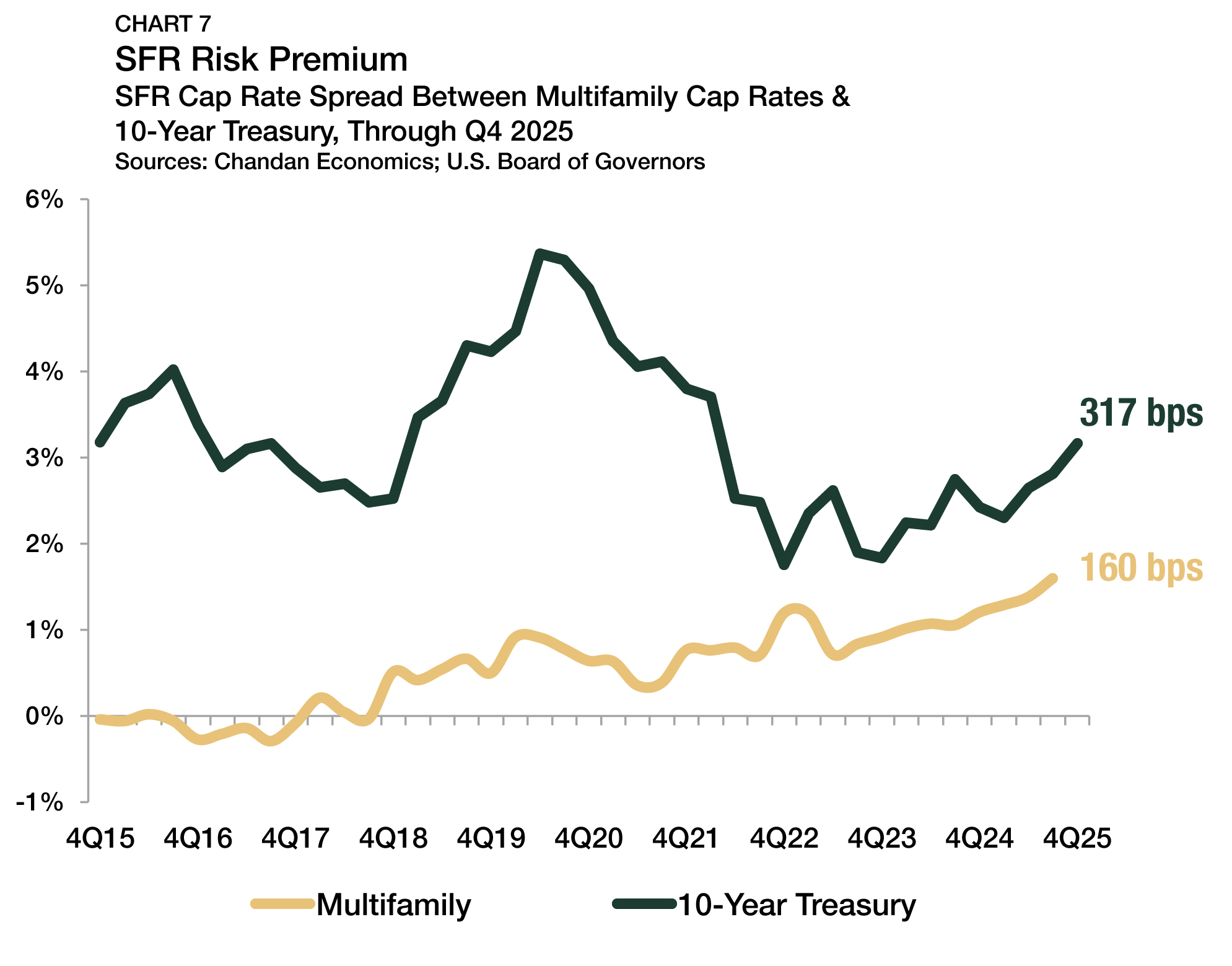
The spread between SFR cap rates and the 10-year Treasury yield — a proxy for the sector’s risk premium — widened to 317 bps in the fourth quarter (Chart 7), up from 288 bps in the prior quarter. Treasury yields averaged 4.1% during the period. Meanwhile, the spread between single-family rentals and multifamily properties widened to 160 bps, reflecting continued SFR cap rate expansion relative to multifamily pricing.
Pricing
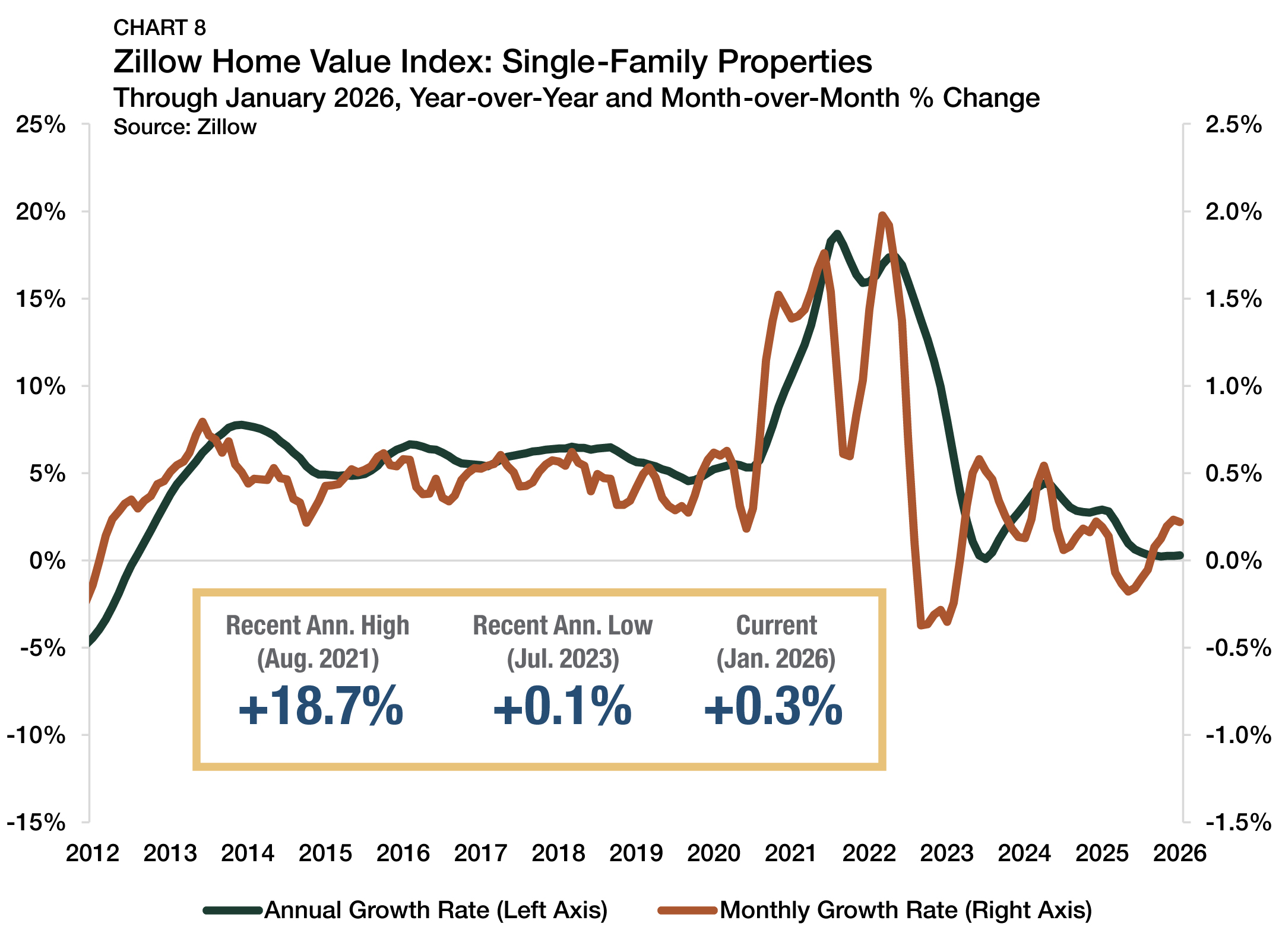
Measured year over year, single-family home values remained positive through January 2026, though appreciation lost momentum. Zillow’s Home Value Index shows the average U.S. single-family home value rose to $358,771 — up 0.3% from one year ago (Chart 8). Annual price growth bottomed at 0.1% in mid-2023 before briefly reaccelerating in 2024, although momentum softened at points during 2025 as affordability constraints weighed on buying power.
However, on a month-over-month basis, price growth turned positive late in the year and continued that trend into early 2026. While this stabilization suggests that the period of outright softness has largely passed, appreciation remains subdued. Zillow currently forecasts home values to rise approximately 0.9% over the next 12 months — a pace that points to continued stability rather than renewed acceleration.
Debt Yields
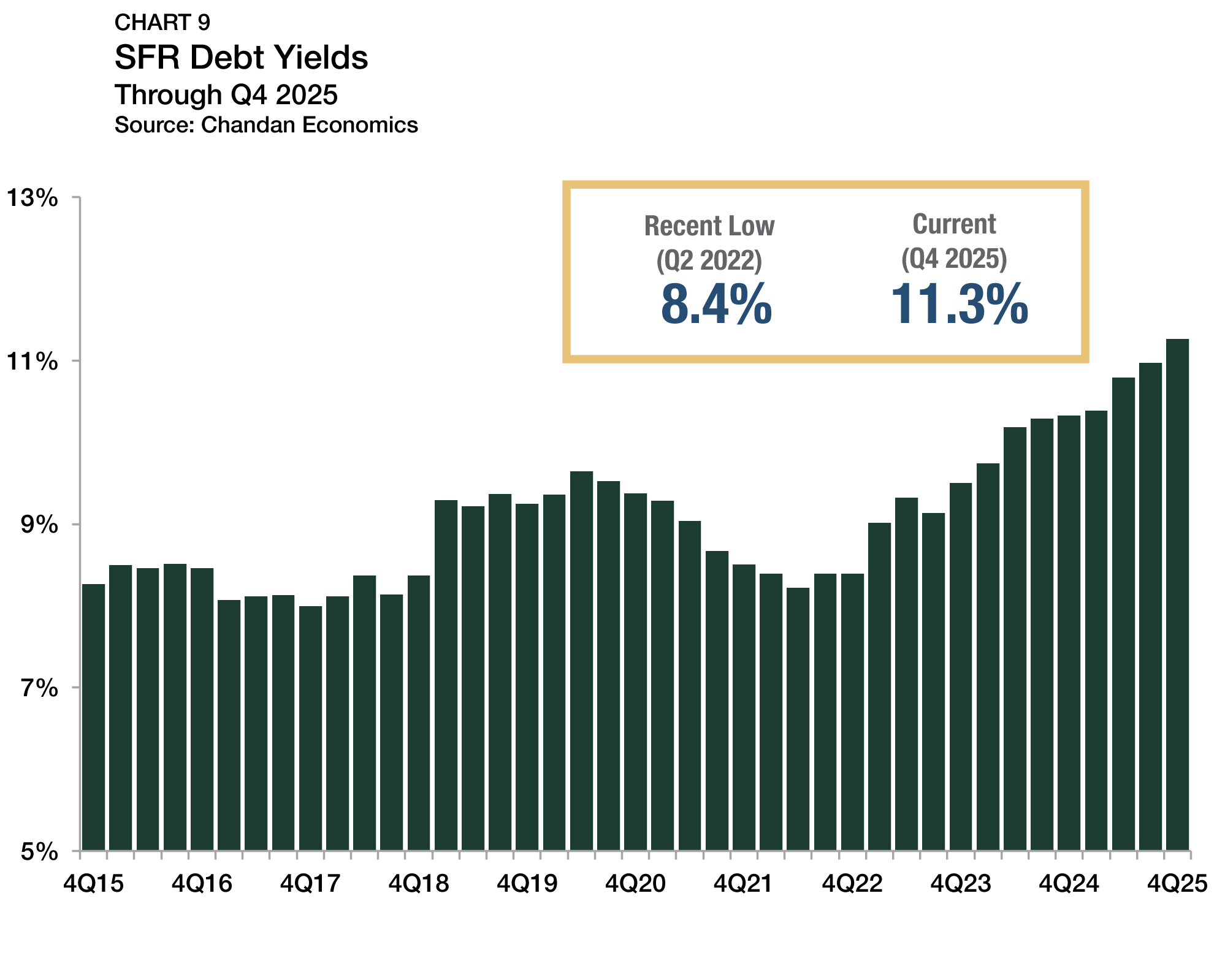
Debt yields — a key measure of credit risk — continued to rise in the fourth quarter of 2025, increasing 30 basis points to 11.3% (Chart 9). Compared to the recent low of 8.4% in the second quarter of 2022, debt yields have climbed 290 bps, underscoring lenders’ sustained preference for stronger cash-flow cushions and lower leverage in an uncertain interest rate environment.
These higher yields translate into materially tighter loan proceeds. In the fourth quarter of 2025, investors obtained an average of $8.88 of debt per $1.00 of NOI — down $3.28 from a 2022 peak and down less than a dollar from one year earlier. While credit remains available to seasoned investors, underwriting standards remain disciplined, with capital concentrated in stabilized assets and portfolios demonstrating durable operating performance.
Residential Distress
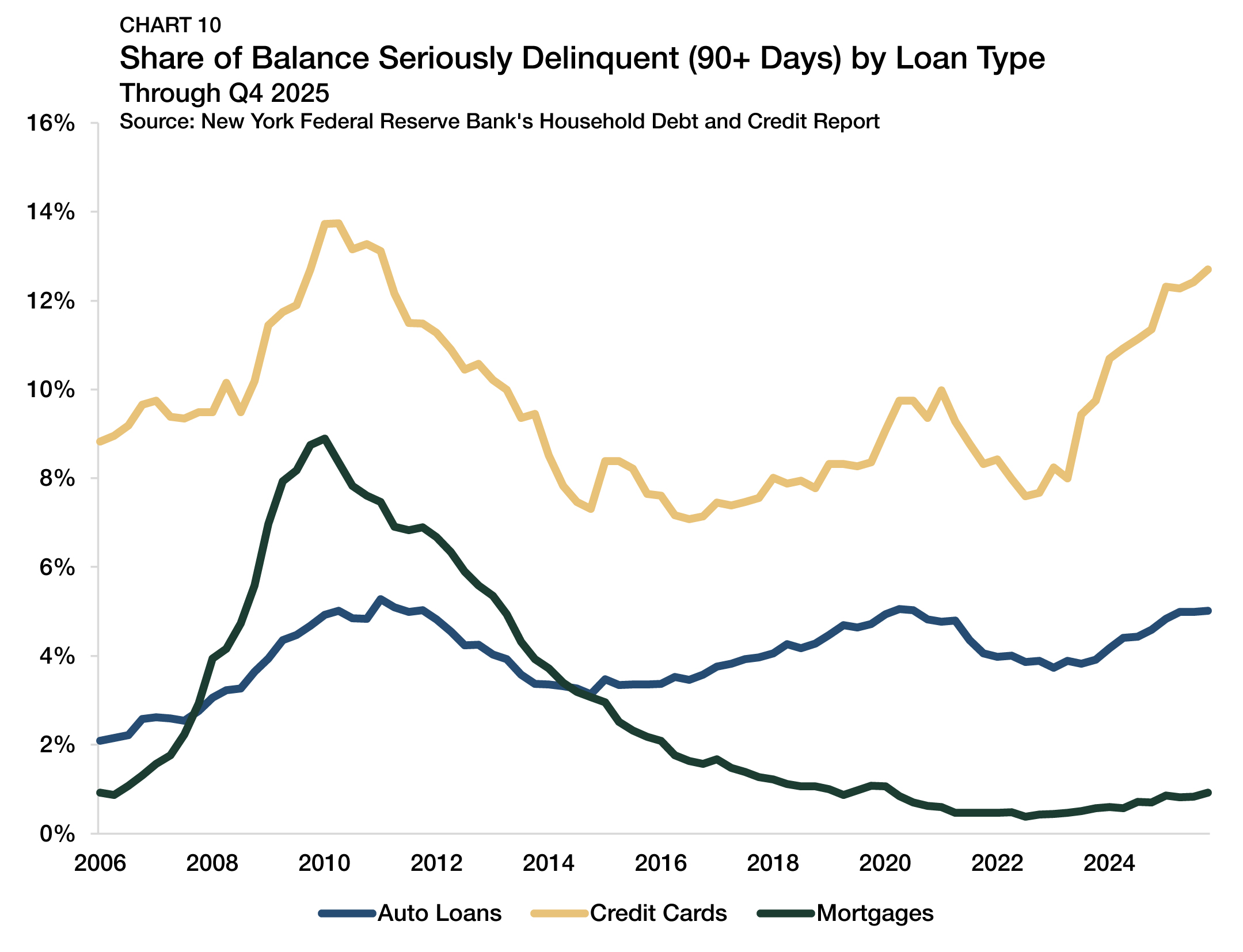
Distress across the U.S. housing market remained contained. According to the Federal Reserve Bank of New York’s Quarterly Report on Household Debt and Credit, the share of mortgage balances more than 90 days delinquent was 0.92% in the fourth quarter of 2025 (Chart 10). While modestly above pandemic-era levels, mortgage delinquencies remained low by historical standards and well below the peaks observed during the Global Financial Crisis. Unlike credit cards and auto loans, where serious delinquencies have risen, mortgage performance remains comparatively stable.
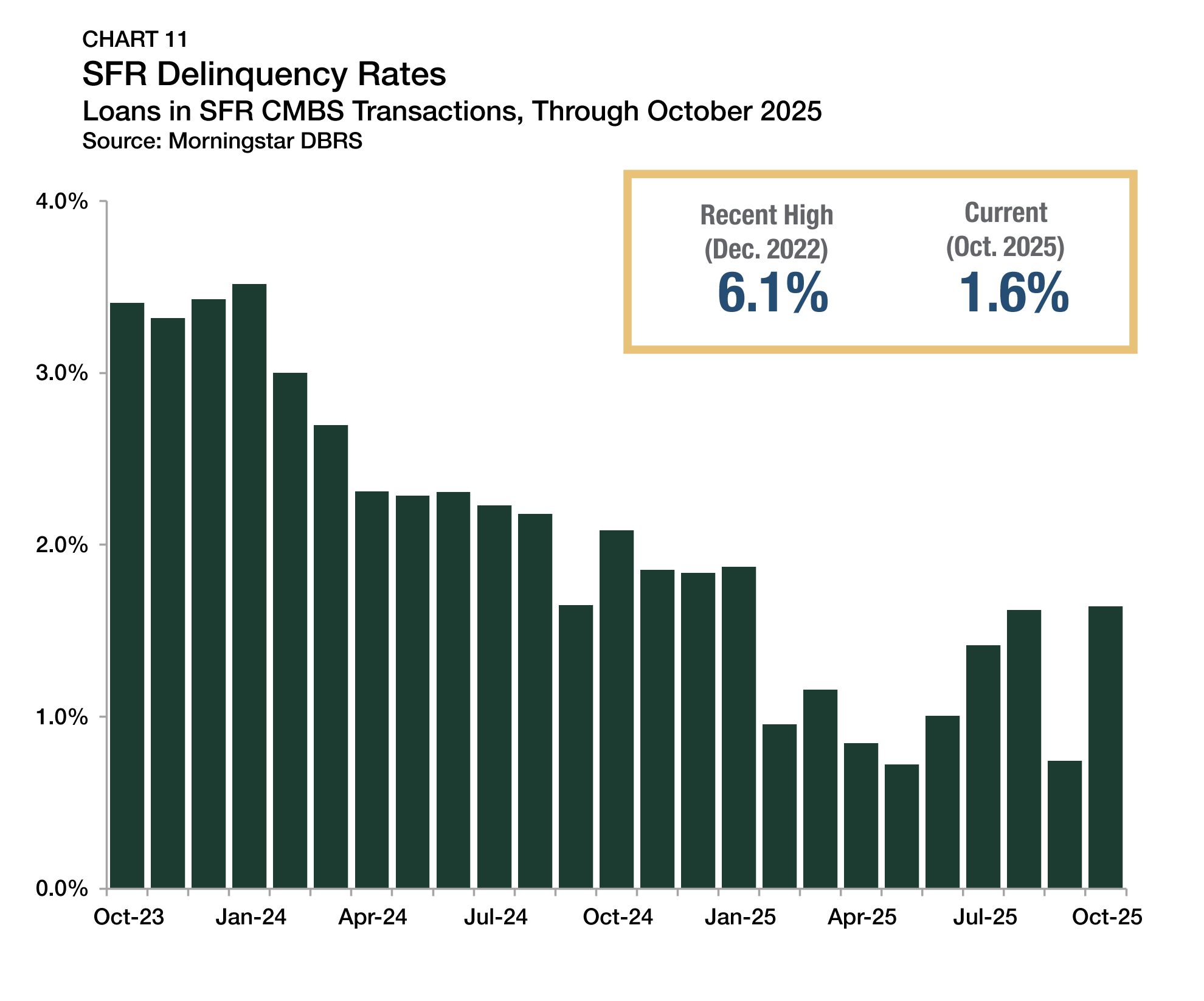
Delinquencies in the SFR sector remained similarly minimal. According to Morningstar DBRS, SFR delinquency rates stood at 1.6% in October 2025 (Chart 11), down from 2.1% one year earlier. Although rates ticked up from a spring low, delinquencies remained dramatically improved from early 2023 levels, reflecting stronger operating performance and more seasoned portfolios.
Supply & Demand Conditions
Build-to-Rent (BTR)
Note: Due to the recent federal government shutdown, Census Bureau data releases have experienced periodic delays. Fourth-quarter 2025 data had not yet been released at the time of publication.
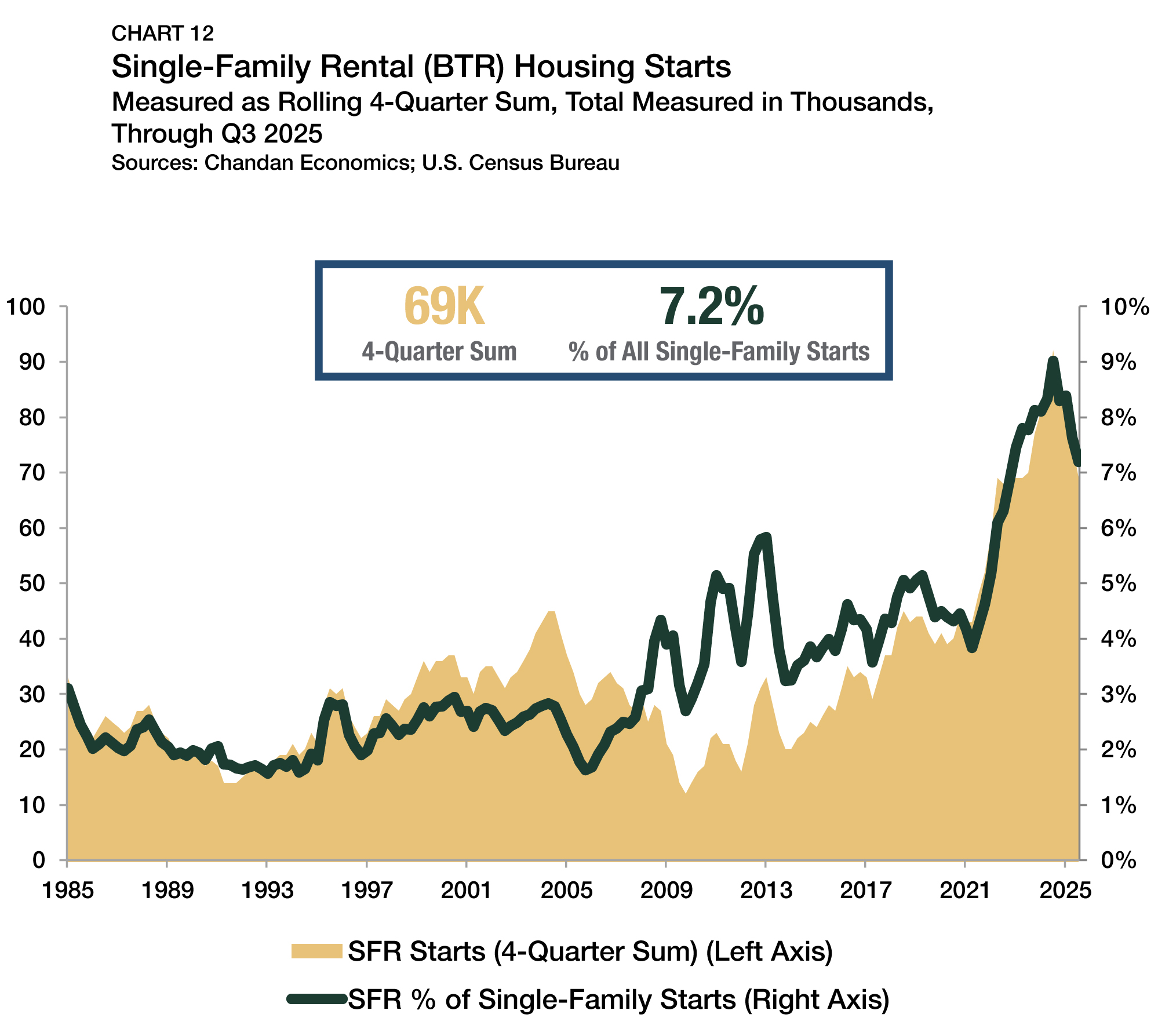
BTR continued to account for a substantial share of new single-family construction last year. As of September 2025, approximately 69,000 BTR units were started over the past 12 months (Chart 12). This marked a pullback from the most recent peak in 2024, though still elevated by historical standards.
Over this same period, BTR accounted for 7.2% of all single-family housing starts. While this share has eased from its 2024 peak — when BTR approached 9% of total single-family construction — it remains well above pre-2020 norms and above its longer-run average.
After several years of rapid expansion, the sector remains well above historical levels of activity, although it has shown signs of cooling alongside a broader housing market stabilization. Additionally, BTR’s footprint in single-family development remains structurally larger than at any point before the pandemic.
Outlook
The SFR sector remains in a position of strength while home price appreciation cools and rent growth normalizes. According to Fannie Mae’s February 2026 forecast, the 30-year fixed mortgage rate is expected to average about 6.0% this year and remain elevated into 2027. While rates in this range would be below recent peaks, it could still constrain affordability and keep more prospective buyers in the rental housing market.
Single-family construction is projected to remain below pre-pandemic norms, reinforcing the for-sale housing shortage supporting rental demand. At the same time, the number of households living in single-family rentals continued to expand in 2025, demonstrating the rising demand for high-quality, amenity-rich rental housing.
The primary underlying drivers of SFR demand — household formation, lifestyle renting, and persistent affordability constraints — continue provide strength and stability to the sector, giving it a solid platform for investment growth in 2026.
For more single-family rental research and insights, visit arbor.com/research
Disclaimer
This report is intended for general guidance and information purposes only. This report is under no circumstances intended to be used or considered as financial or investment advice, a recommendation or an offer to sell, or a solicitation of any offer to buy any securities or other form of financial asset. Please note that this is not an offer document. The report is not to be considered as investment research or an objective or independent explanation of the matters contained herein and is not prepared in accordance with the regulation regarding investment analysis. The material in the report is obtained from various sources per dating of the report. We have taken reasonable care to ensure that, and to the best of our knowledge, material information contained herein is in accordance with the facts and contains no omission likely to affect its understanding. That said, all content is provided herein “as is” and neither Arbor Realty Trust, Inc. or Chandan Economics, LLC (“the Companies”) nor their affiliated or related entities, nor any person involved in the creation, production and distribution of the content make any warranties, express or implied. The Companies do not make any representations or warranties, express or implied, as to the reliability, usefulness, completeness, accuracy, currency nor represent that use of any information provided herein would not infringe on other third-party rights. The Companies shall not be liable for any direct, indirect or consequential damages to the reader or a third party arising from the use of the information contained herein. There may have been changes in matters which affect the content contained herein and/or the Companies subsequent to the date of this report. Neither the issue nor delivery of this report shall under any circumstance create any implication that the information contained herein is correct as of any time subsequent to the date hereof or that the affairs of the Companies have not since changed. The Companies do not intend, and do not assume any obligation to update or correct the information included in this report. The contents of this report are not to be construed as legal, business, investment or tax advice. Each recipient should consult with its legal, business, investment and tax advisors as to legal, business, investment and tax advice. The information contained herein may be subject to changes without prior notice. This report is only intended for the recipients, and should not be copied or otherwise distributed, in whole or in part, to any other person.