

Why Tenant Retention Drives Value for Multifamily Investors
- Investors who focus on tenant retention in 2026 can maximize the lifetime value of quality renters.
- Structural factors, such as demographics, in the U.S. economy support the long-term stability of the multifamily real estate sector.
- High home prices combined with strong multifamily absorptions and completions are influencing rental demand.
With homebuying out of reach for many, more tenants are staying in the rental market longer than in previous cycles. This dynamic offers multifamily investors a strategic opportunity to focus on tenant retention, according to Dr. Sam Chandan, one of the commercial real estate industry’s leading scholars, who recently shared his expert insights on the 2026 Housing Outlook webinar with RentRedi.
Renters are Staying Longer
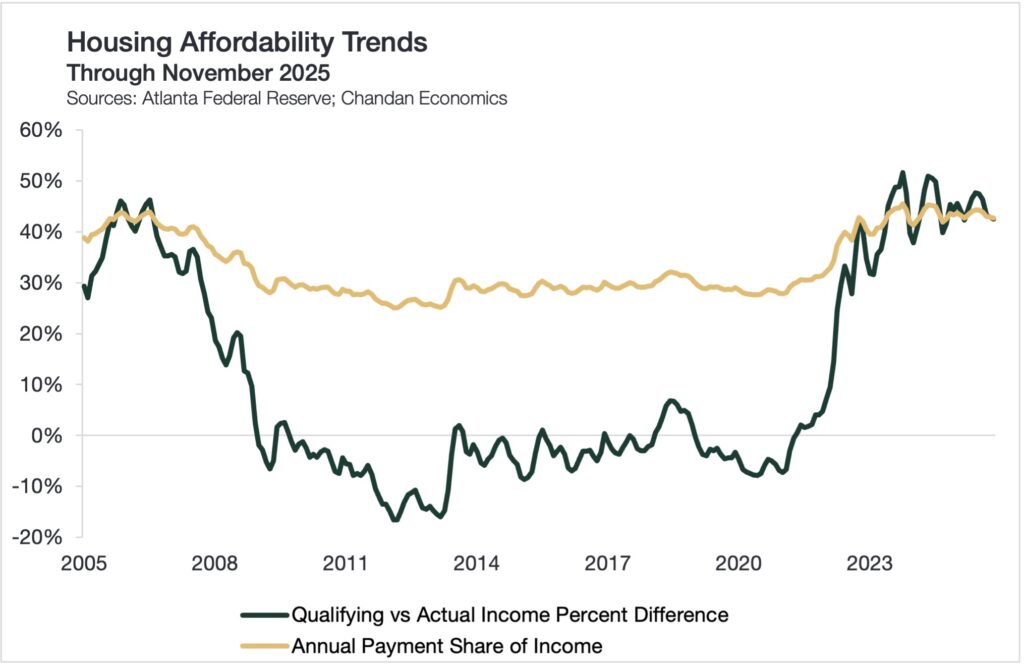
Homeownership costs reached record-high levels in 2025, with a nearly $60,000 income gap between the income needed to qualify for a median-priced home and the actual median household income, Federal Reserve data show. In part due to this affordable housing shortage, many renters are marrying and having children later, delaying homeownership, said Chandan, who is the Founding Director of the Chen Institute for Global Real Estate Finance at the NYU Stern School of Business.
“On balance, for a young individual or couple, home ownership is going to happen a lot later than it has in the past, and that will support rental demand,” he said.
With elevated home prices and interest rates, and limited starter home inventory, a key question about tenant retention for multifamily investors has evolved, said Chandan.
“It’s not only asking, ‘how long will they be a renter,’ but also, ‘how long will they be a renter with me?’” he said.
The answer to that second question can determine whether a property is profitable or is struggling with high renter turnover costs and inconsistent cash flow.
Low Tenant Turnover Boosts NOI
The case for keeping tenants on rent rolls for longer periods is compelling, and landlords who build trust and reliability gain several competitive advantages, including:
- Higher lifetime value per tenant: Investors are maximizing the rental timelines of their tenants.
- Avoiding turnover costs: Turnover costs (marketing, vacancy, maintenance) erode returns.
- Stability: Net operating income (NOI) improves with consistent cash flow, and properties with lower turnover often have higher valuations.
Strategies to Maximize Tenant Retention
Consider the ways that an enhanced resident experience or property renovations could create more long-term, valuable tenant relationships and convince great renters to stay, such as:
- Clear communication and responsive maintenance: Respond promptly to repair requests, and communicate proactively about property improvements, community events, or upcoming changes.
- Add lifestyle amenities: Thoughtfully designed common areas, fitness centers, and outdoor green space create opportunities for residents to connect with neighbors and enjoy the property.
- Offer lease renewal incentives: Perks could include modest rent increases or a one-time unit upgrade.
- New technology for convenience: Online portals for rent payments, maintenance requests, and communication with property management have become standard expectations.
Economic Trends Supporting Rental Demand
Multifamily household estimates and completions reached historically high levels in 2025, as a surge in multifamily inventory that followed the pandemic was absorbed at a healthy pace across many markets, Chandan said. Meanwhile, the homebuying market faces its own supply constraints and high prices.
“Even with a slowdown in the pace of home price appreciation, the medium to long-term outlook in the U.S. supports renting due to structural factors,” he said. With structural shifts keeping more renters in place, tenant retention will be critical to the success of multifamily investment strategies in 2026.
For more insights from Chandan, watch a replay of the webinar.
Interested in the multifamily real estate investment market? Contact Arbor today to learn about our array of multifamily and single-family rental financing options and view our other market research and multifamily posts in our research section.