Small Multifamily Investment Trends Report Q4 2024

Small Multifamily Investment Trends Report Q4 2024

Pricing, Cap Rates, and Credit Conditions Show Improvement

Key Findings

  • Small multifamily valuations stabilized in the third quarter of 2024.
  • Cap rates moved off post-pandemic high point and declined slightly from the previous quarter’s mark.
  • Credit conditions loosened as the Federal Reserve initiated its first interest rate cut in four years.

State of the Market

The normalization of the small multifamily market continued to advance in the third quarter as the Federal Reserve began its long-awaited cycle of interest rate reductions. With pricing measures, cap rates, and credit conditions all improving, investment activity is poised to rise. A favorable combination of easing interest rate pressure, robust rental demand, and stable, government-sponsored lending support continues to strengthen the fundamental health of the small multifamily subsector.

Throughout the multifamily real estate industry, optimism is building. The National Multifamily Housing Council’s (NMHC) Quarterly Survey of Apartment Conditions recently indicated that multifamily practitioners observed higher sales volumes and improved debt and equity financing conditions in the third quarter. According to the CRE Finance Council’s third quarter Sentiment Index Survey, 81% of commercial real estate/multifamily professionals expect transaction volume to improve over the next year.

Across its performance fundamentals, small multifamily has demonstrated signs of stability. Deleveraging trends have started reversing, and ascendant cap rates have lost steam. While elevated supply conditions may continue to depress sector-wide rent growth, the structural need for affordable housing should counterbalance any influx of new units. Looking ahead, markets have forecasted that the Federal Reserve will continue to cut interest rates through next year, adding more momentum to a subsector already on the rise.

Lending Volume

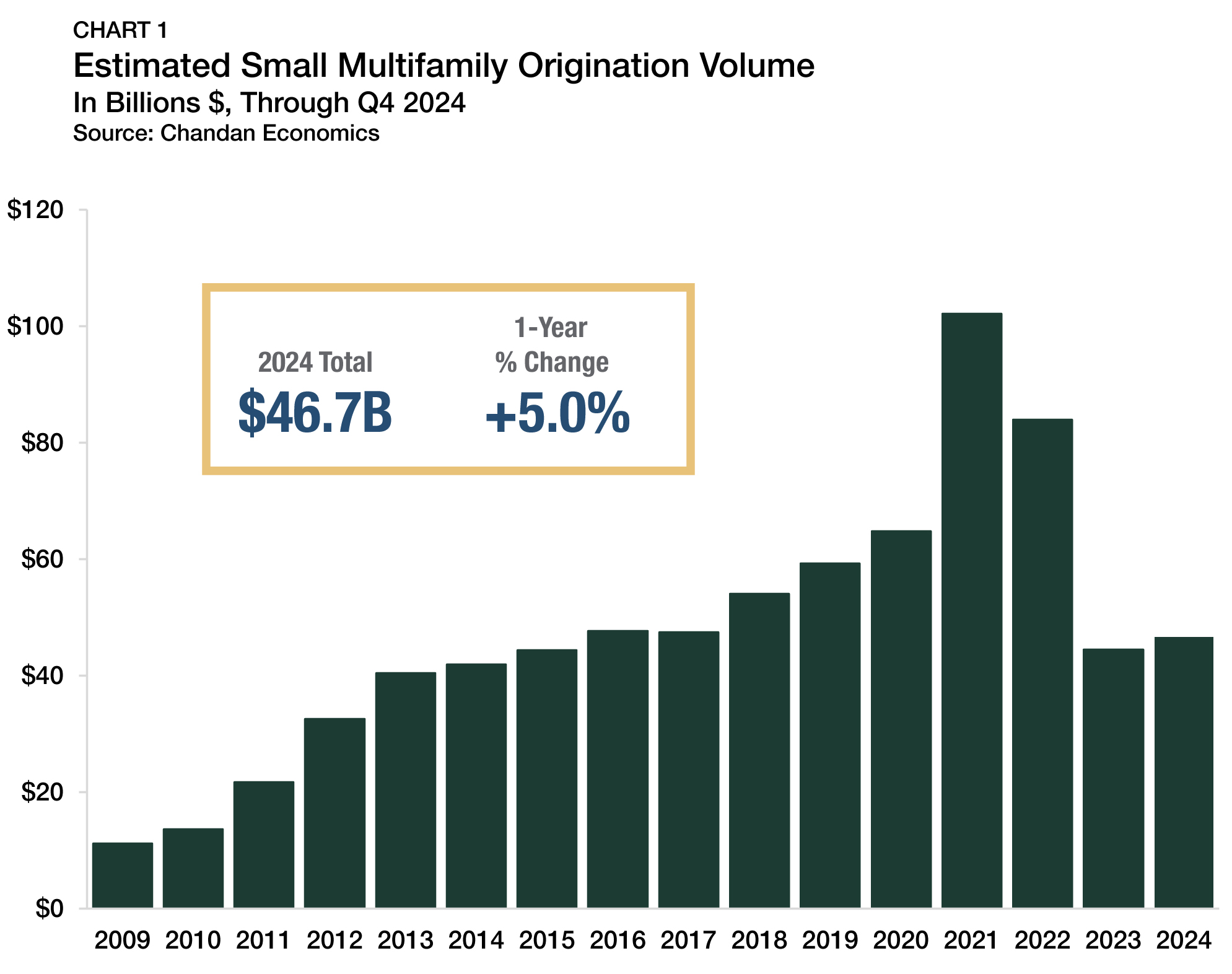
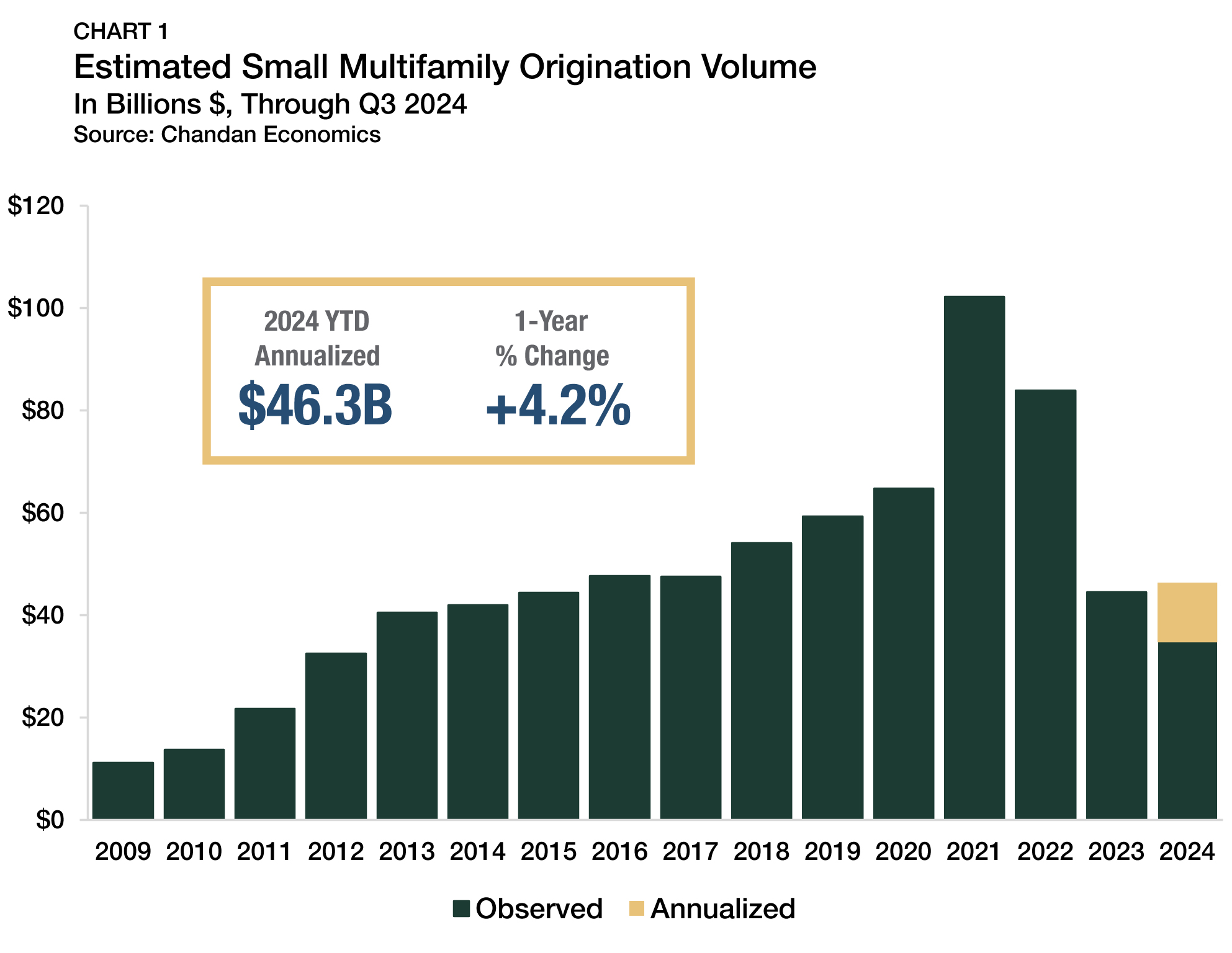
The $44.4 billion year-end 2023 estimate of new multifamily lending volume on loans with original balances between $1 million and $9 million1 (including loans for apartment building sales and refinancing) was down significantly from $90.1 billion in 2022 (Chart 1). Through the end of the third quarter of 2024, originations have stabilized in line with last year’s cadence. Through the third quarter, small multifamily originations are on an annualized pace to reach $46.3 billion in 2024, a modest increase of 4.2% over last year’s volume.

The interest rate environment is the primary factor that has held down origination volumes in 2023 and 2024. Higher financing costs have meant that prospective buyers have required steeper asset price discounts to execute transactions. At the same time, asset owners that have held properties since before 2022 have generally enjoyed low debt servicing costs over the past two years. As a result, buyers and sellers have engaged in a strategy of patience. With the Federal Reserve likely to continue cutting interest rates this year and next, financing costs are becoming more favorable, and originations activity should begin increasing.

All data, unless otherwise stated, are based on Chandan Economics’ analysis of a limited pool of loans with original balances of $1 million to $9.0 million and loan-to-value ratios above 50%.

Loans by Purpose

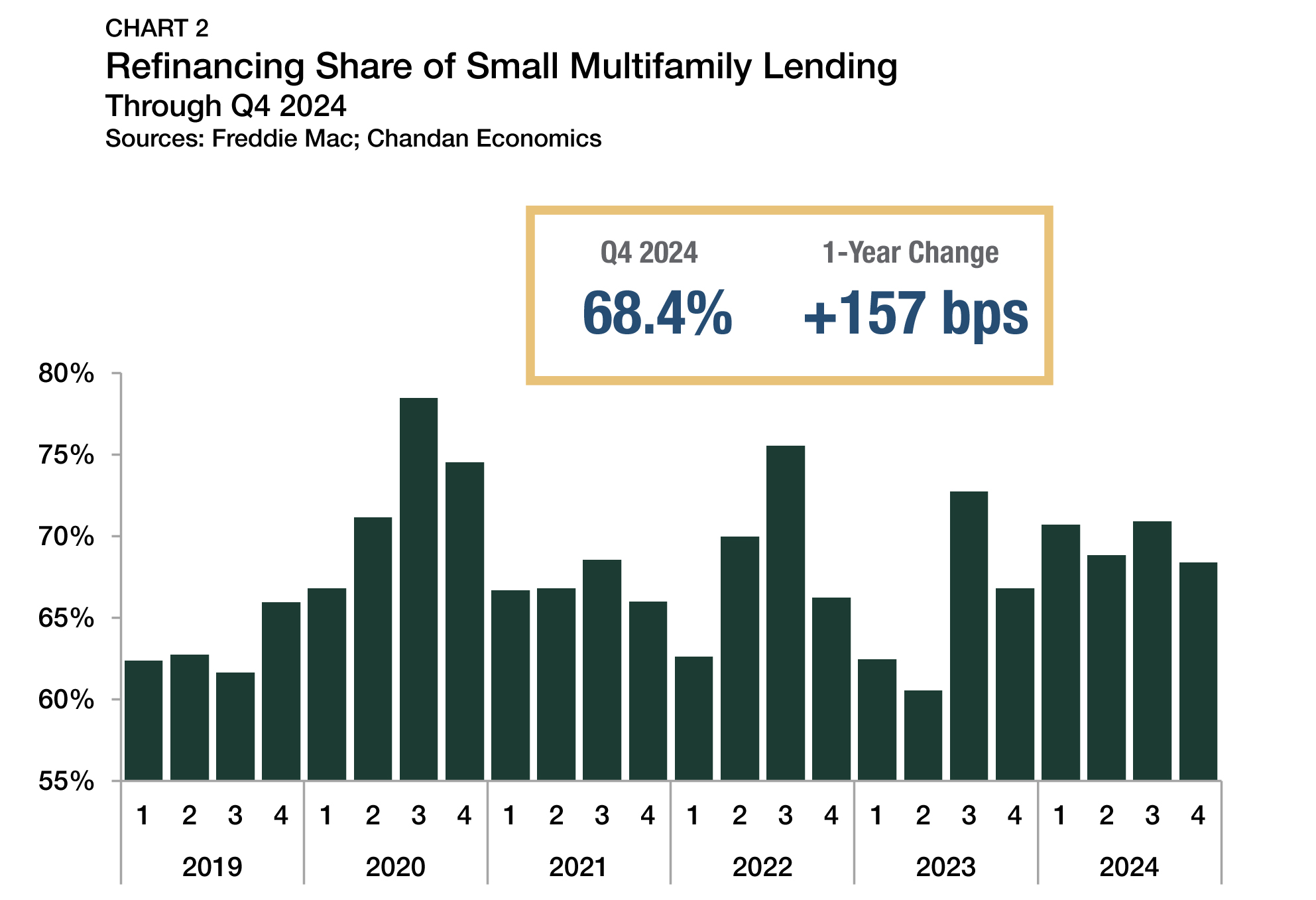
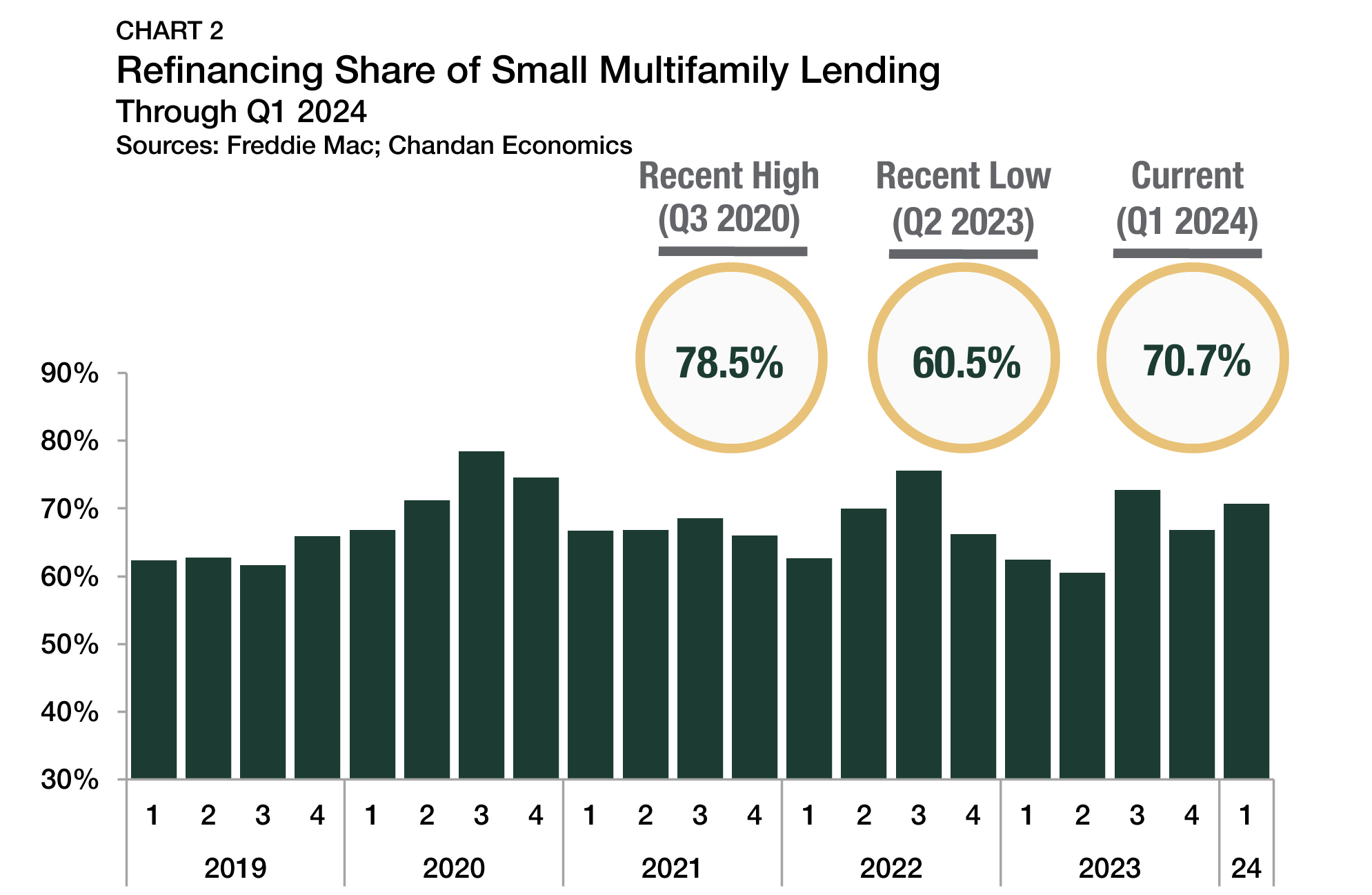
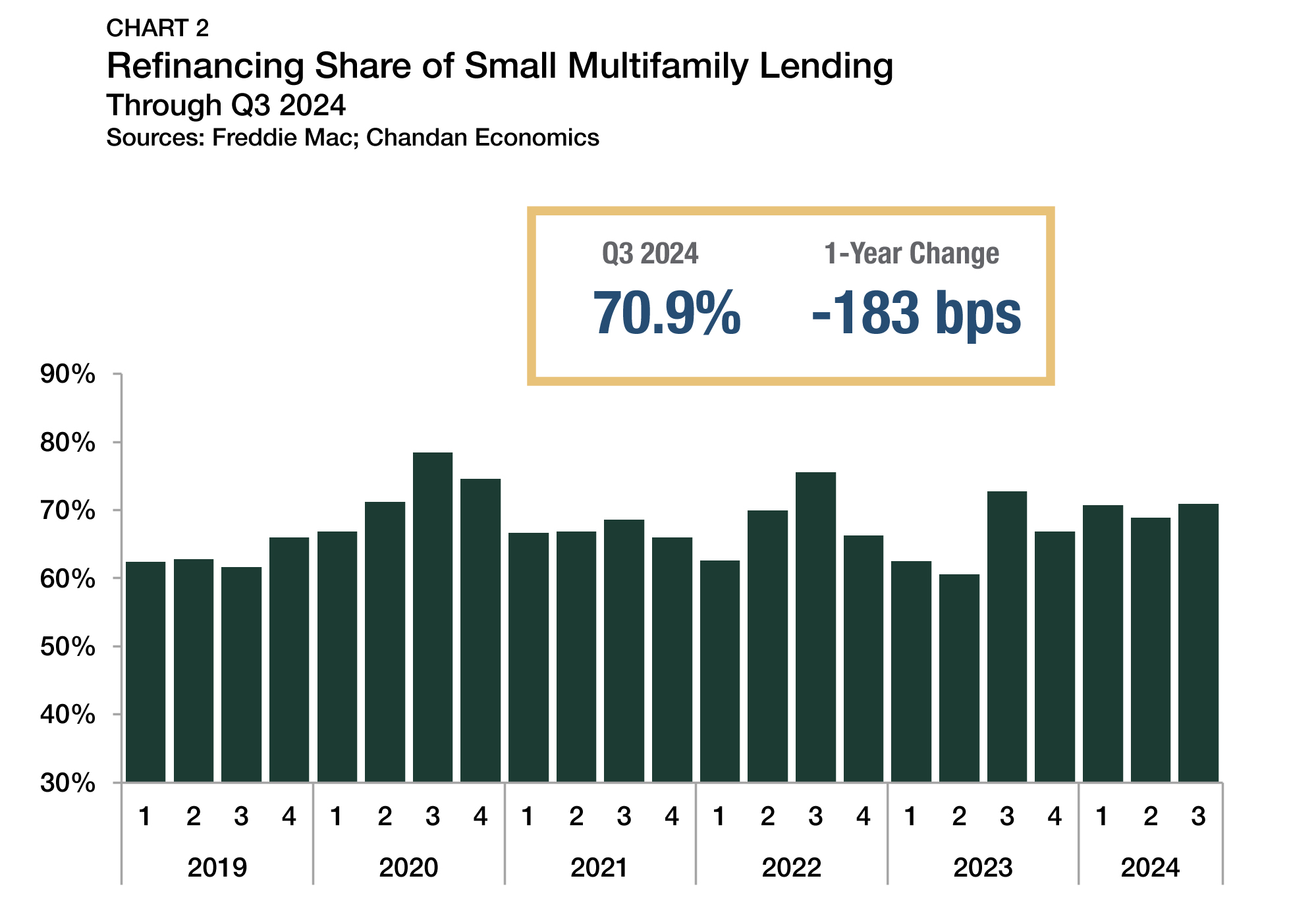
High interest rates reduce the incentive for investors to pursue cash-out refinancings. After hitting a recent high of 75.6% in the third quarter of 2022, the refinancing share of originations fell precipitously to a low of 60.5% in the second quarter of 2023 (Chart 2). However, the refinancing share of originations, which was 70.9% in the third quarter of 2024, has recovered and moderated over the past five quarters, ranging between 66.8% and 72.7%.

Arbor Small Multifamily Price Index

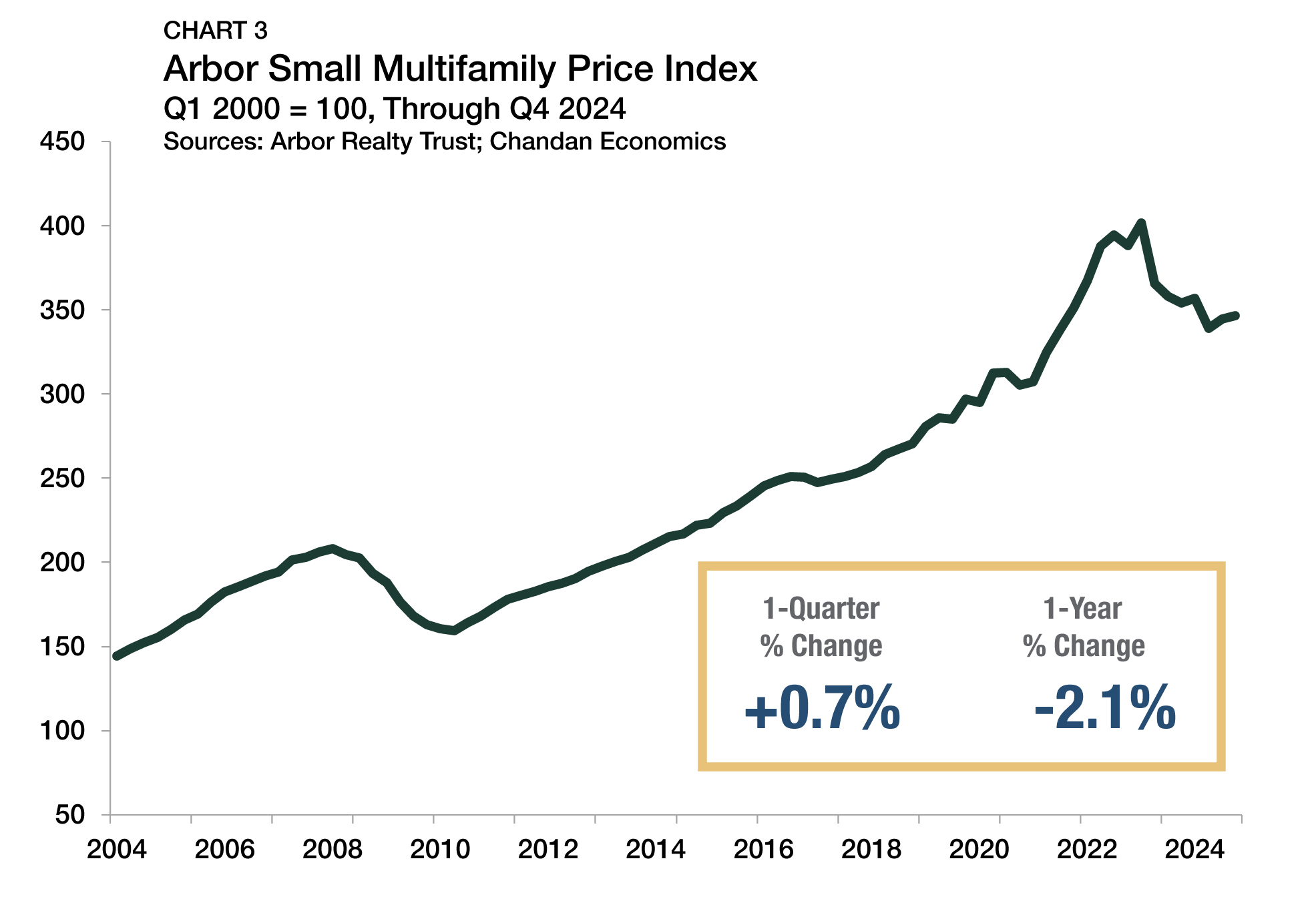
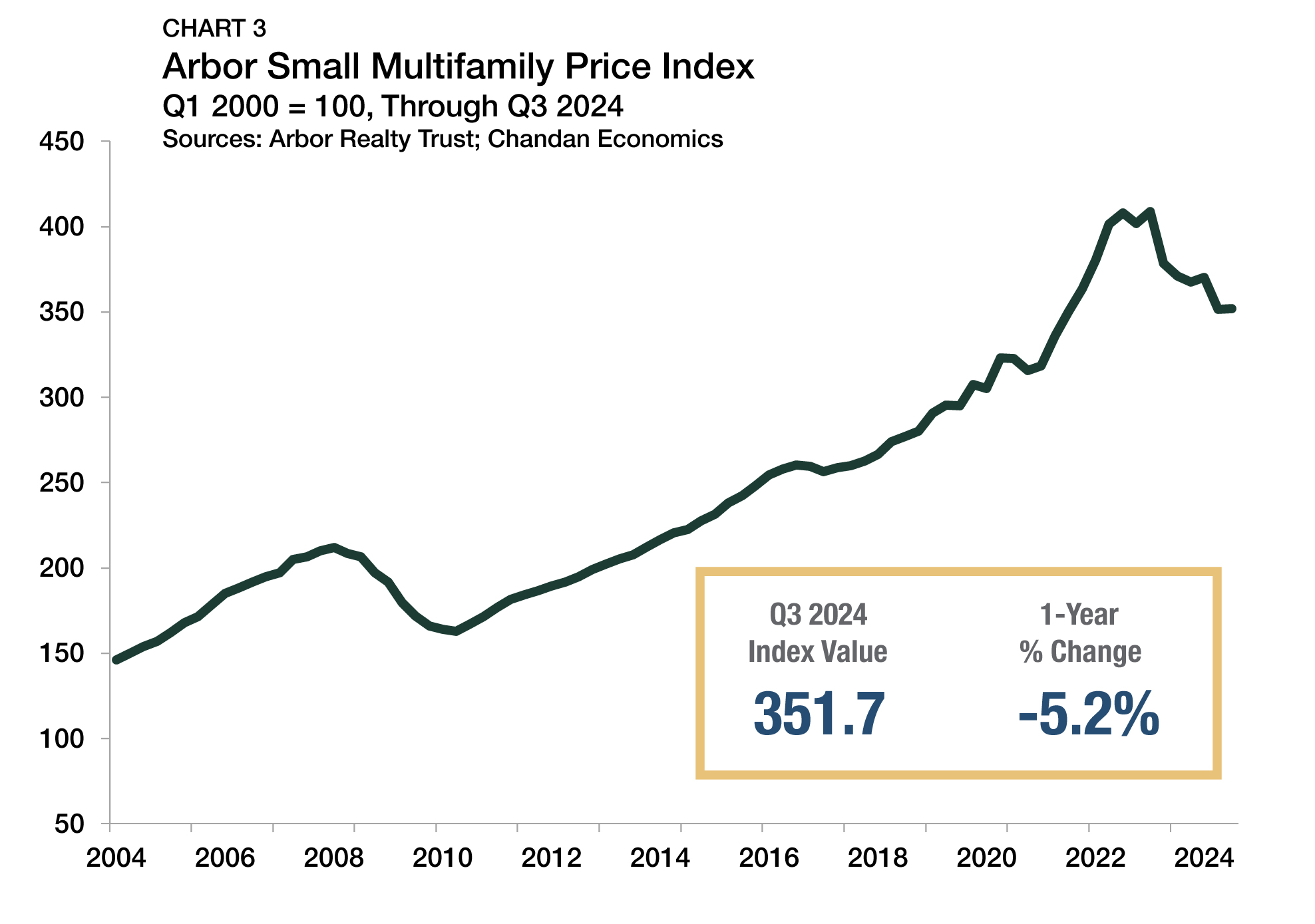
According to the Arbor Small Multifamily Price Index, asset valuations are down 5.2% from a year earlier through the third quarter of 2024 (Chart 3), although valuations improved by a marginal 0.1% compared to the previous quarter. Property-level revenues saw healthy levels of growth in the third quarter, coinciding with resilient rent growth, declining cap rates, and improving occupancy rates — all of which supported valuations. However, average operating expenses also moved higher, muting some gains.

Cap Rates & Spreads

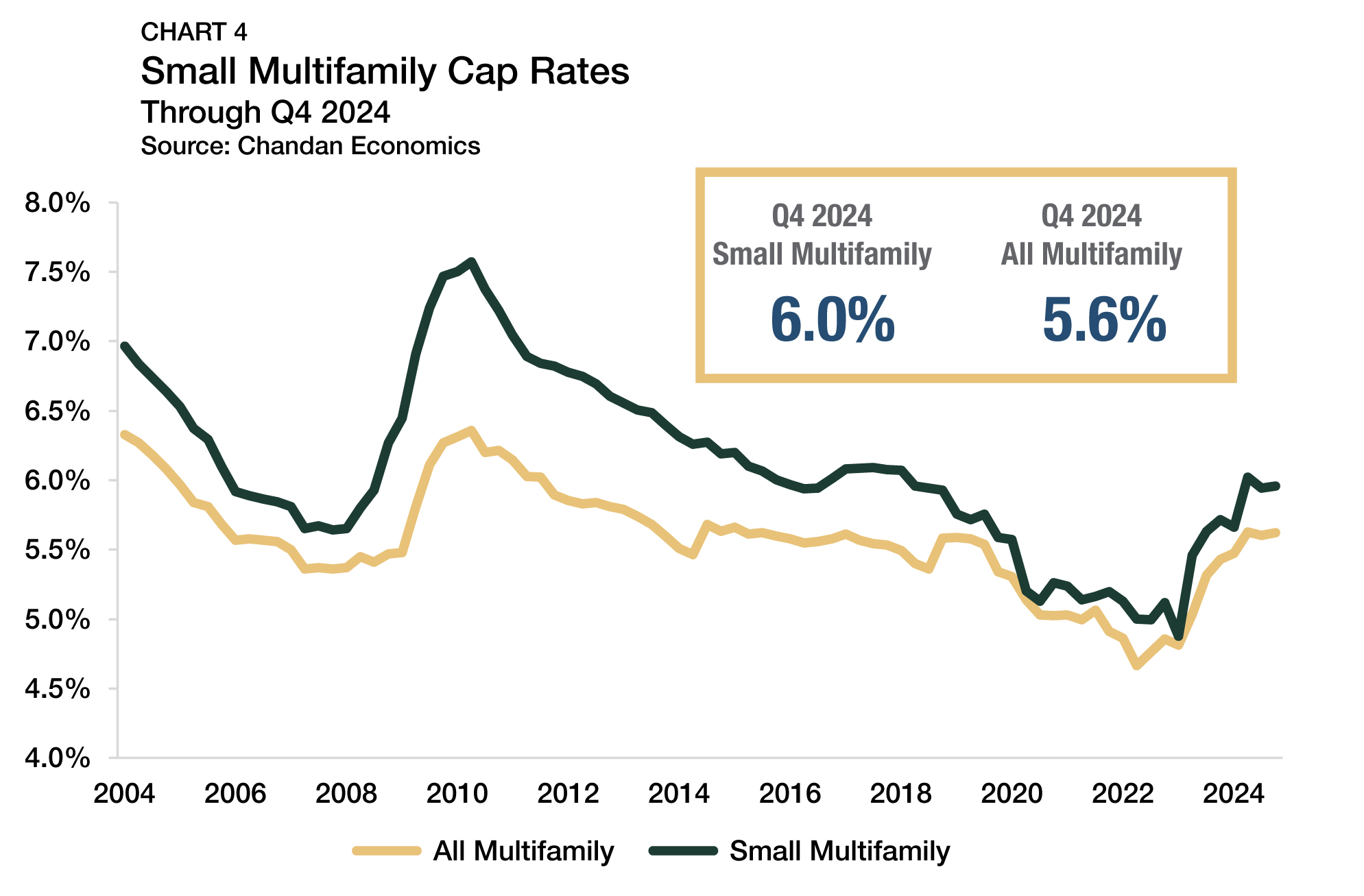
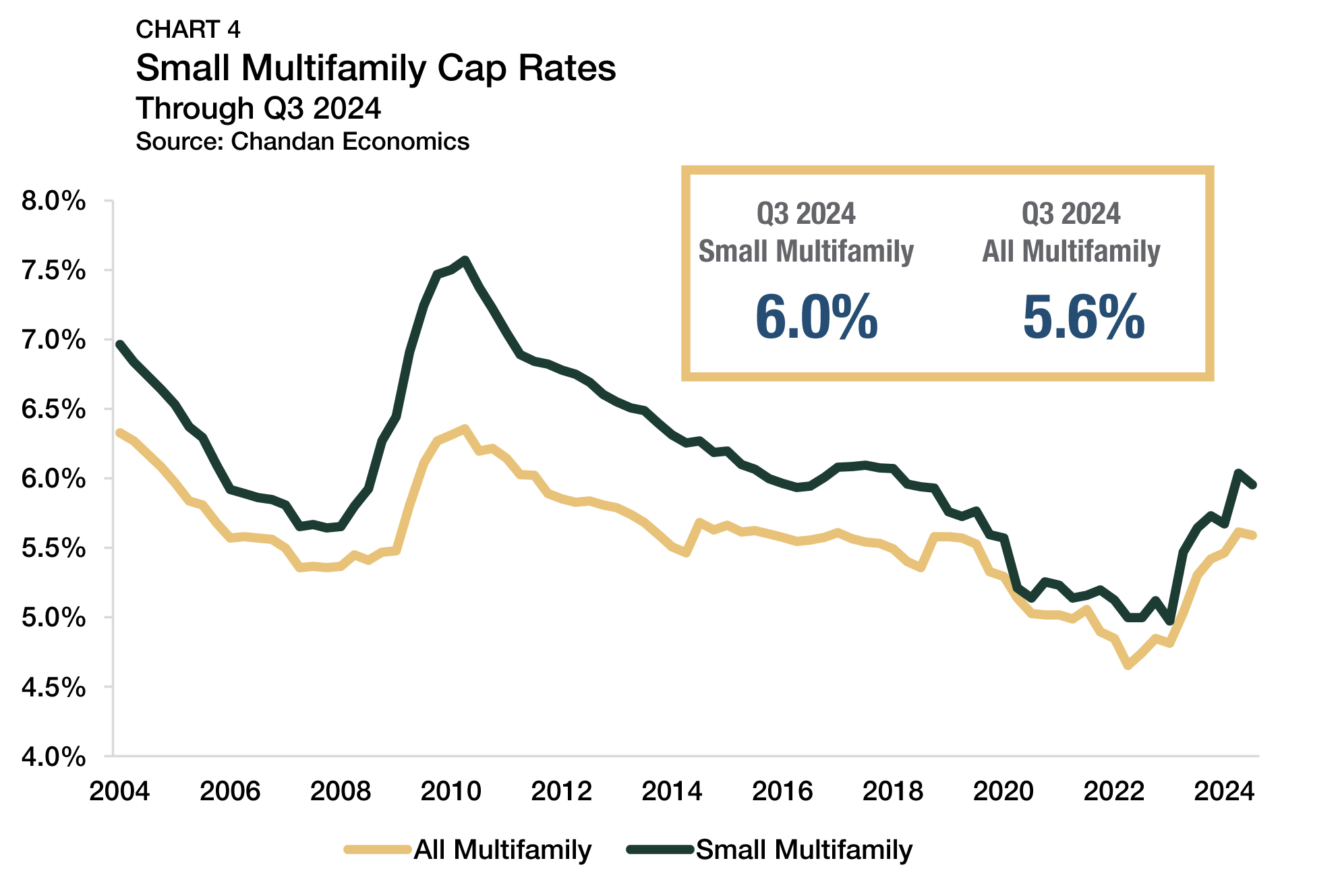
In the third quarter of 2024, small multifamily cap rates averaged 6.0%, declining slightly from the previous quarter (Chart 4). The decline moved the average cap rate for the subsector below its six-year high. Despite a small decrease last quarter, small multifamily cap rates have risen by 31 bps from one year ago and 98 bps compared to the cyclical low point set in early 2023. While elevated cap rates have negatively impacted asset valuations in recent quarters, they have also improved the return profile of small multifamily properties for prospective investors.

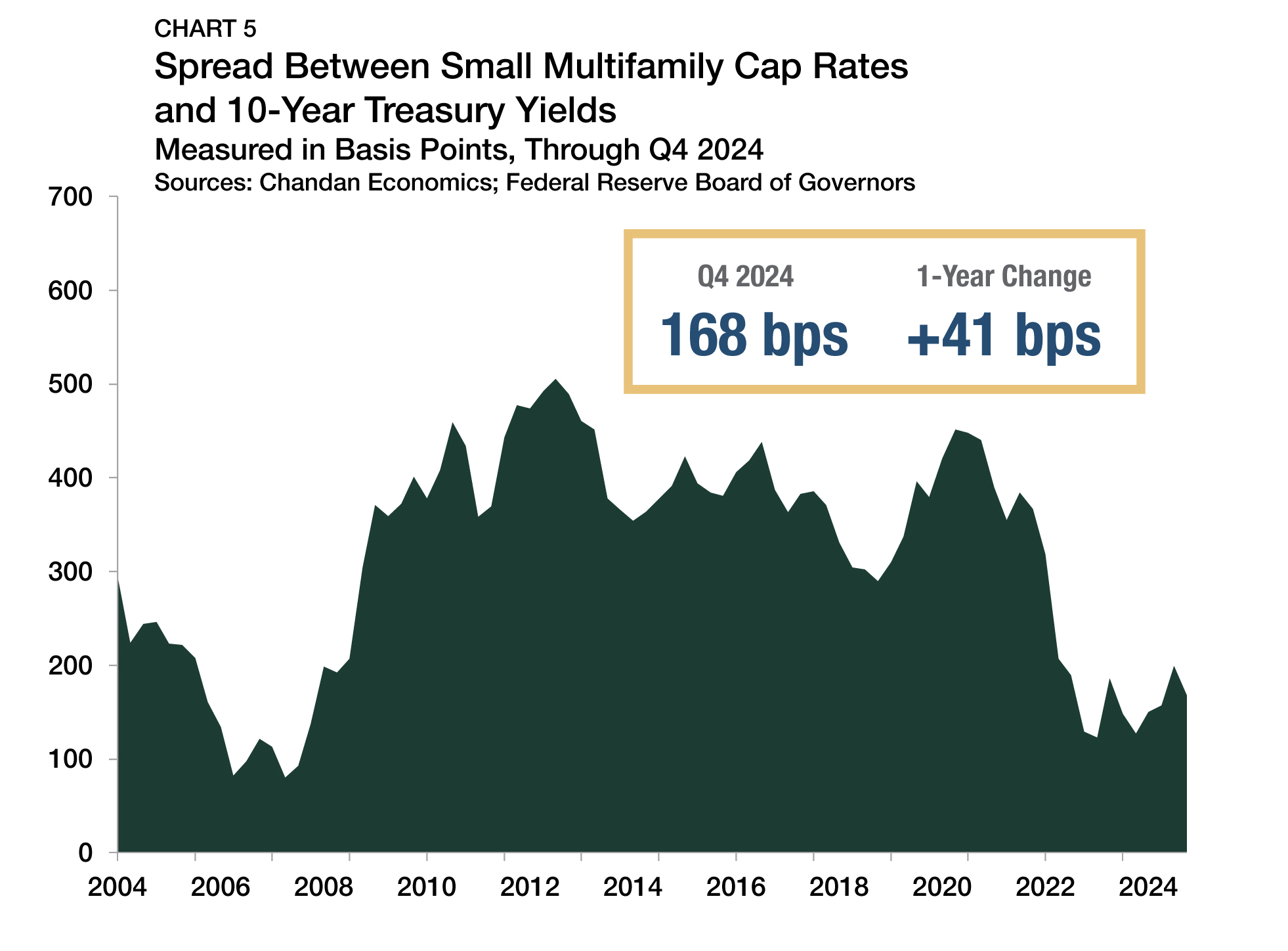
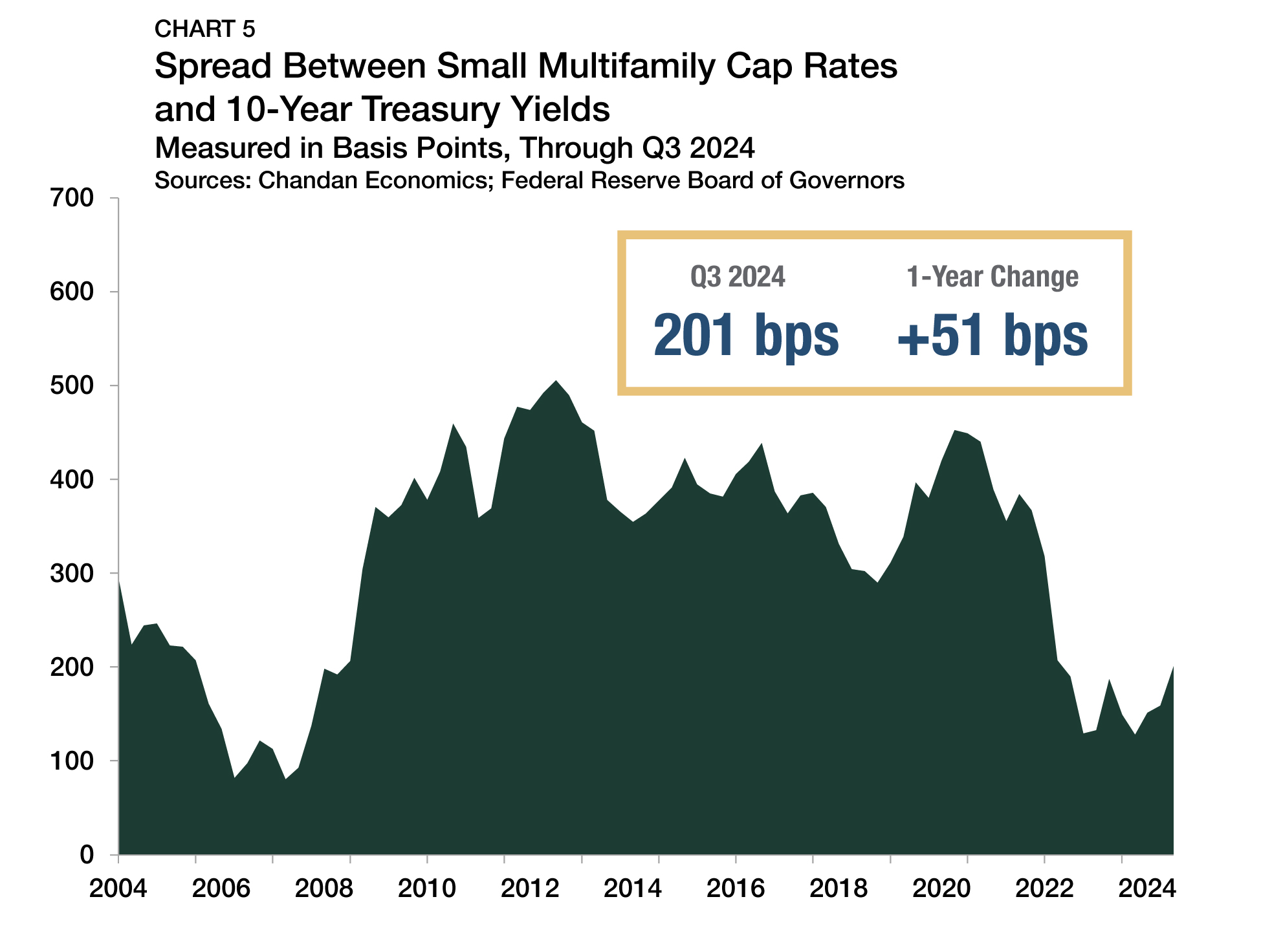
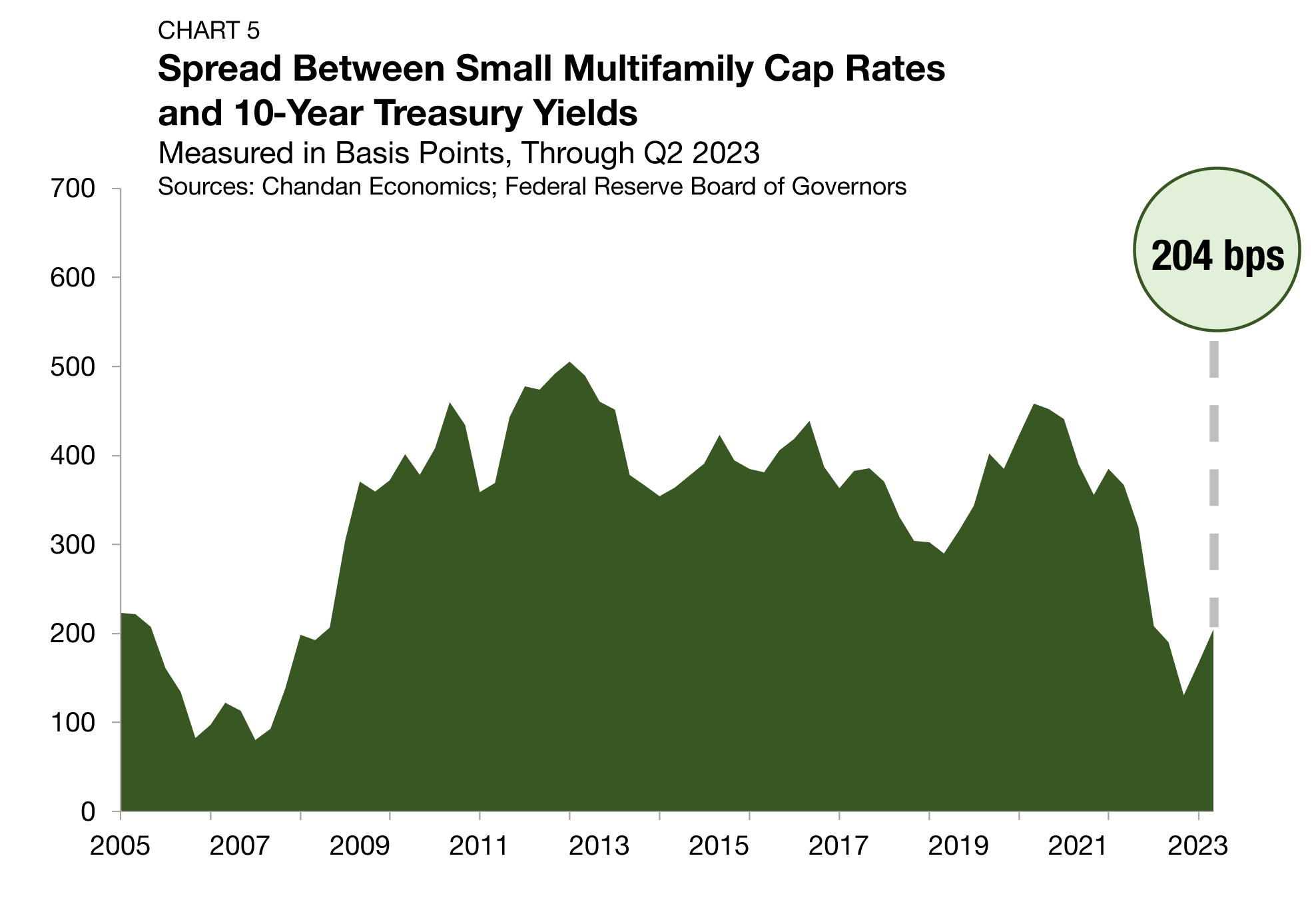
The small multifamily risk premium, best measured by comparing cap rates to the yield on the 10-year Treasury, approximates the additional compensation that investors require to account for higher levels of risk. This risk premium widened by 42 bps in the third quarter of 2024 to reach 201 bps (Chart 5). The increase occurred as 10-year Treasury yields averaged 4.0% between July and September 2024 — down from 4.5% in the second quarter of the year.

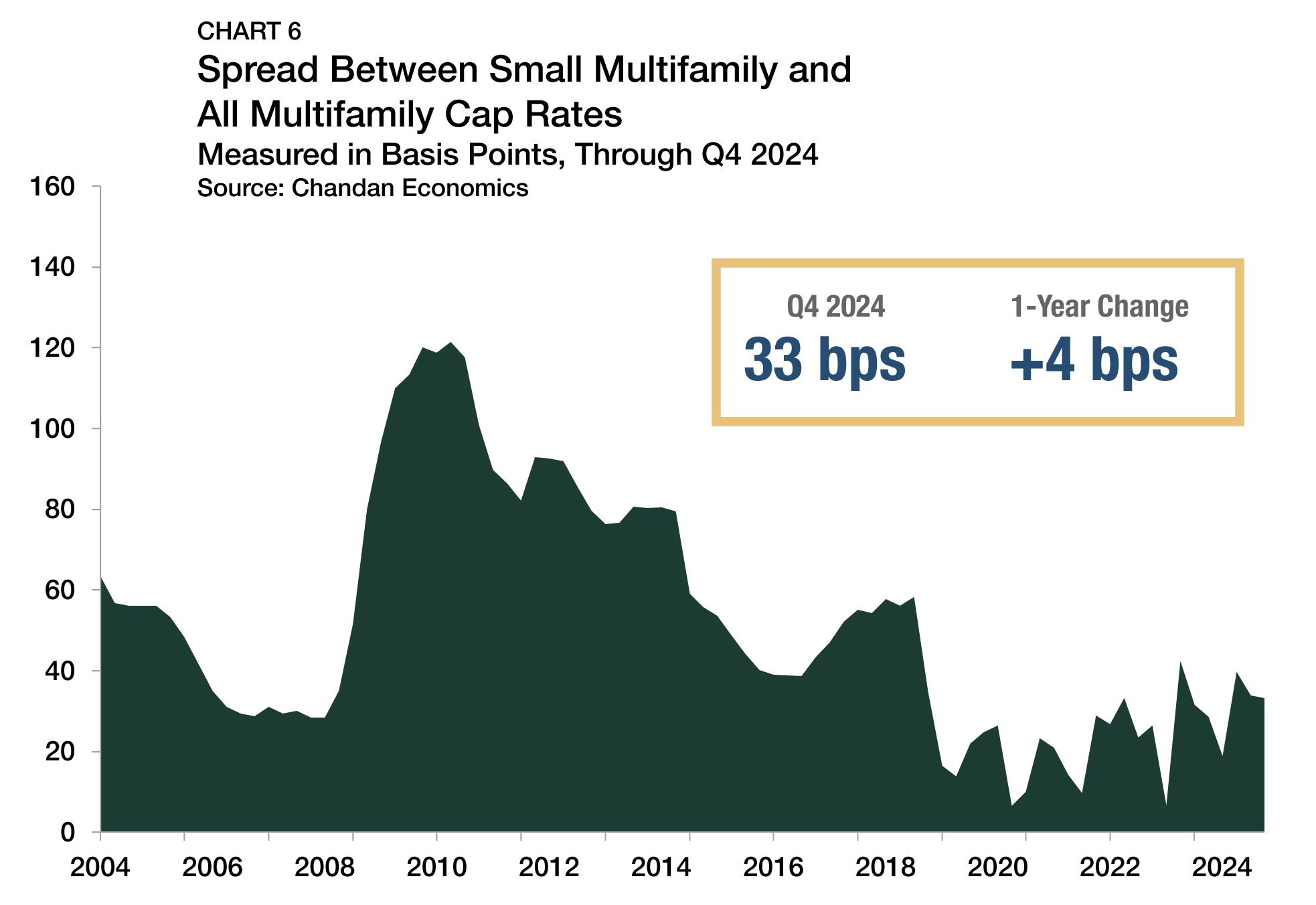
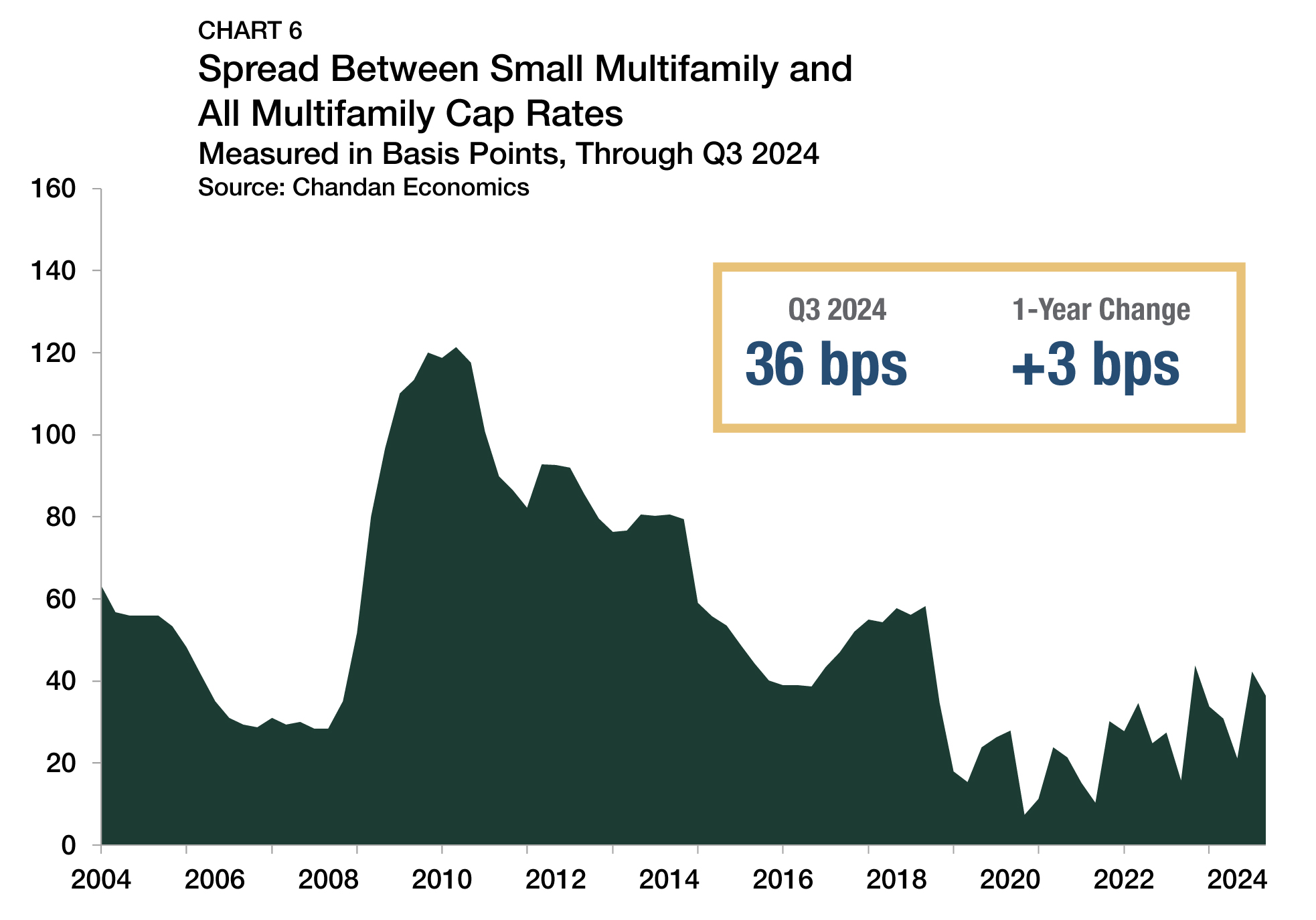
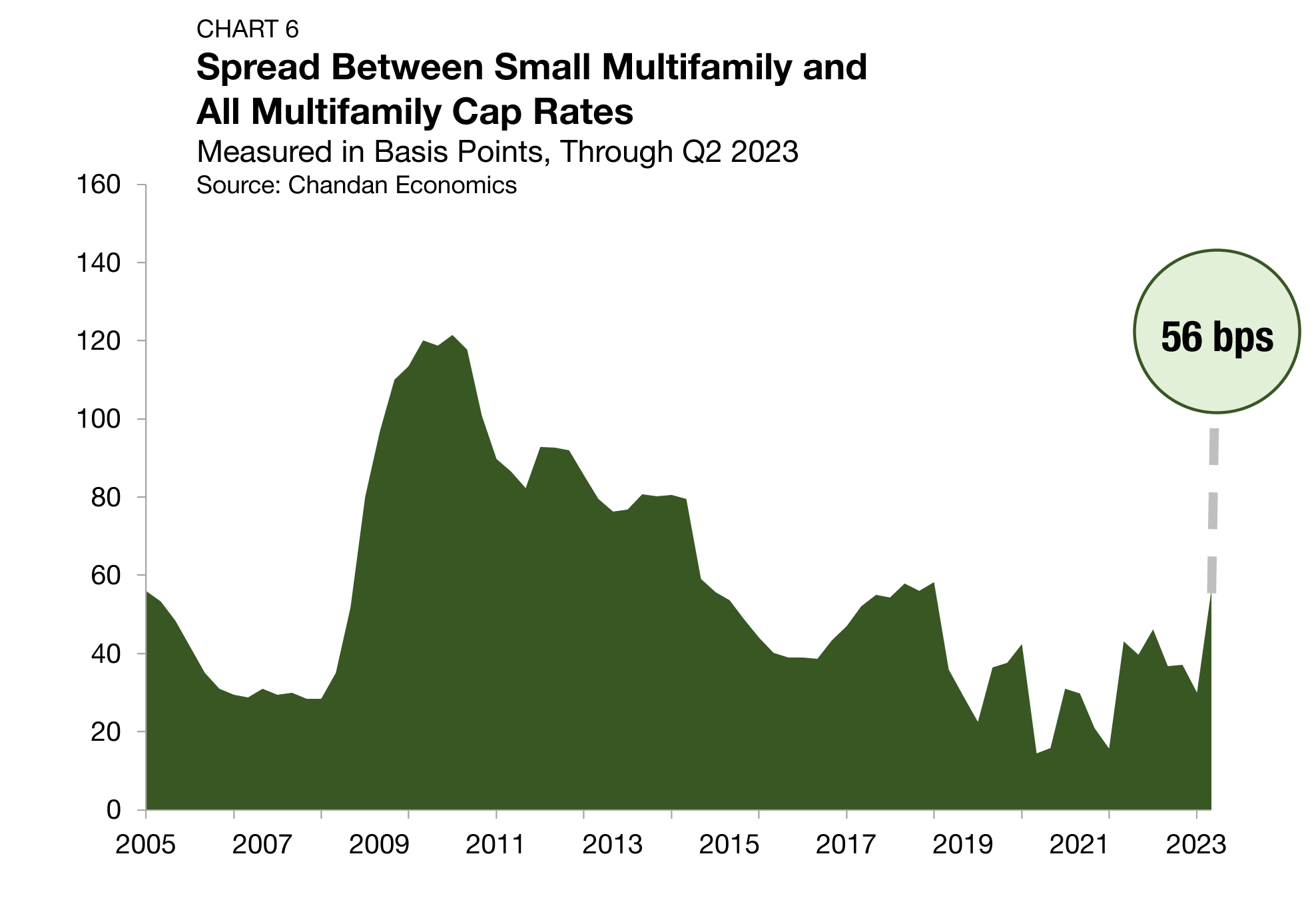
The increase in the spread represents a reversion towards pre-pandemic trends. Between 2015 and 2019, the small multifamily risk premiumaveraged 370 bps — nearly double the current spread. Simultaneously, the cap rate spread between small multifamily assets and the rest of the multifamily sector, a measure of the risk unique to smaller properties, decreased by a marginal 6 bps during the third quarter to reach 36 bps (Chart 6).

Expense Ratios

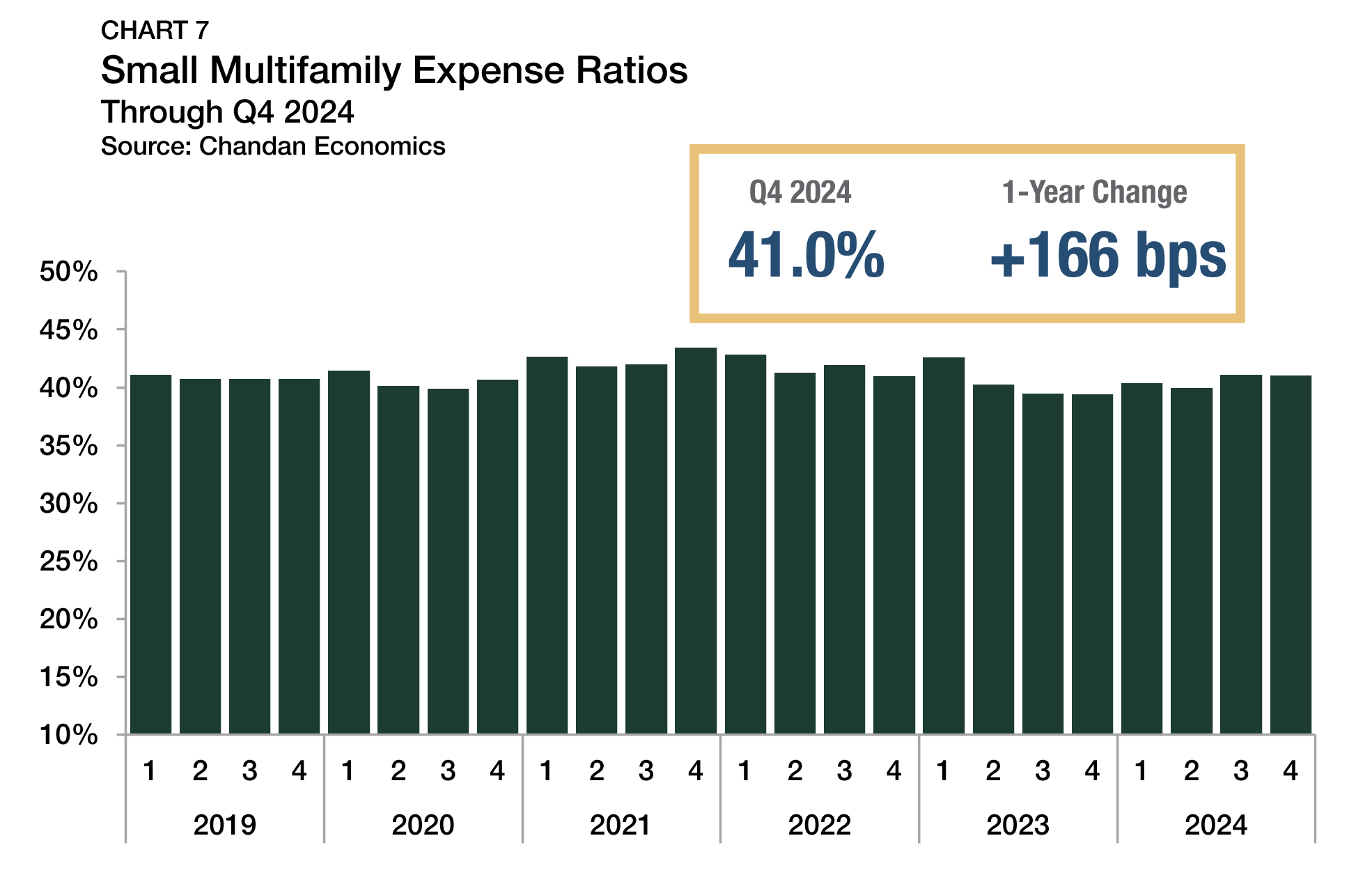
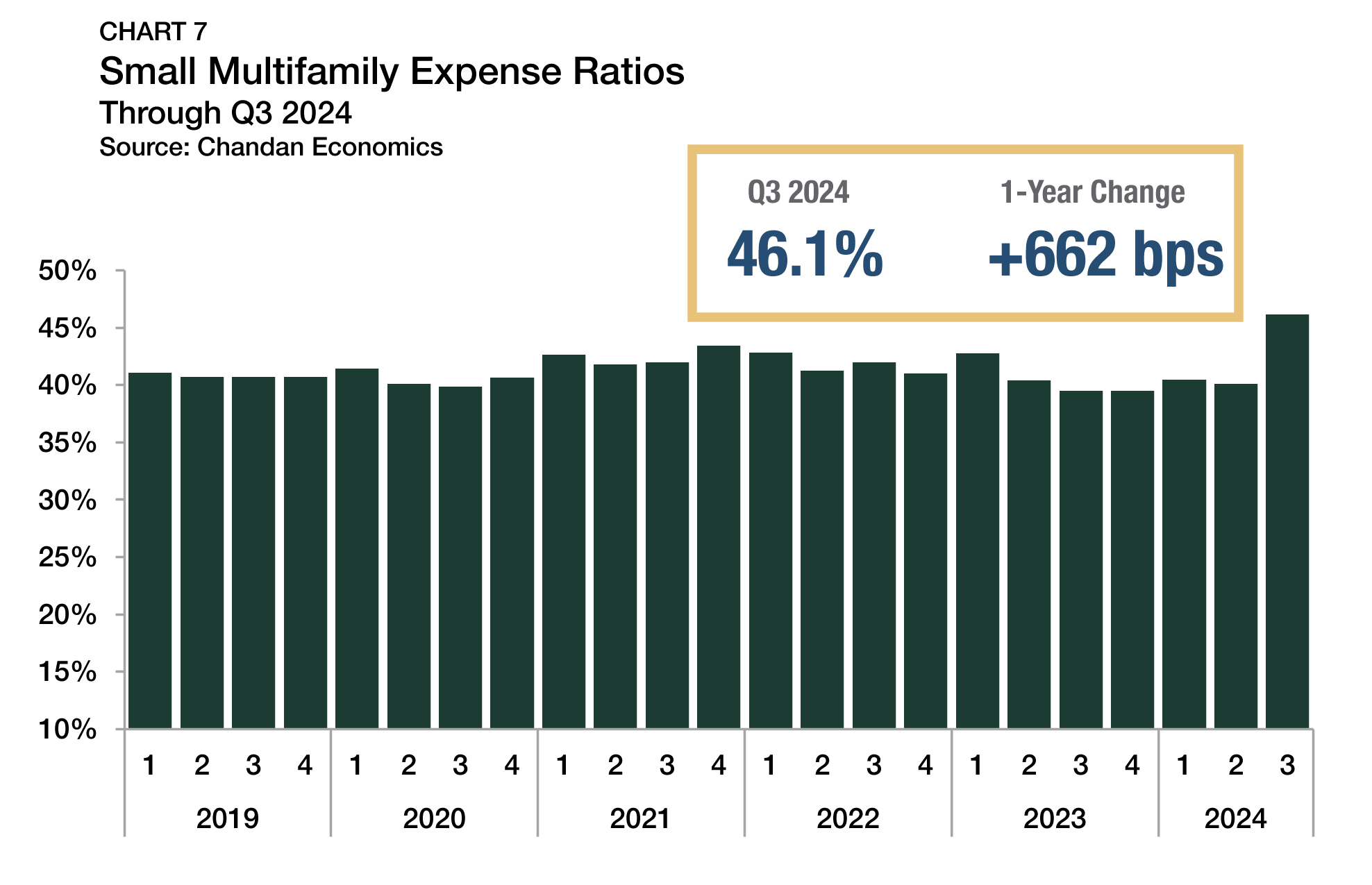
Expense ratios, measured as the relationship between underwritten property-level expenses and gross income, jumped considerably in the third quarter of 2024, rising to 46.1% — the highest level in at least five years (Chart 7). The continued surge in multifamily insurance prices, especially in parts of the country impacted by repeated climate events, has been a growing culprit behind the dramatic uptick in expense ratios.

Occupancy Rates

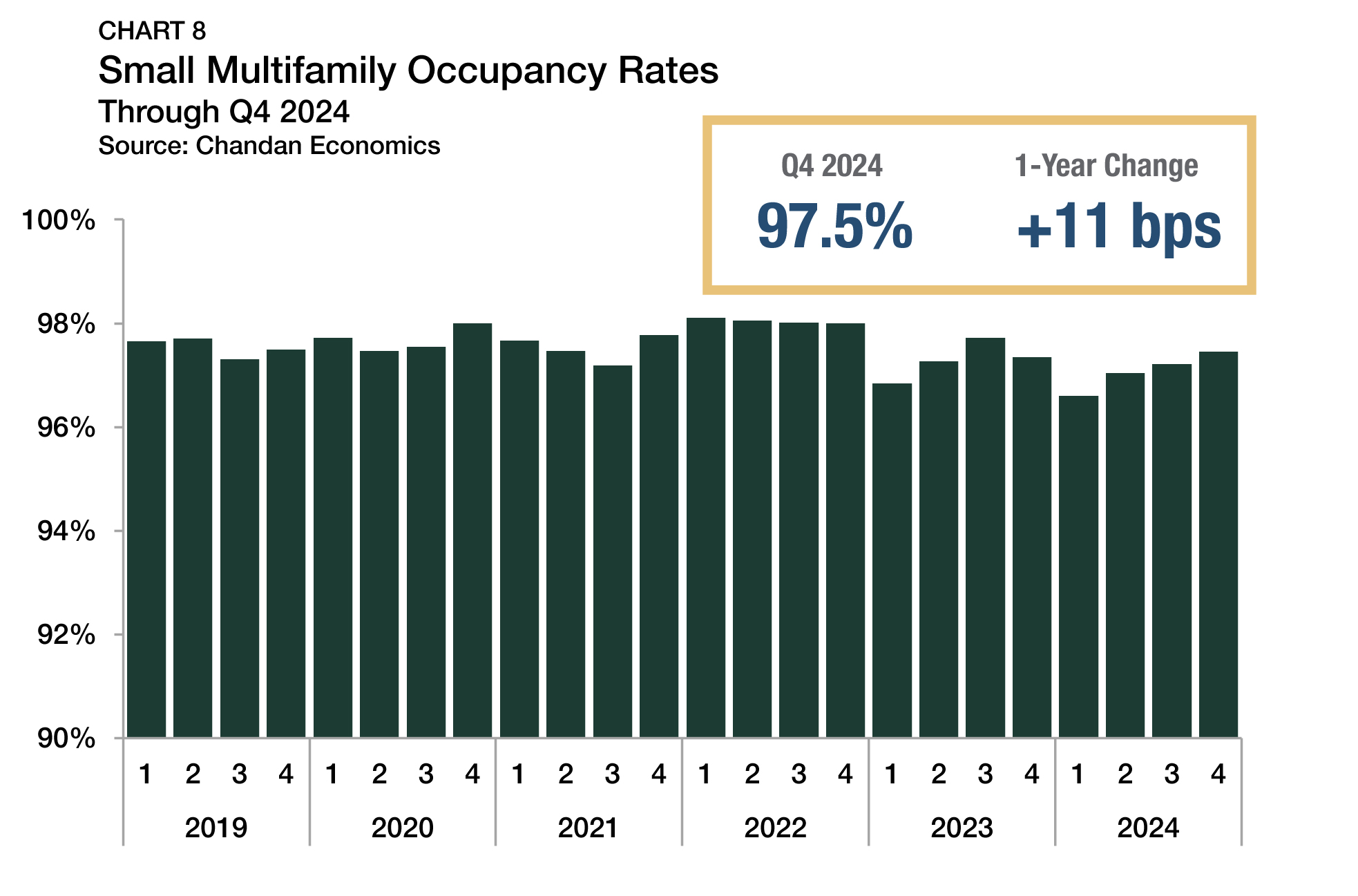
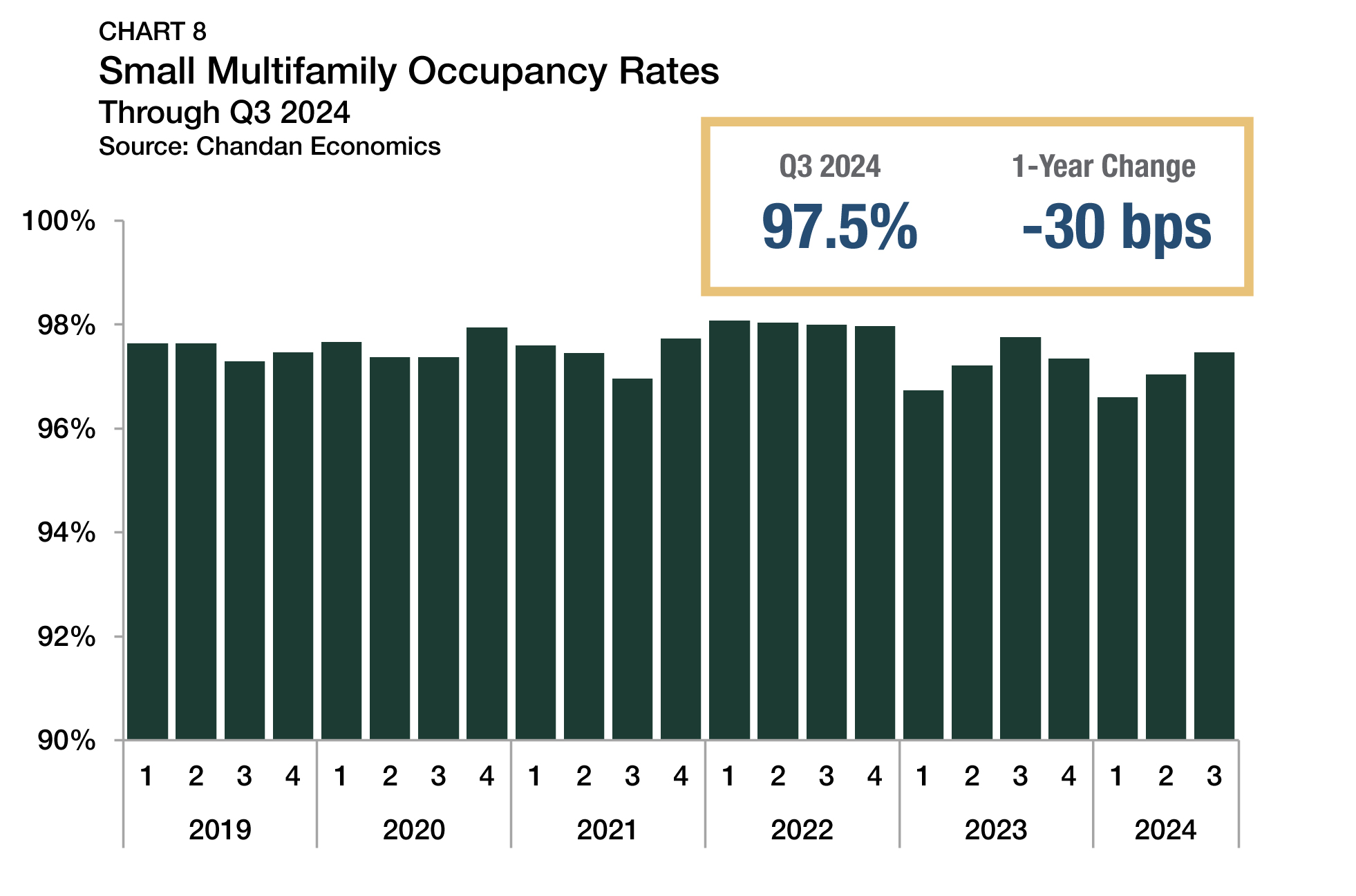
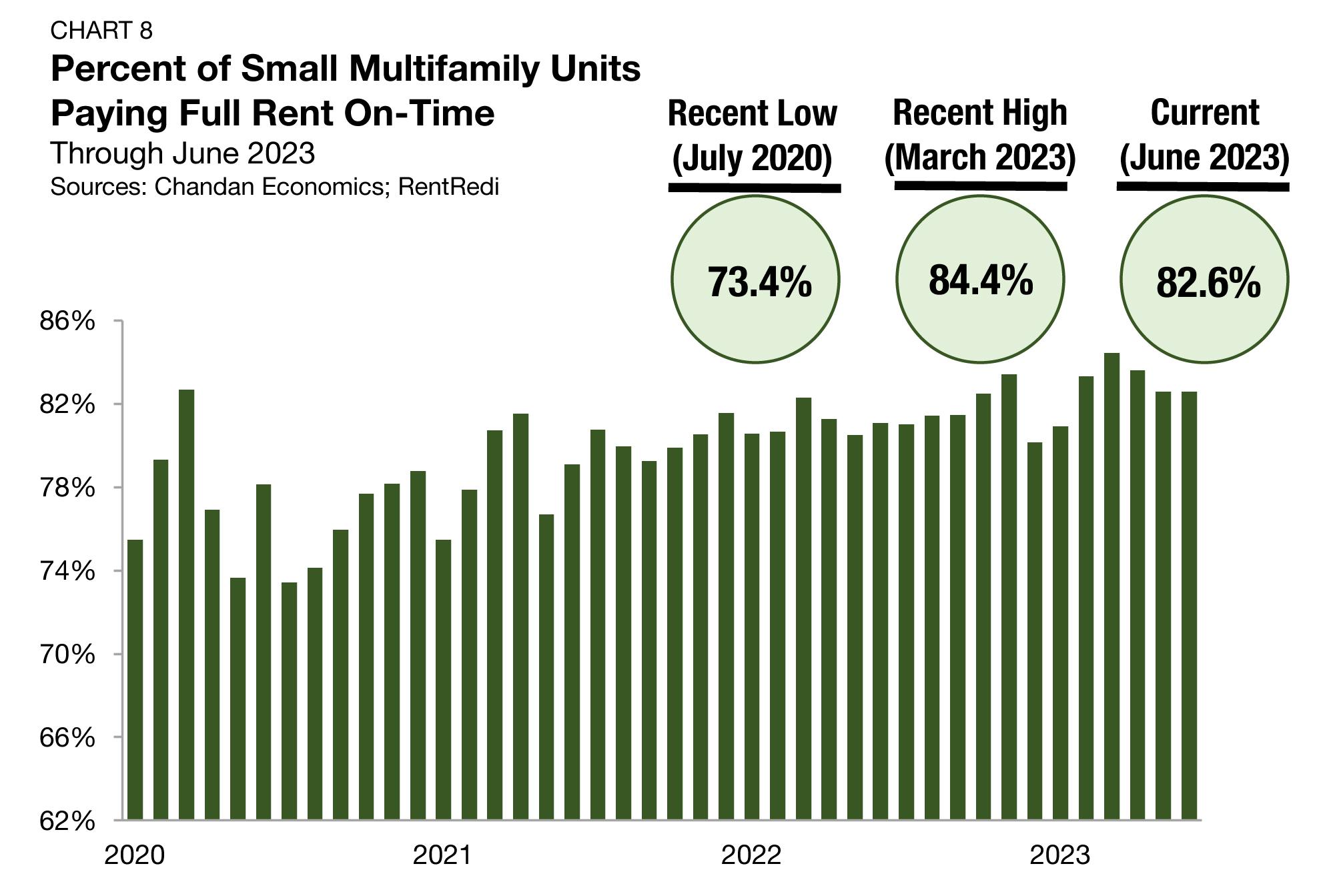
Occupancy rates within small multifamily properties that received financing during the third quarter averaged 97.5% (Chart 8). After occupancy rates slid through 2023 and into early 2024, there was an encouraging turnaround over the past two quarters, as occupancy rates jumped an average of 87 bps between the first and third quarters of the year.

Small multifamily occupancy rates routinely outperform the rest of the multifamily sector, tracking about 2% higher than the average set across all multifamily properties, an anomaly that may be due to closer tenant-landlord relationships. According to a recent report by the Terner Center for Housing Innovation at UC Berkeley, a majority of small multifamily property owners reported that at least half of their rental units were being leased at below-market-rate rents, primarily as a strategy to retain quality tenants.

Leverage & Debt Yields

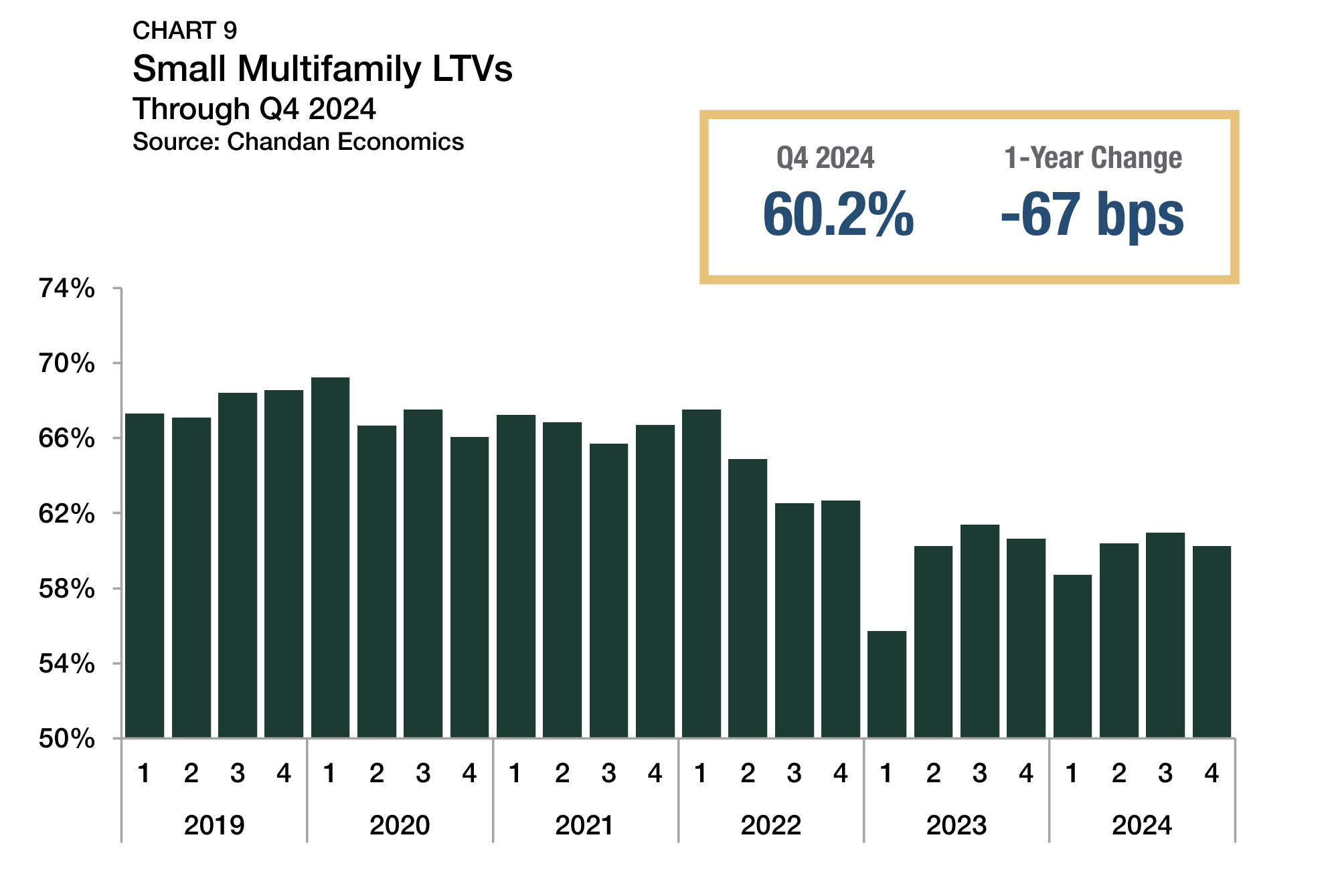
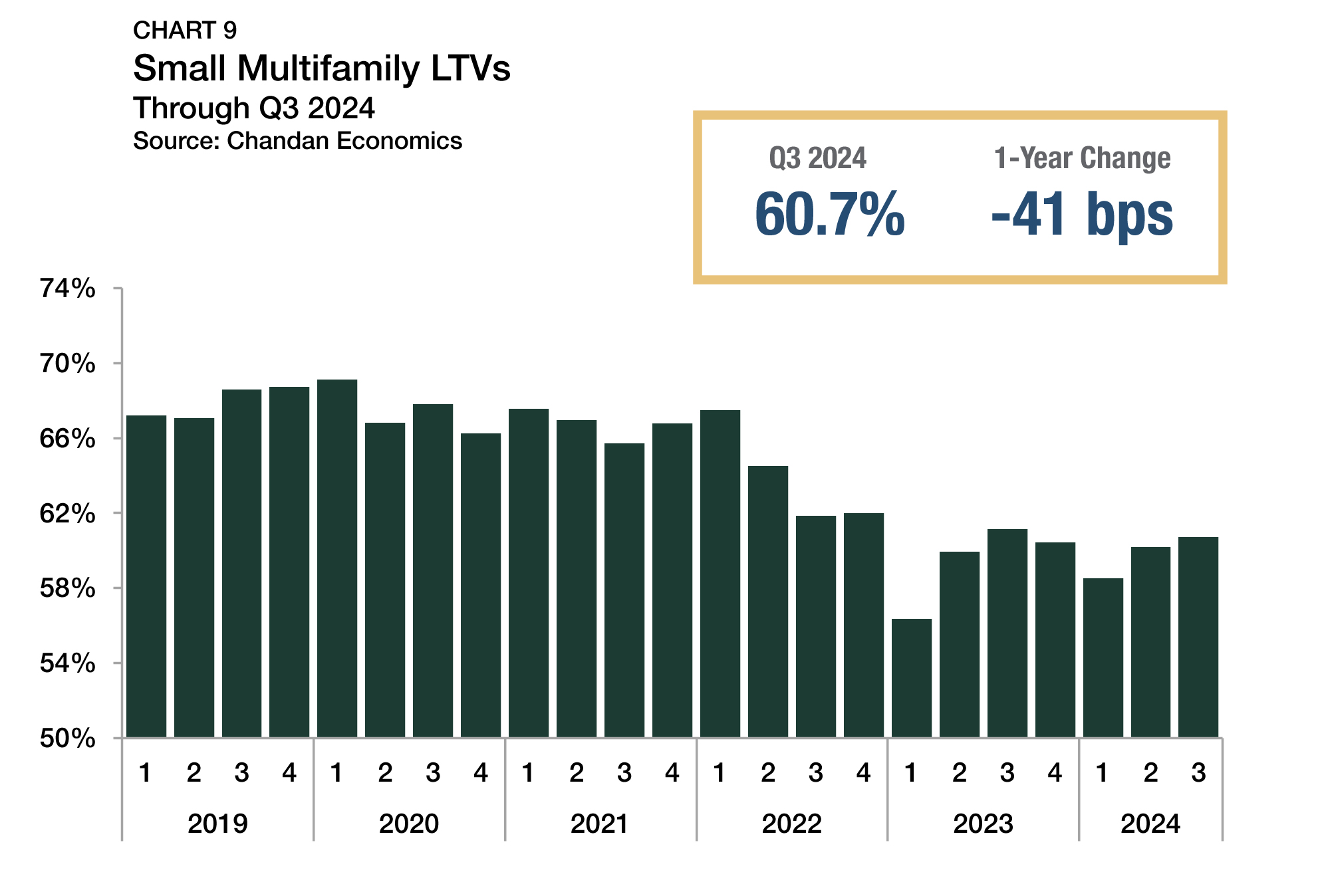
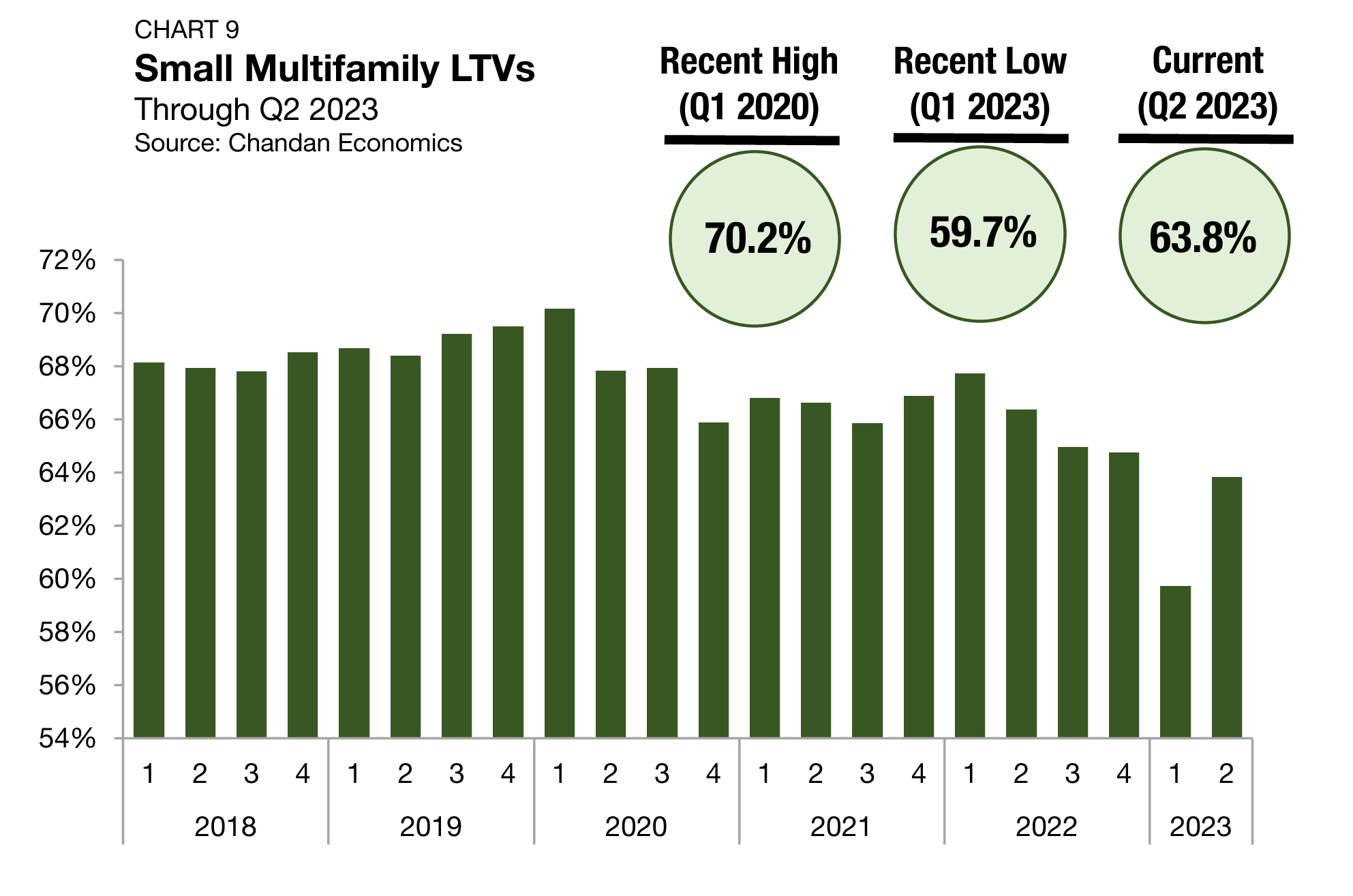
While debt underwriting standards remain tight, there was improvement in the third quarter, with loan-to-value ratios (LTVs) rising and debt yields falling. LTVs increased by 54 bps from the second quarter, settling at 60.7% (Chart 9). The third quarter’s movement followed an increase of 167 bps in the previous quarter. While small multifamily LTVs remain down by 841 bps from a peak in early 2022, they are up 437 bps from their 2023 low point.

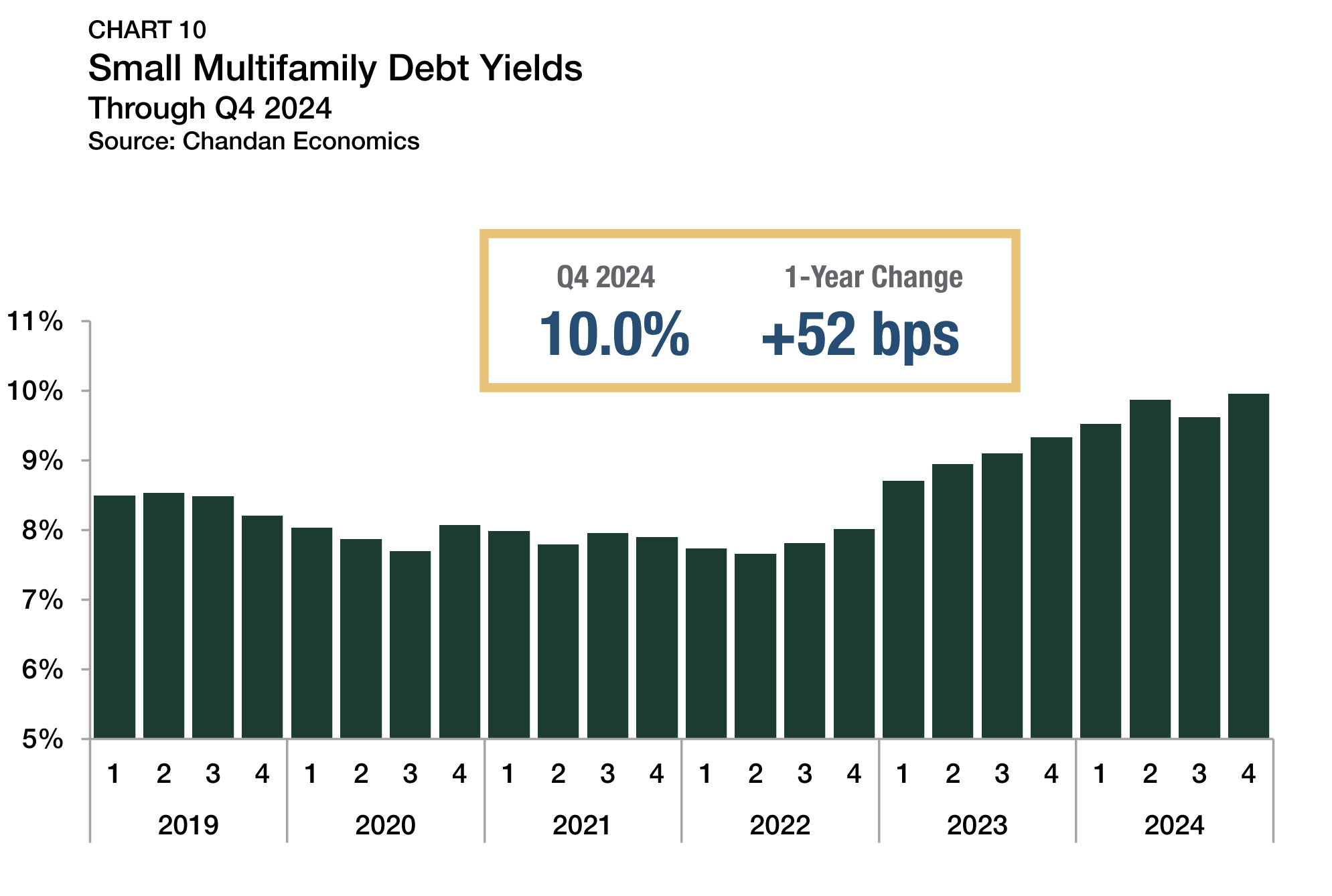
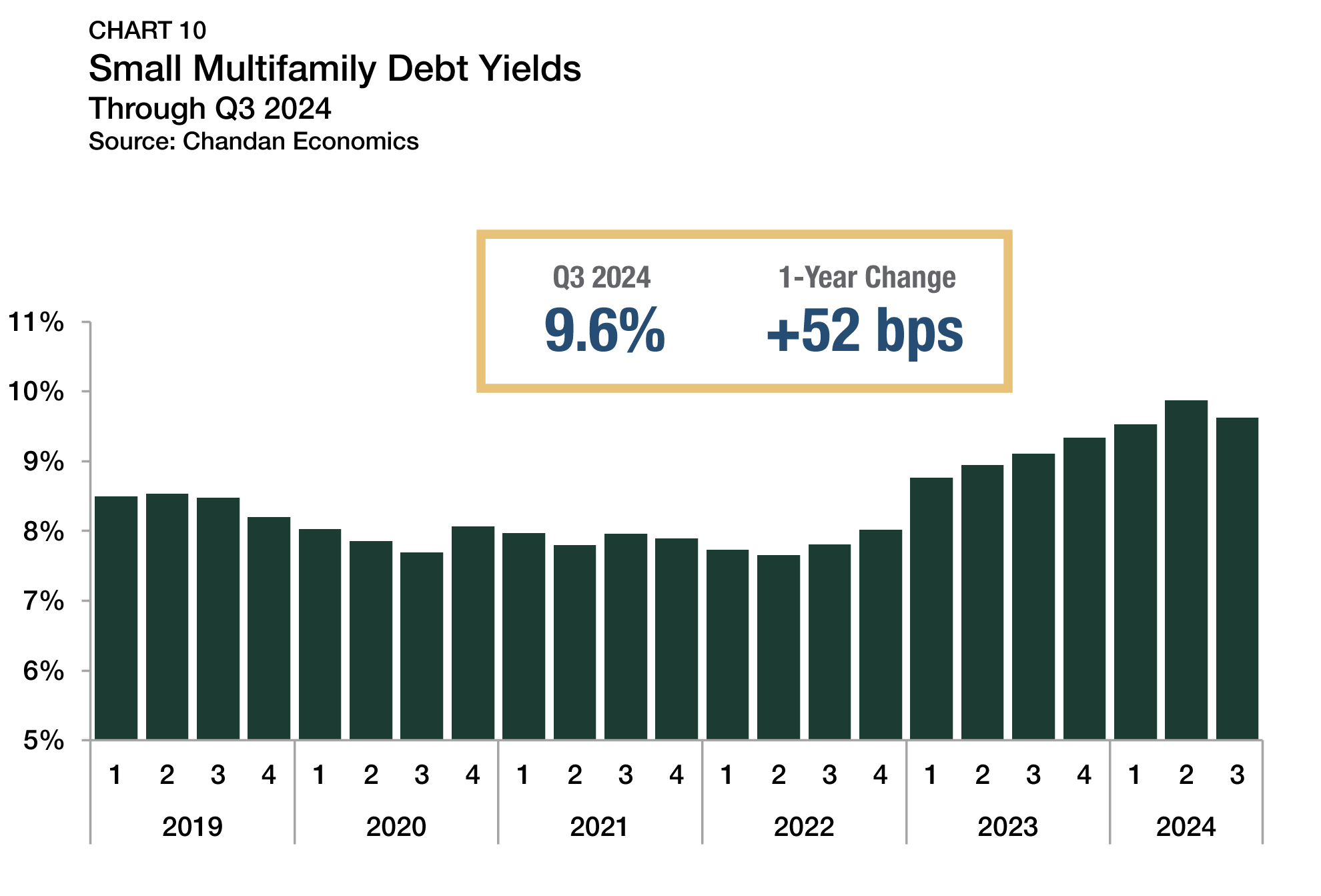
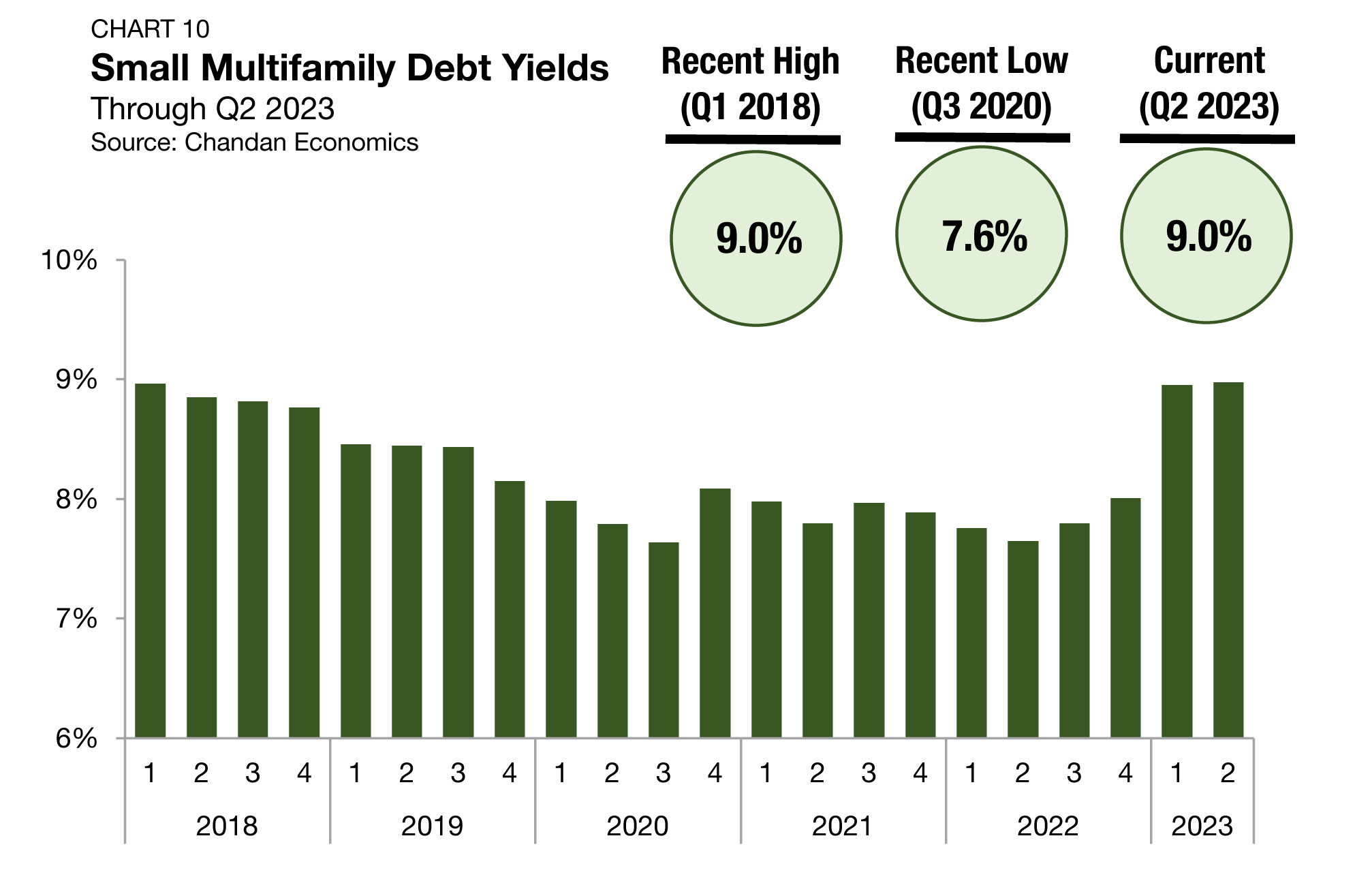
Average debt yields for small multifamily loans fell for the first time in two years during the third quarter of 2024, sliding by 25 bps to settle at 9.6% (Chart 10). The inverse of debt yields, debt per dollar of net operating income (NOI) ended an eight-quarter-streak of declines in the third quarter of 2024. Small multifamily borrowers secured an average of $10.39 in new debt for every $1.00 of property NOI, up $0.27 from the previous quarter.

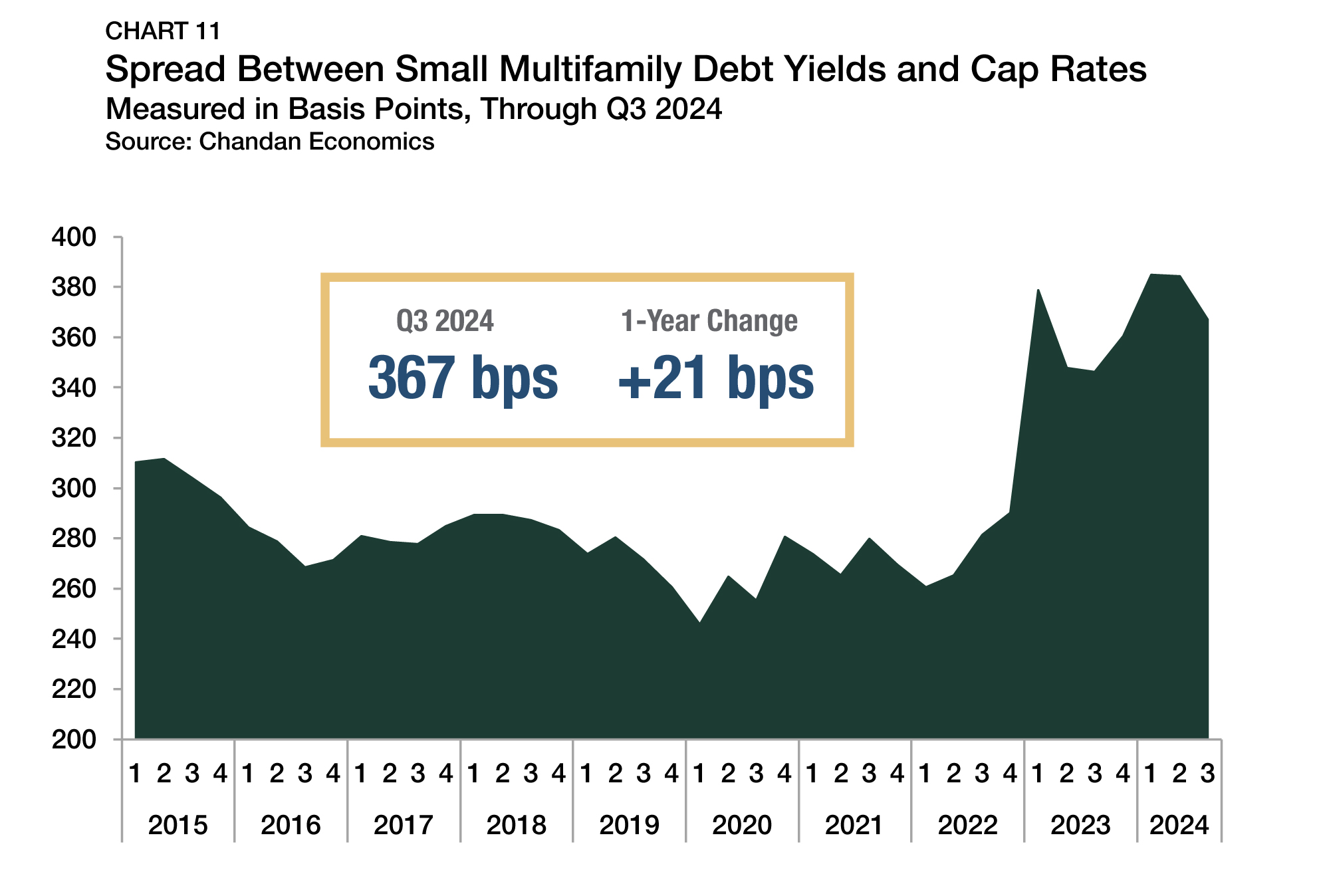
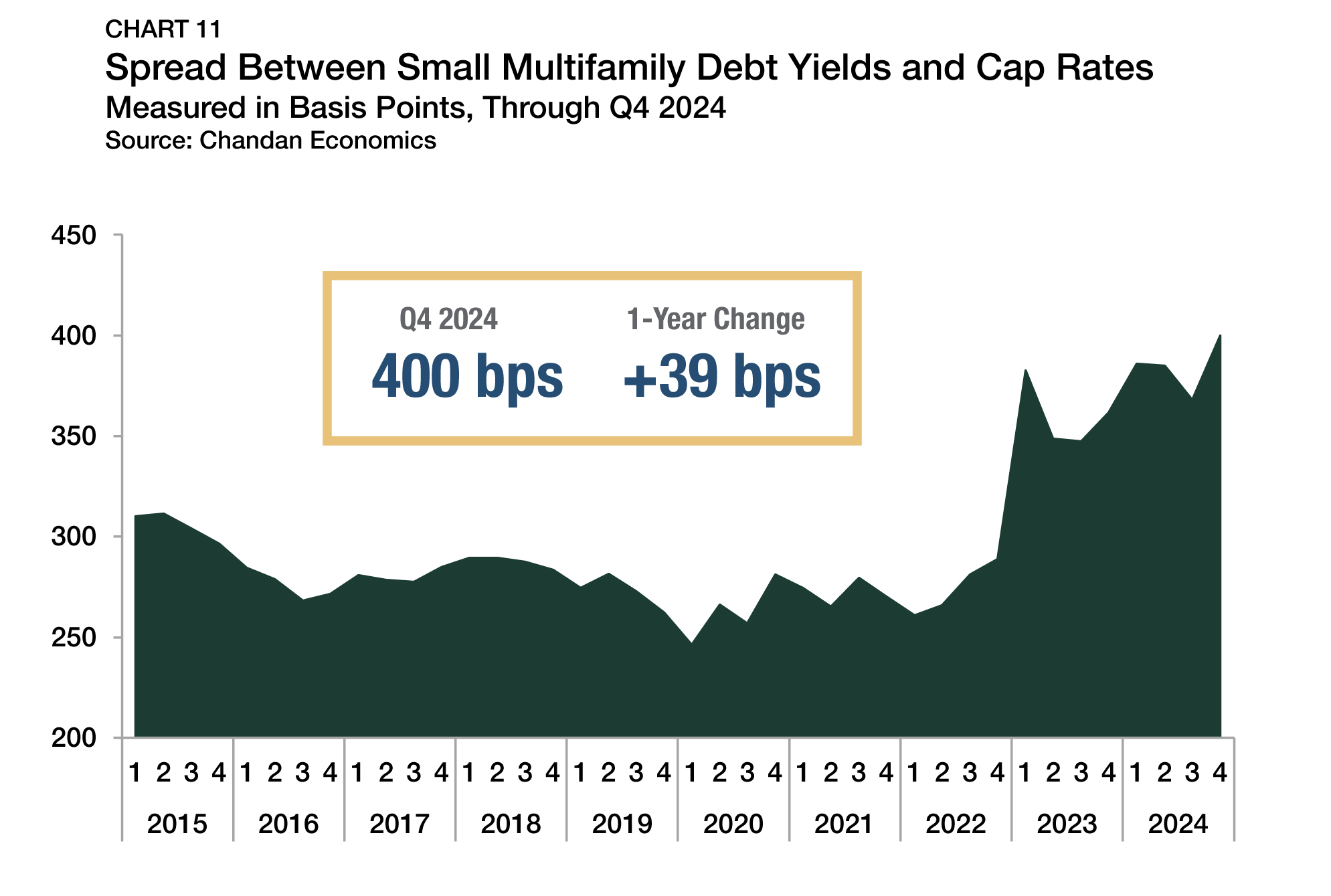
While cap rates and debt yields both fell during the third quarter, debt yields dipped more substantially than cap rates. As a result, the spread between debt yields and cap rates declined to 367 bps (Chart 11). Between 2015 and 2019, the spread between debt yields and cap rates averaged 284 bps. Spreads have remained elevated since then, highlighting that lenders became more risk-averse over the past two years than buyers. However, the spread’s third-quarter decline may signal the start of a reversal of risk aversion among buyers and sellers.
Outlook

So far this year, small multifamily has demonstrated its resiliency and displayed forward momentum in most performance metrics. With interest rates projected to fall considerably, prospects within the subsector are suddenly much brighter. Provided inflation remains under control in the near term, falling capital costs should encourage more interaction between buyers and sellers, accelerating originations activity. No matter how short-term macroeconomic conditions vary, small multifamily will continue to benefit from immense liquidity and strong structural demand, positioning it for continued growth through the end of 2024 and beyond.

For more small multifamily research and insights, visit arbor.com/articles

Disclaimer

This report is intended for general guidance and information purposes only. This report is under no circumstances intended to be used or considered as financial or investment advice, a recommendation or an offer to sell, or a solicitation of any offer to buy any securities or other form of financial asset. Please note that this is not an offer document. The report is not to be considered as investment research or an objective or independent explanation of the matters contained herein and is not prepared in accordance with the regulation regarding investment analysis. The material in the report is obtained from various sources per dating of the report. We have taken reasonable care to ensure that, and to the best of our knowledge, material information contained herein is in accordance with the facts and contains no omission likely to affect its understanding. That said, all content is provided herein “as is” and neither Arbor Realty Trust, Inc. or Chandan Economics, LLC (“the Companies”) nor their affiliated or related entities, nor any person involved in the creation, production and distribution of the content make any warranties, express or implied. The Companies do not make any representations or warranties, express or implied, as to the reliability, usefulness, completeness, accuracy, currency nor represent that use of any information provided herein would not infringe on other third-party rights. The Companies shall not be liable for any direct, indirect or consequential damages to the reader or a third party arising from the use of the information contained herein. There may have been changes in matters which affect the content contained herein and/or the Companies subsequent to the date of this report. Neither the issue nor delivery of this report shall under any circumstance create any implication that the information contained herein is correct as of any time subsequent to the date hereof or that the affairs of the Companies have not since changed. The Companies do not intend, and do not assume any obligation to update or correct the information included in this report. The contents of this report are not to be construed as legal, business, investment or tax advice. Each recipient should consult with its legal, business, investment and tax advisors as to legal, business, investment and tax advice. The information contained herein may be subject to changes without prior notice. This report is only intended for the recipients, and should not be copied or otherwise distributed, in whole or in part, to any other person.
Small Multifamily Investment Trends Report Q2 2024

Small Multifamily Investment Trends Report Q2 2024

Valuations and Cap Rates Stabilize as Fundamentals Support Growth

Key Findings

  • Small multifamily valuations held steady over the last quarter.
  • Cap rates fell for the first time in nearly two years, sliding 5 bps.
  • Credit conditions remain conservative as debt yields rose to 9.5%.

State of the Market

In the first quarter of 2024, the small multifamily subsector continued to fall in line with pre-pandemic norms, resuming patterns frequently seen before the historic multifamily boom years of 2021 and 2022.


Across the multifamily real estate sector, distress has remained limited. According to Trepp, the delinquency rate of multifamily loans in CMBS transactions was 1.8% at the end of the first quarter of 2024, down from 2.6% at the end of the previous quarter. Trends found in small multifamily properties tell a similar story. According to Freddie Mac, 97.8% of its small balance multifamily loans were either current or less than 60 days delinquent through February 2024. There may also be light at the end of the tunnel for asset pricing. Compared to last year, cap rates are higher, and valuations sit lower. However, when measured against the previous quarter, both metrics show improvement, with cap rates falling slightly and asset prices holding steady.


In the quarters ahead, small multifamily is likely to see steady improvement. Lending standards remain conservative, and the market consensus that there will be six rate cuts in 2024 has faded. Although many anticipate more hawkish monetary policy in the months ahead, multifamily’s structural strength has historically helped it withstand heavy headwinds. When the Federal Reserve cuts interest rates, multifamily investment activity is likely
to see a bounce.

Lending Volume

Elevated interest rates continued to impact small multifamily lending volume in the first quarter of 2024, as compared with the highs of recent years. The $44.4 billion year-end 2023 estimate of new multifamily lending volume on loans with original balances between $1 million and $9 million1  — including loans for apartment building sales and refinancing — represented a significant deceleration from the record-breaking 2022 total of $90.1 billion (Chart 1).

Thus far in 2024, a rapid bounce back does not appear in the cards — but neither does a further pullback. Through the year’s first quarter, small multifamily originations are on pace to hit $44.7 billion in 2024, a slight increase of 0.6% over last year.

Sustained high interest rates are the primary factor weighing down origination volumes, and they impact the market in several ways.


First, it widens the bid-ask spread (the difference between what a buyer is willing to pay and what a seller is willing to accept). Amid higher capital costs, potential buyers are seeking larger discounts. At the same time, a lack of multifamily sector distress has meant fewer owners have been motivated to sell if they do not receive an offer that meets their perception of fair value. Further, according to Yardi Matrix, loan extensions have been a common feature of the current lending environment, simultaneously suppressing new originations and distress.


Altogether, lower transaction activity, more frequent loan extensions, and reduced incentives for refinancings have all contributed to decreased origination volumes through 2023 and into early 2024.

1 All data, unless otherwise stated, are based on Chandan Economics’ analysis of a limited pool of loans with original balances of $1 million to $9.0 million and loan-to-value ratios above 50%.

Loans by Purpose

A high interest rate environment makes cash-out refinancing less attractive. When interest rates are favorable, borrowers often use accrued equity in their properties to finance subsequent acquisitions. In high interest rate environments, cash-out refinancing may result in a voluntary increase in debt servicing costs.


After the refinancing share of originations reached a high of 75.6% in the third quarter of 2022, it has fallen in three consecutive quarters, landing at a low of 60.5% in the second quarter of 2023 (Chart 2). The refinancing share of originations has been normalizing over the past three-quarters of available data, ranging between 66.8% and 72.7%.

Arbor Small Multifamily Price Index

Through the first quarter of 2024, the Arbor Small Multifamily Price Index shows that small multifamily asset valuations were down 4.3% from a year earlier (Chart 3). While annual price growth remains negative, the first-quarter reading marks an improvement from the prior two quarters, where annual price declines reached above 9%. Further, quarter-over-quarter, prices held effectively flat, falling by just 0.2% in the year’s first three months. The first-quarter movement comes as expense growth has narrowly outpaced property-level incomes, which weighed against valuations, even as cap rates ticked down by a few basis points.

Following the small multifamily sector’s peak in the third quarter of 2022, asset prices have declined in six consecutive quarters, dropping 11.8% in aggregate value. Despite recent declines, small multifamily valuations today are still 19.9% higher than before the pandemic.

Cap Rates & Spreads

In the first quarter of 2024, small multifamily cap rates averaged 5.7% — declining quarter-over-quarter for the first time since mid-2022 (Chart 4). The marginal decline of 5 basis points represents a surprising shift in direction. Similar trends have also been reported for prime multifamily properties, an indication that recent patterns in rising cap rates could be reversing sector-wide.
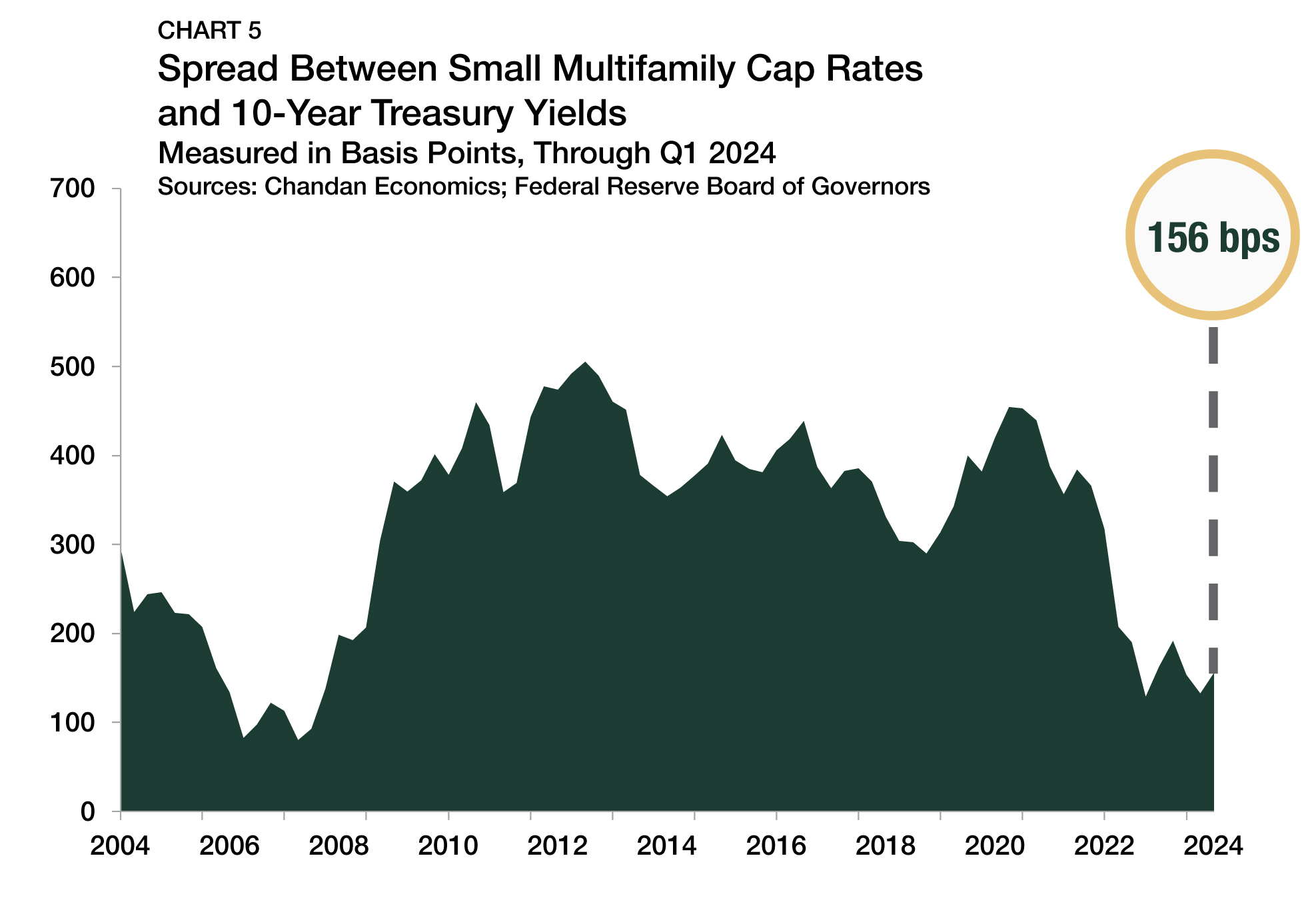
The small multifamily risk premium, best measured by comparing cap rates to the yield on the 10-year Treasury, approximates the additional compensation that investors require to account for higher levels of risk. This risk premium widened by 23 bps in the first quarter of 2024, reaching 156 bps (Chart 5).

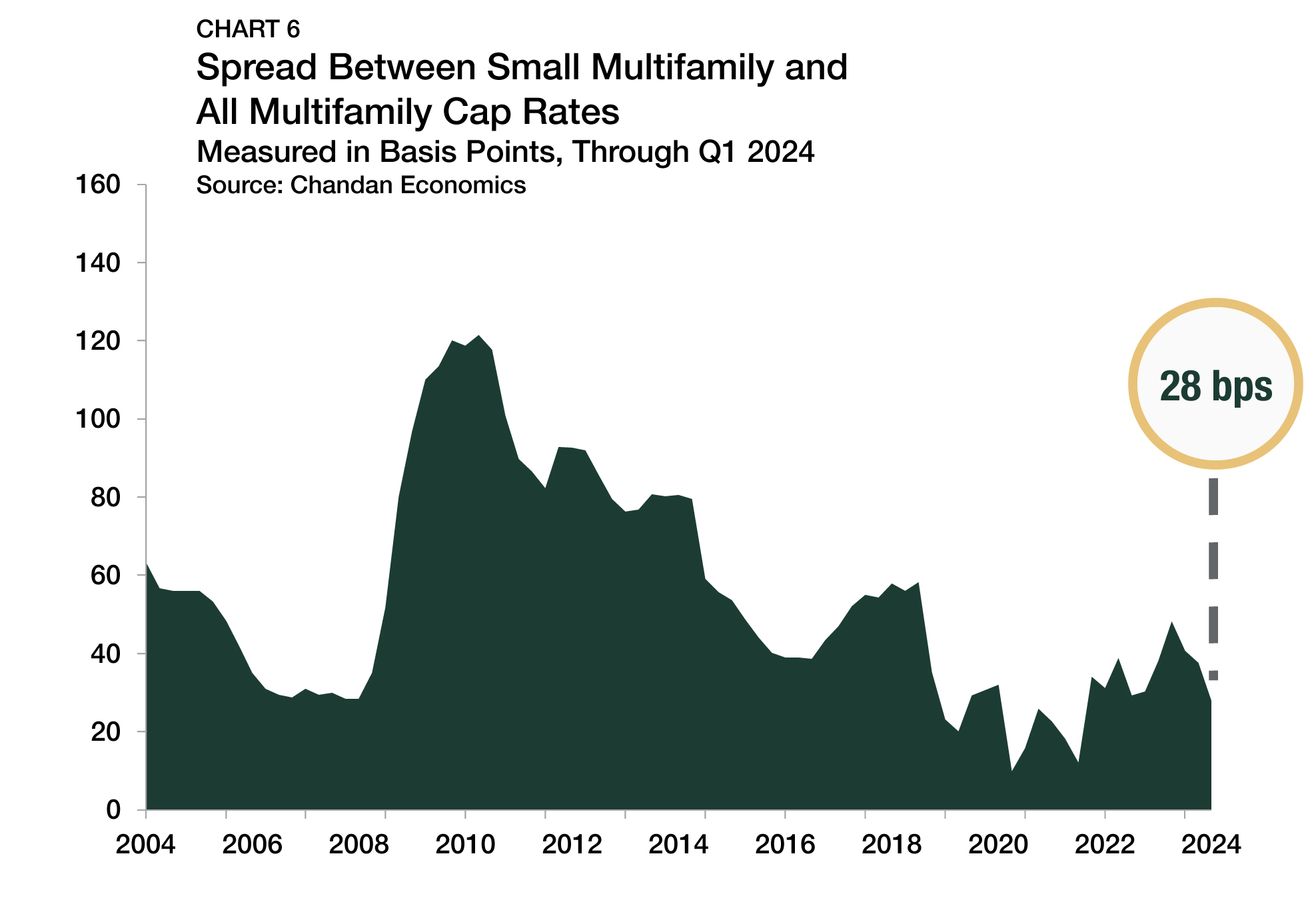
The first quarter increase arrives as 10-year Treasury yields averaged 4.2% over the year’s first three months — down from 4.5% in the fourth quarter of 2023. Despite the slight increase, the current risk premium is less than half of the average risk premium of 370 bps observed between 2015 and 2019. Meanwhile, the cap rate spread between small multifamily assets and the rest of the multifamily sector, a measure of the risk unique to smaller properties, narrowed by 10 bps during the first quarter to finish at 28 bps (Chart 6).

Expense Ratios

Expense ratios, measured as the relationship between underwritten property-level expenses and effective gross income, have remained stable in recent quarters. In the first quarter of 2024, expense ratios in small multifamily properties receiving financing averaged 40.7% — rising slightly from the 39.7% observed during the prior quarter (Chart 7)Expense ratios peaked at 43.2% in the first quarter of 2023, just as property insurance prices sharply increased. However, expense ratios have quickly come back down to a normal range. Over the past four quarters of available data, expense ratios have deviated by less than a percentage point — ranging between 39.7% and 40.9%.

Occupancy Rates

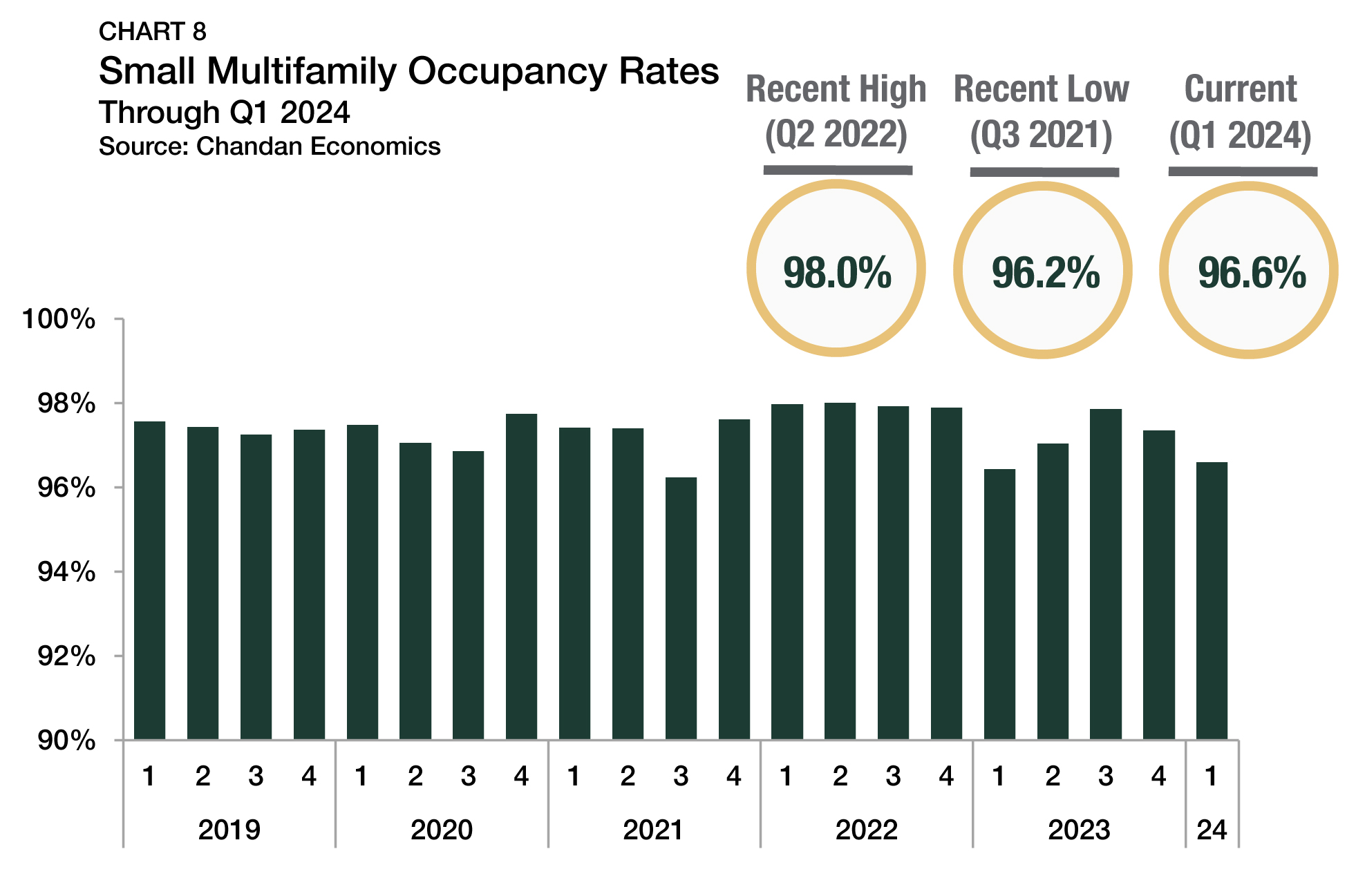
In the first quarter of 2024, small multifamily properties receiving financing had an average occupancy rate of 96.6% (Chart 8). In each of the past two quarters, small multifamily occupancy rates declined, falling 127 bps in total, although they remain slightly higher than where they were a year ago.

Small multifamily properties have a 2% higher occupancy rate than other types of multifamily real estate. This trend is supported by the relationship-driven nature of small multifamily owners. According to a recent report by the Terner Center for Housing Innovation at UC Berkeley, a majority of small multifamily property owners report that at least half of their rental units were leased at below-market-rate rent prices in an effort to retain quality tenants.

Leverage & Debt Yields

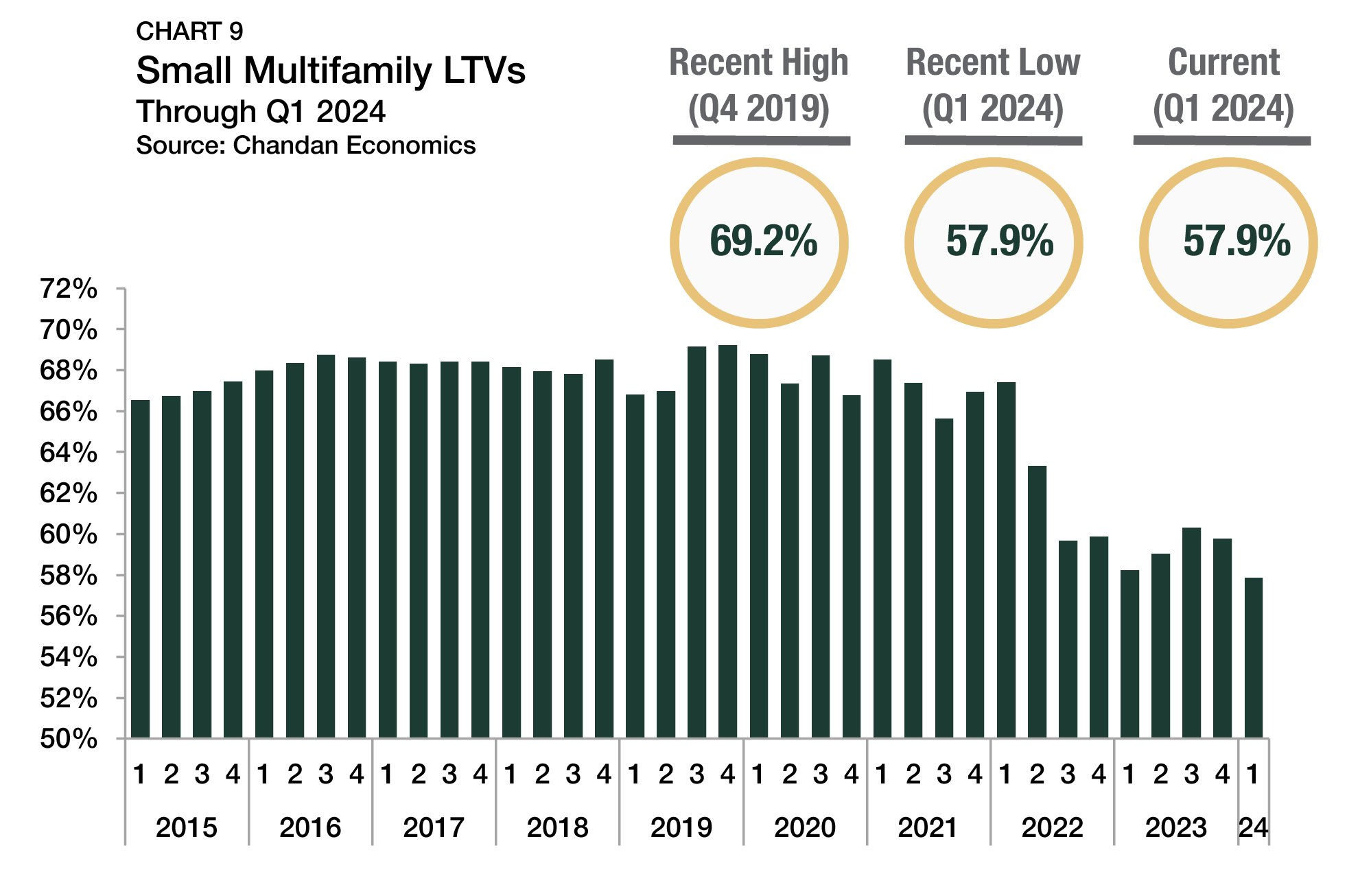
Debt underwriting standards remained tight through the first quarter of 2024. Loan-to-value ratios (LTVs) slid by 179 bps from the previous quarter, settling at 57.9% (Chart 9). Small multifamily LTVs have generally declined since the onset of the pandemic. After hitting a record high of 69.2% in the fourth quarter of 2019, they have dropped in 11 of 17 quarters. In that time, average LTVs have decreased by 11.4 percentage points, highlighting that lenders require more substantial equity cushions when trends in valuations are volatile.

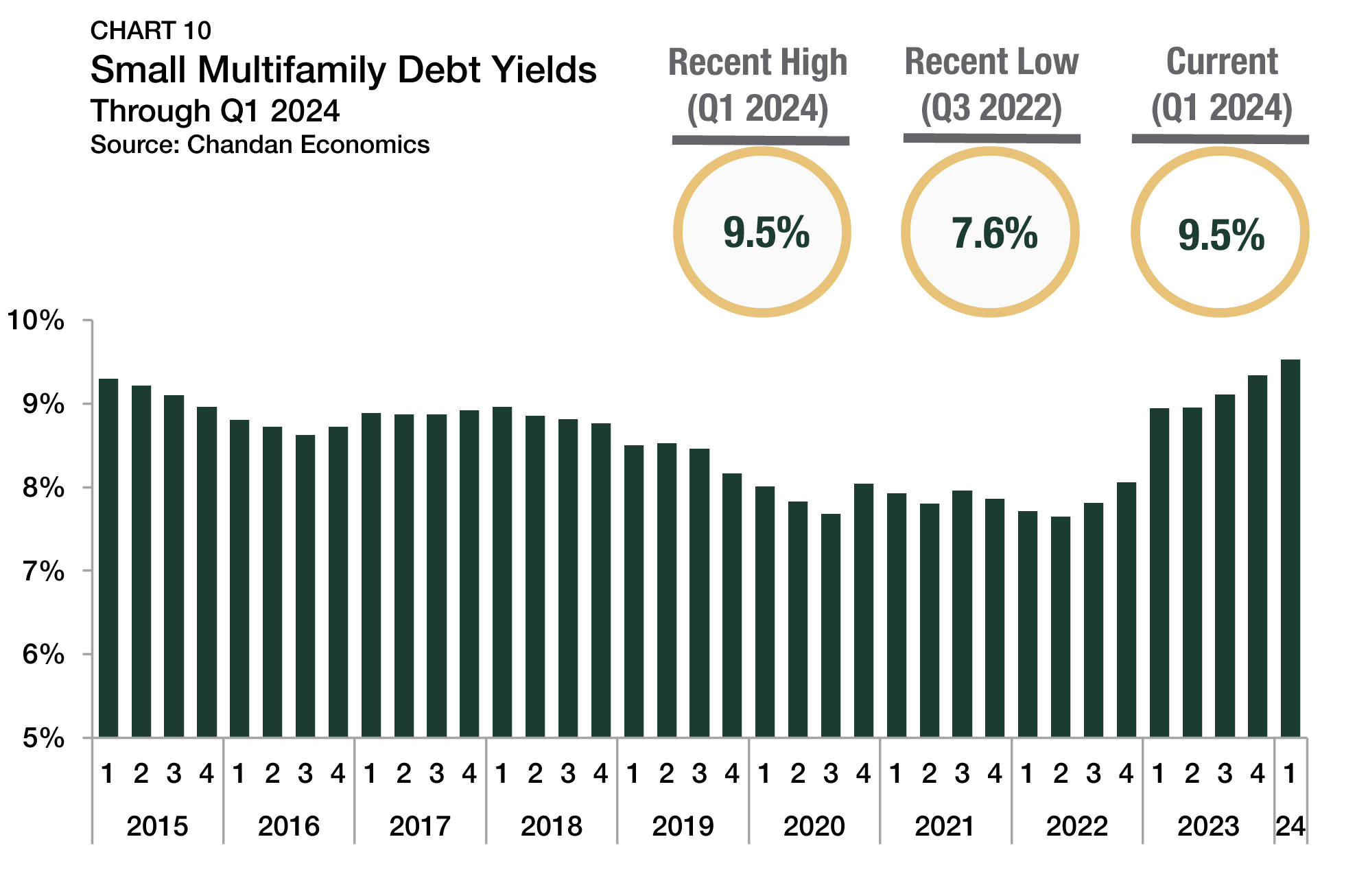
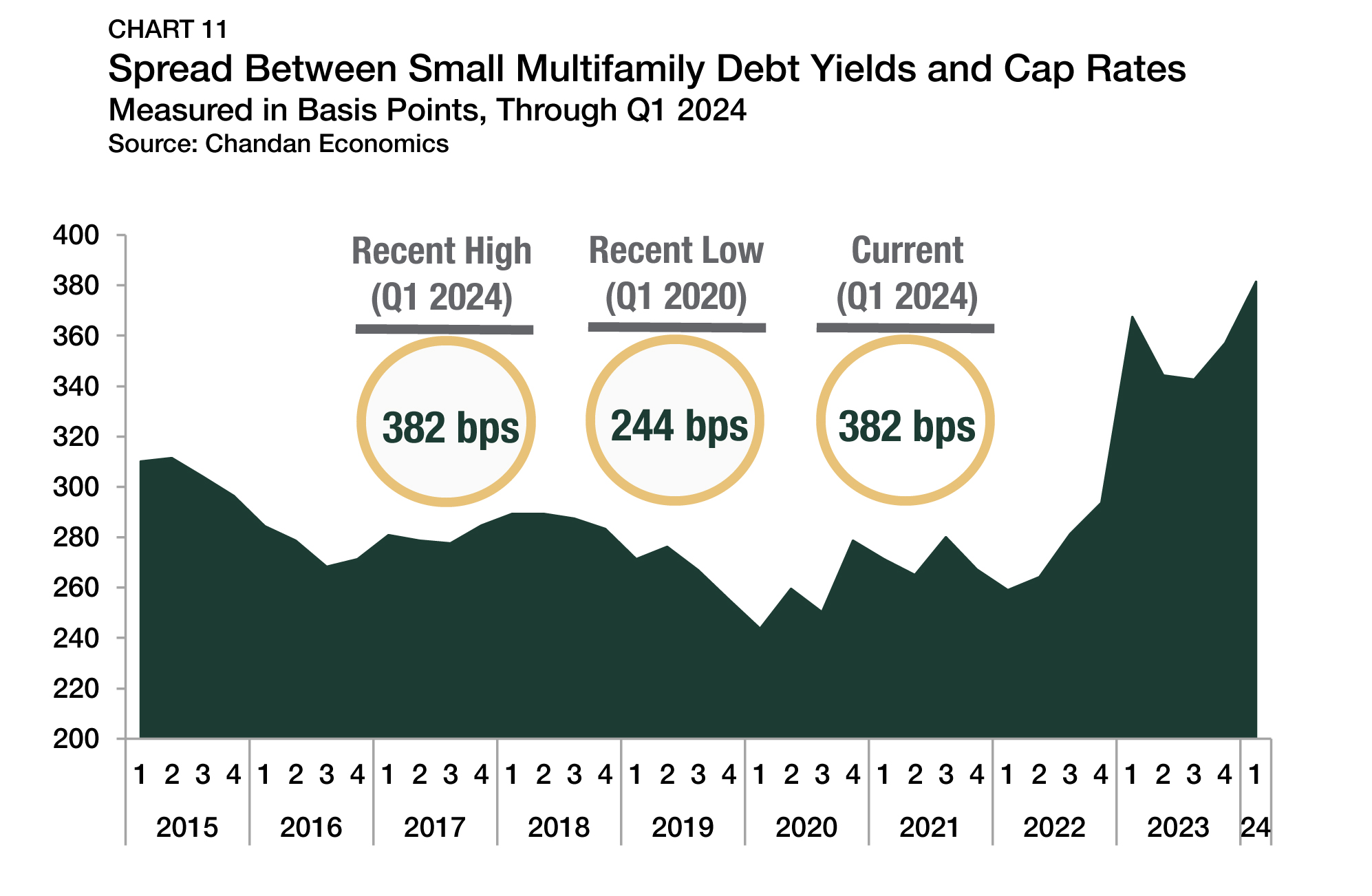
Average debt yields for small multifamily loans continued climbing higher in the first quarter of 2024, reaching 9.5% (Chart 10). Small multifamily debt yields have risen in each of the past seven quarters, hitting their highest point in nearly a decade. While cap rates and debt yields are higher than a year ago, debt yields have increased more substantially. In the first quarter of 2024, the spread between debt yields and cap rates widened to 382 bps —  the most significant difference since 2013 (Chart 11).

The inverse of debt yields, the debt per dollar of net operating income (NOI), for small multifamily loans fell again in the first quarter of 2024. Small multifamily borrowers secured an average of $10.49 in new debt for every $1.00 of property NOI, a decline of $0.21 from the previous quarter and its lowest level since 2014.

Outlook

The small multifamily subsector’s stronger-than-average occupancy rates provide a stable foundation that will allow property owners to hold steady through the current high interest rate environment. As evidenced by the recent stabilization of asset prices and cap rates, as well as an uptick in large investor buying activity, there is growing confidence that the sector is rebounding from its cyclical bottom. For the small multifamily sector, interest rate headwinds will likely create a bumpy road to recovery in 2024, but smoother pavement lies ahead.

For more small multifamily research and insights, visit arbor.com/articles

Disclaimer
All content is provided herein “as is” and neither Arbor Realty Trust, Inc. or Chandan Economics, LLC (“the Companies”) nor their affiliated or related entities, nor any person involved in the creation, production and distribution of the content make any warranties, express or implied. The Companies do not make any representations regarding the reliability, usefulness, completeness, accuracy, currency nor represent that use of any information provided herein would not infringe on other third party rights. The Companies shall not be liable for any direct, indirect or consequential damages to the reader or a third party arising from the use of the information contained herein.
Small Multifamily Investment Trends Report Q1 2024

Small Multifamily Investment Trends Report Q4 2023

Cap Rates Push Higher as Underwriting Standards Stabilize

Key Findings

  • Small multifamily prices fell 3.2% during the quarter.
  • Cap rates climbed 33 bps — the largest single-period jump since 2009.
  • Property-level cash flows remained healthy as rent collections continued to strengthen and expense ratios normalized.

Key Findings & Overview

As we enter the closing chapter of 2023, the small multifamily sector is in the midst of resetting and adjusting to new capital market realities. Even as the Federal Reserve has pumped the brakes on rate hikes over the past few months, financial market conditions have kept tightening as long-term interest rates have ascended. Nevertheless, distress remains limited even as valuations and measures of risk pricing are in flux, signaling a stabilization of conditions.

According to Trepp, the delinquency rate of multifamily loans in CMBS transactions stands at 1.9% through September 2023, the best mark of any commercial property type other than industrial. The trends seen in small asset classes are similar. According to Freddie Mac, 1.5% of small balance multifamily loans are nonperforming — an increase from the 0.7% measured in the summer of 2022 while still below the recent high of 1.7% in spring 2021. To place these figures in context, the multifamily nonperforming rate for loans on bank balance sheets reached 4.7% after the 2008 financial crisis, according to data reported by the FDIC.

While underwriting criteria for small multifamily properties remain tight in a challenging market environment, lending standards held steady in the third quarter of 2023. Market clearing prices continue to edge lower, though the pace of depreciation has slowed, and new deal activity is starting to pick up. Further, the operational profile of the small multifamily subsector has held strong, with rent collections remaining at healthy levels and expense ratios normalizing. While macroeconomic headwinds remain a constant challenge, the small multifamily sector has demonstrated its ability to bend rather than break.

Lending Volume

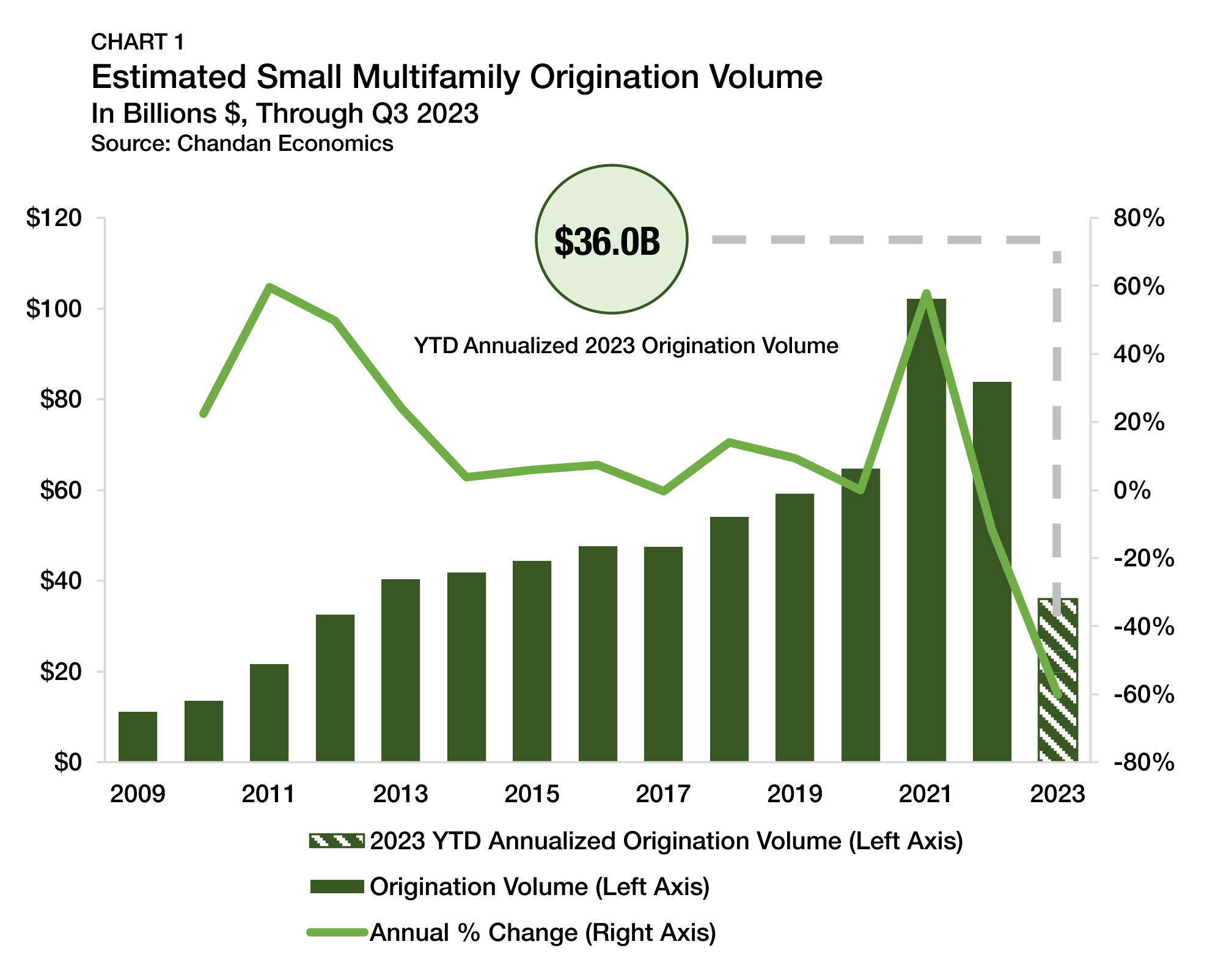
The $90.1 billion year-end 2022 estimate of new multifamily lending volume on loans with original balances between $1 million and $9 million1 — including loans for apartment building sales and refinancing — represented a modest deceleration from 2021’s record high of $102.1 billion (Chart 1).

To date, 2023 has seen a resetting in the level of small multifamily originations. The current annualized 2023 total is $36 billion, which puts this year on track to be the slowest for new originations since 2012. However, while the annualized total will remain muted, there are signs of activity starting to pick back up. Third-quarter activity was nearly three times higher than the first quarter of the year.

Sustained high interest rates have contributed significantly to the decline in small multifamily origination volumes this year, which has impacted the market in two distinct ways. First, it has widened the bid-ask spread — the difference between what a buyer is willing to pay and what a seller is willing to accept. With costs of capital rising, potential buyers have been requiring larger discounts. At the same time, a lack of multifamily sector distress has meant that few owners are motivated to sell if they do not receive an offer close to their perception of fair value. Driven by this disagreement in price, 2023 has seen a dearth of apartment sales.

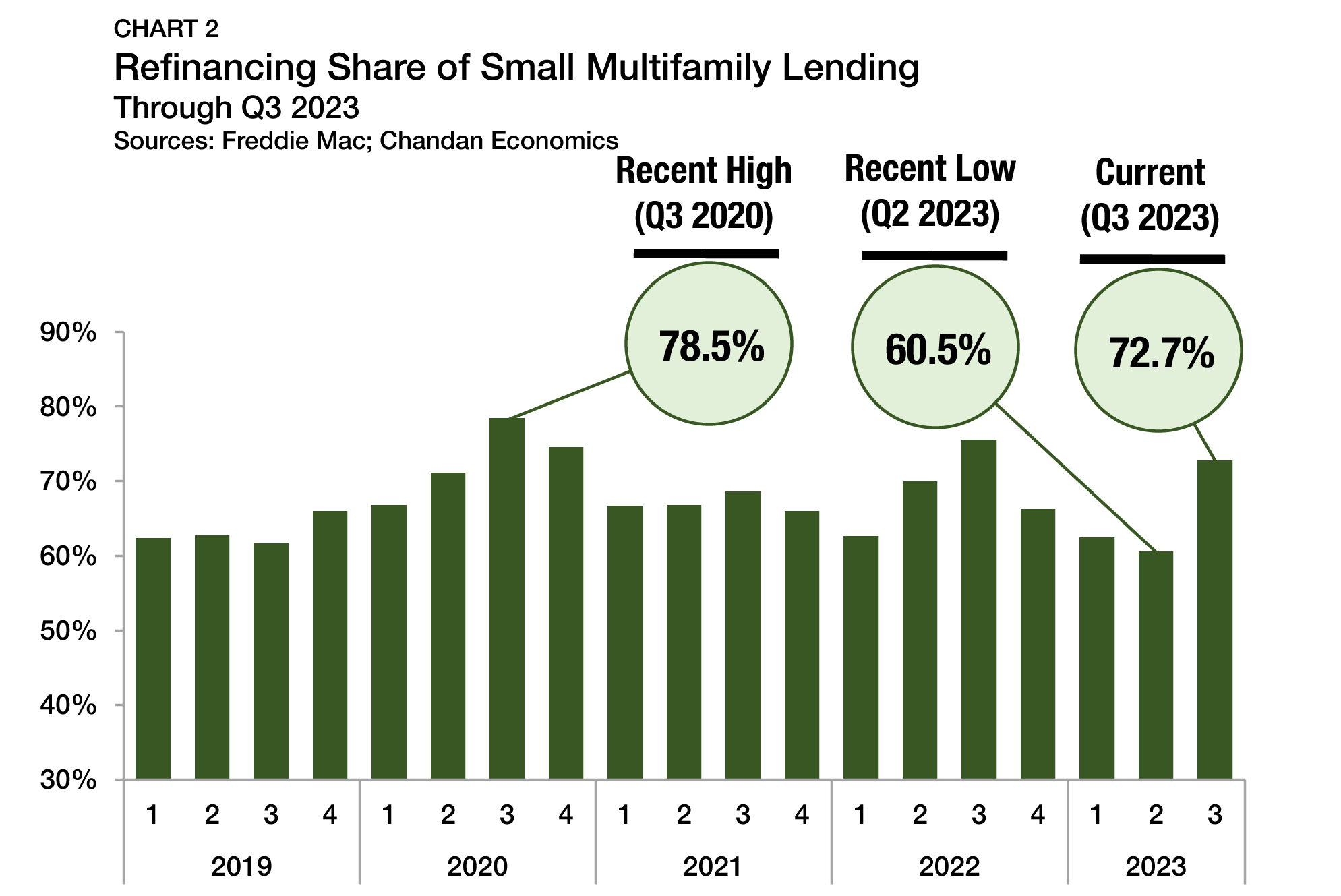
The second way that high interest rates impact small multifamily originations is that they reduce the incentive for investors to pursue cash-out refinancing. When interest rates are favorable, borrowers often use accrued equity in their properties to finance subsequent acquisitions. However, in today’s higher-rate environment, a cash-out refinancing would likely result in a voluntary increase in debt servicing costs. After reaching a recent high of 75.6% in the third quarter of 2022, the refinancing share of originations fell in three consecutive quarters, dropping to 60.5% in the second quarter of 2023 (Chart 2). However, there were signs of improvement in the third quarter as the refinancing share of originations shot up to 72.7% — potentially signaling that borrowers are no longer waiting for a rapid return of accommodative interest rates.

Arbor Small Multifamily Price Index

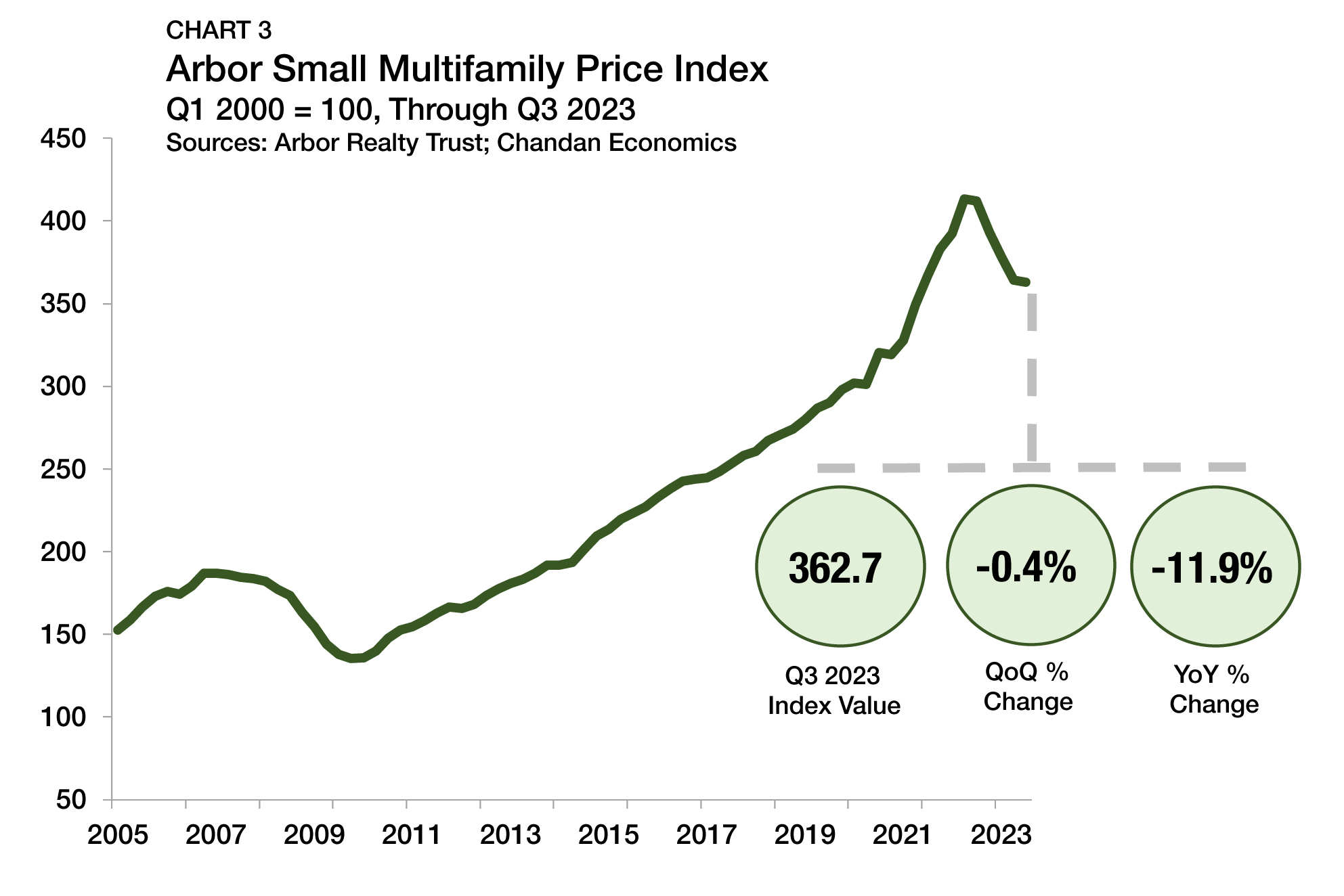
As measured by the Arbor Small Multifamily Price Index2, small multifamily asset valuations are down 11.9% from the same time last year (Chart 3). Meanwhile, prices fell just 0.4% in the third quarter of 2023 — the smallest single-period movement in the past year.

Negative pricing pressures are not unique to either multifamily or the small asset subsector in this interest rate environment. The higher cost of capital means that potential buyers of all property types have larger required yields. However, the slowing pace of devaluation combined with an increasing pace of originations suggests that bid-ask spreads are starting to narrow — albeit at lower market clearing prices than a year ago.

Cap Rates & Spreads

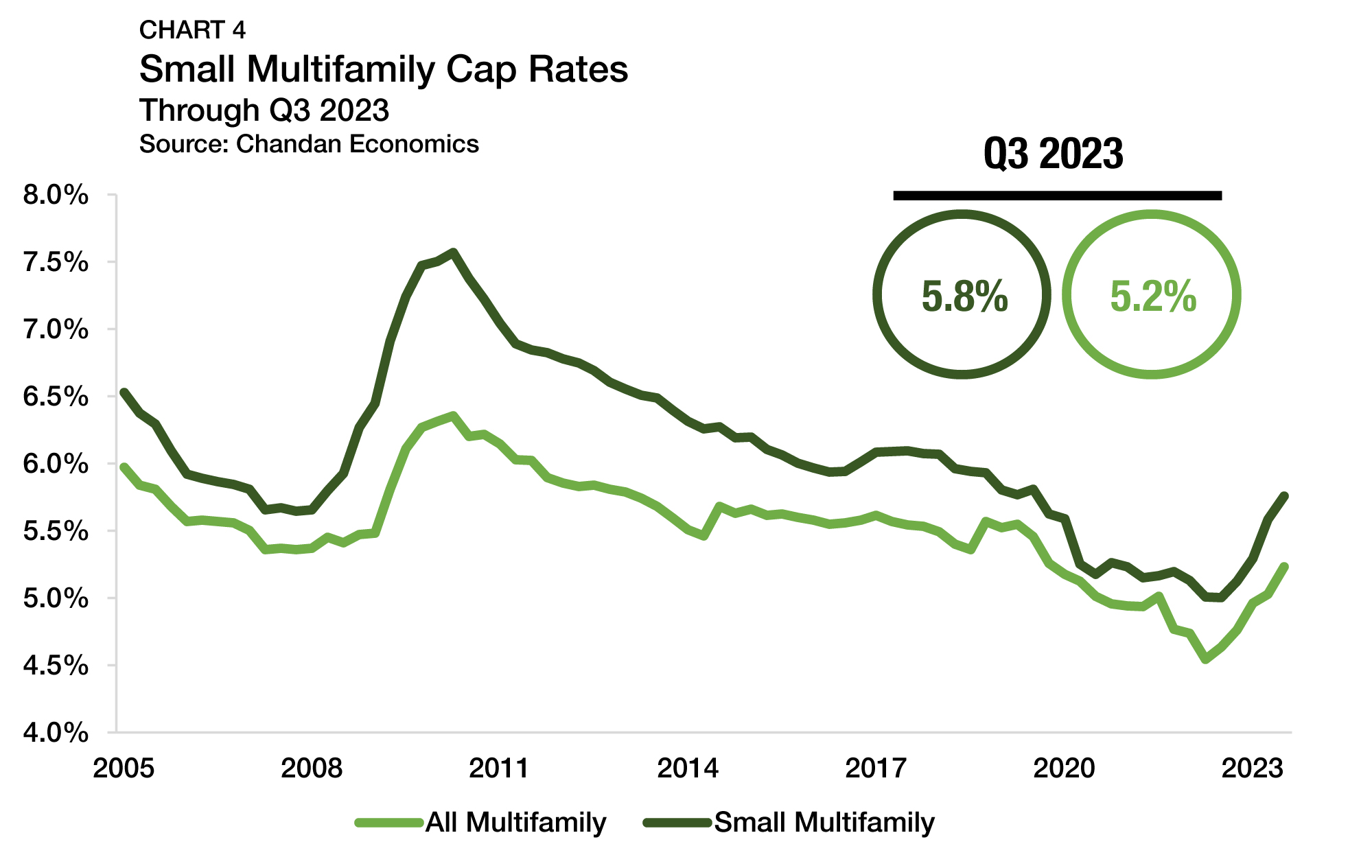
As 10-year Treasury yields push up against their high-water mark of the past 16 years, cap rates across all commercial property types, including multifamily and the small asset subsector, are on the rise. In the third quarter of 2023, small multifamily cap rates averaged 5.8%, reaching their highest point in over four years (Chart 4).

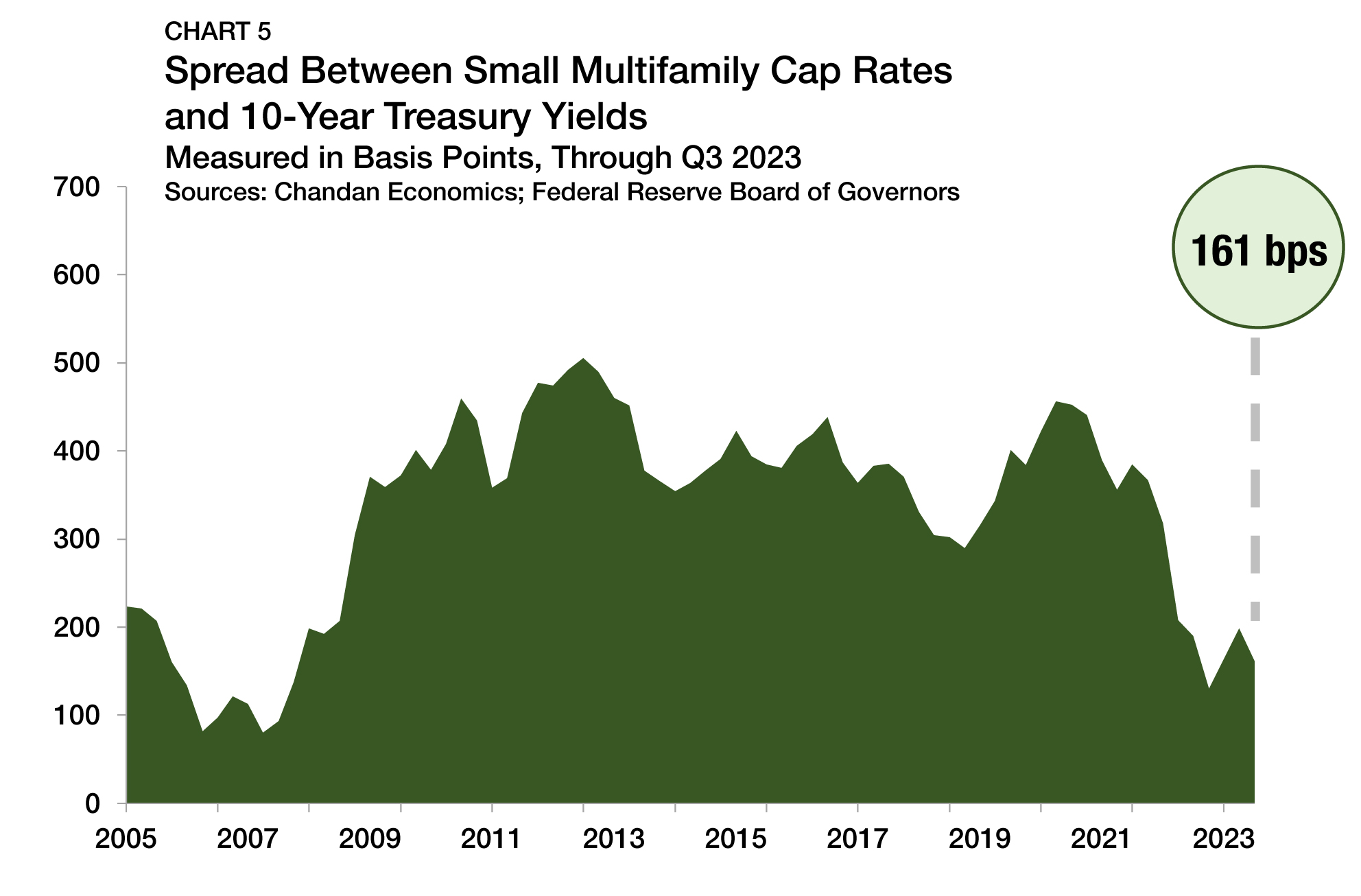
After cap rates in this subsector reached their all-time low of 5.0% in the third quarter of 2022, they have subsequently increased in four consecutive quarters. Small multifamily cap rates jumped 17 bps during the third quarter alone and are up 76 bps from this time last year — the most substantial year-over-year increase since 2010. The small multifamily risk premium, measured by comparing cap rates to the yield on the 10-year Treasury, is the additional compensation that investors require to account for higher levels of risk. This risk premium compressed by 38 bps in the third quarter of 2023, landing at 161 bps (Chart 5). The declining risk premium comes as long-term Treasury yields have rapidly risen in recent months. If long-term interest rates hold up at current levels, it could mean more upward pressure for cap rates on the horizon.

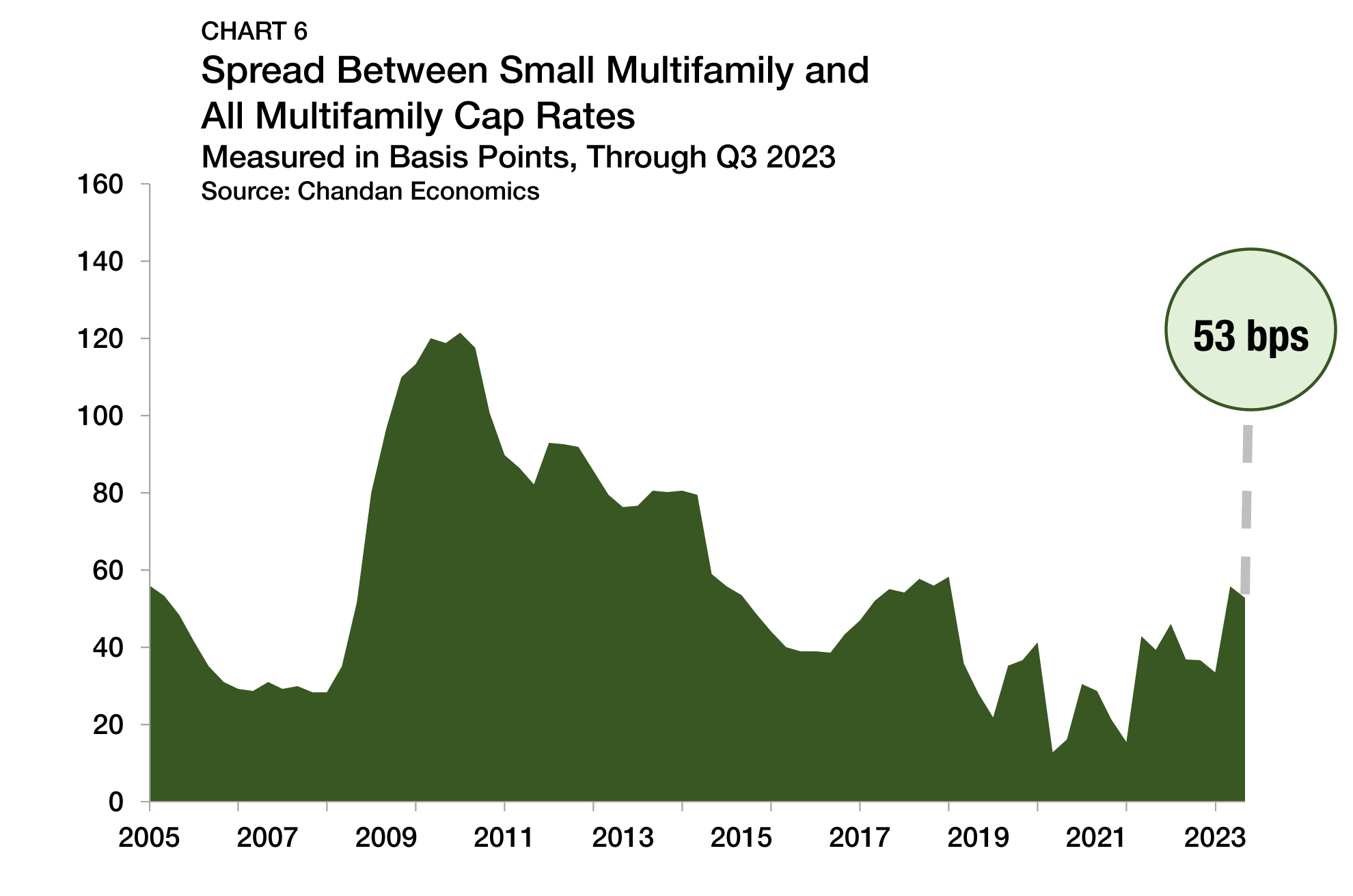
Between 2016 and 2021, the small multifamily risk premium averaged 372 bps and never fell below 290 bps or rose above 441 bps. Its movement back to a more sizable range that is in line with recent patterns is a reasonable baseline outlook for the year ahead. Meanwhile, the cap rate spread between small multifamily assets and the rest of the multifamily sector, a measure of the risk unique to smaller properties, fell by a minuscule 3 bps during the quarter to finish at 53 bps (Chart 6).

Expense Ratios

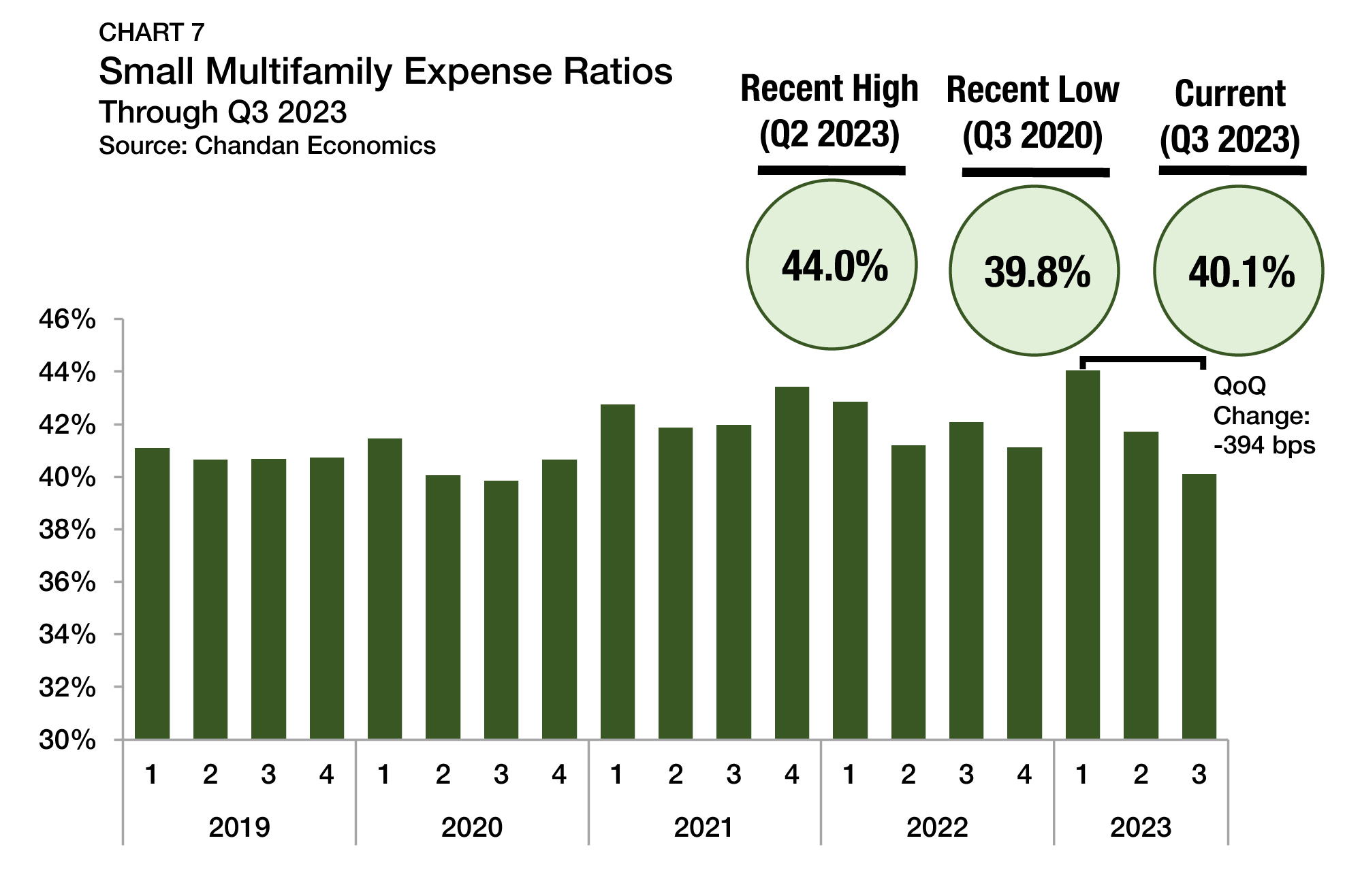
Expense ratios, measured as the relationship between underwritten property-level expenses and effective gross income, are showing signs of improvement. Driven by increases in vacancies and operating expenses, the small multifamily expense ratio surged to start the year, reaching 44.7% in the first quarter (Chart 7). However, the surge was short-lived. Expense ratios fell in both the second and third quarters of 2023, settling at 40.1% — 394 bps below the first quarter of the year.

Rent Collections

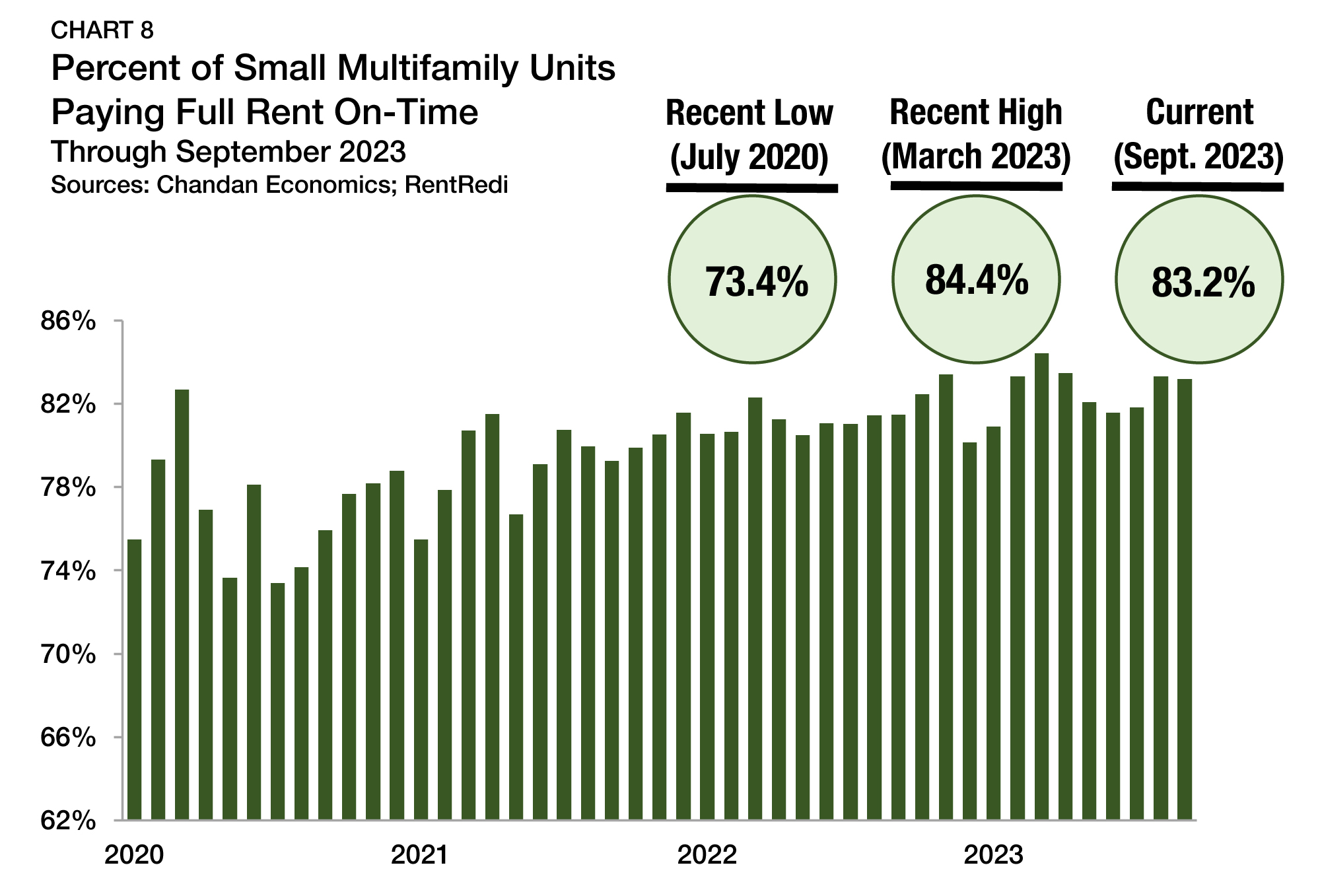
In recent months, on-time rental payment rates in small multifamily properties have consistently been robust, according to Chandan Economics and RentRedi’s Independent Landlord Rental Performance Report. In September 2023, tenants paid their full rent on time in an estimated 83.2% of units — improving 173 bps from the same time last year (Chart 8).

Due to a resilient labor market, tenants’ ability to make on-time rental payments continues to be one of the small multifamily subsector’s biggest strengths. Even in a challenging economic environment, healthy property-level cash flows have limited distress.

Leverage & Debt Yields

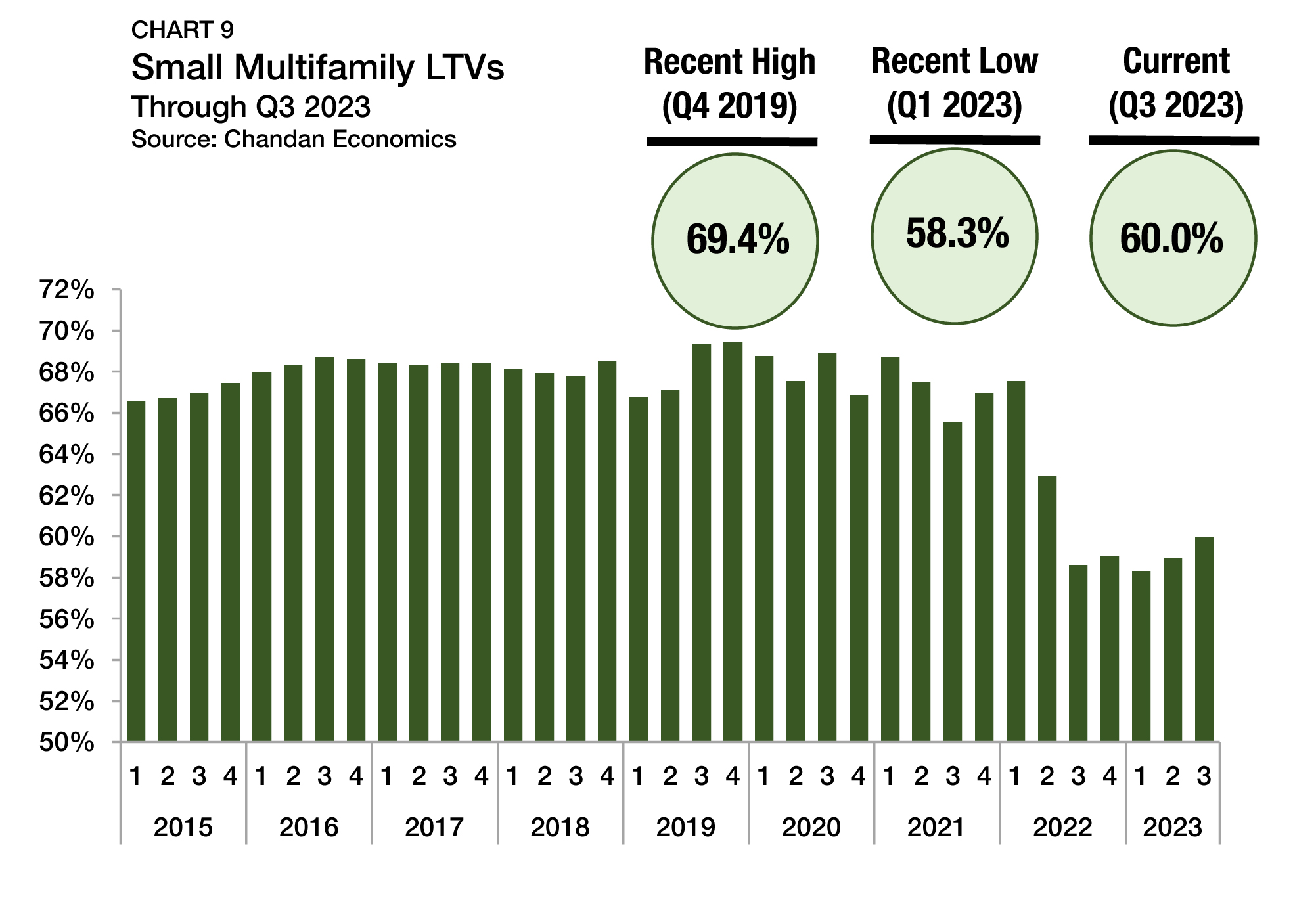
Underwriting standards remained tight during the third quarter of the year. Loan-to-value ratios (LTVs) improved slightly, rising 105 bps from 58.9% to 60.0% (Chart 9). Moreover, LTVs have now risen in two consecutive quarters, signaling that fears of sizable upcoming devaluations are calming. Nevertheless, current LTVs are exceptionally low and represent very tight underwriting standards compared to conditions seen as recently as early 2022. While small multifamily LTVs have improved from the first-quarter 2023 low by 167 bps, they remain down from first-quarter 2022 levels by a far more substantial 756 bps.

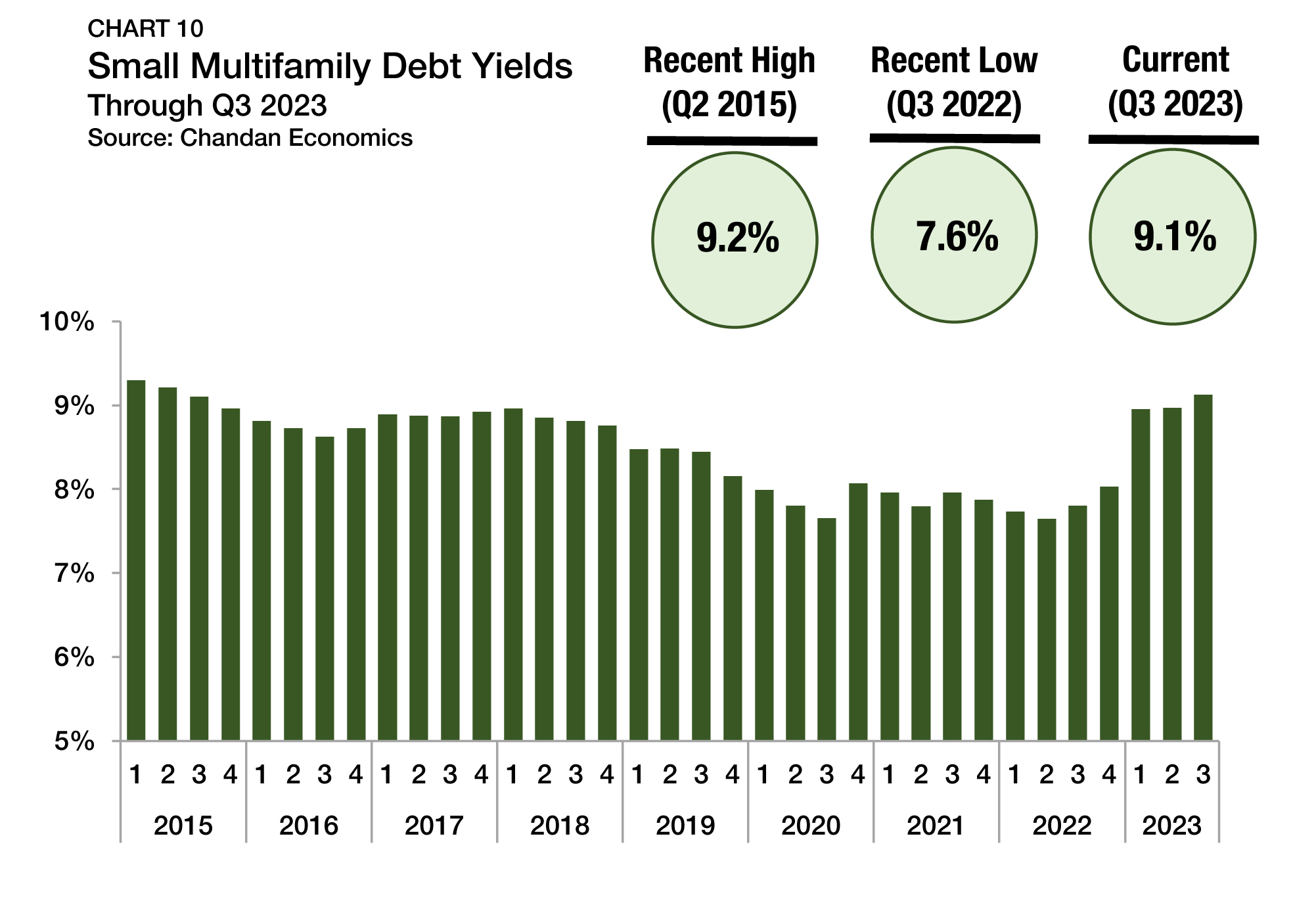
Average debt yields for small multifamily loans resumed their ascent in the third quarter, rising to 9.1% (Chart 10). Small multifamily debt yields have now risen in each of the past five quarters, and this pace of increase does appear to be settling down. Between the second quarter of 2022 and the first quarter of 2023, debt yields rose by 131 bps, notching an average quarterly increase of 45 bps in that time. In the following six months, small multifamily debt yields rose by a cumulative total of 17 bps.

The inverse of debt yields, the debt per dollar of net operating income (NOI), for small multifamily loans fell again during the quarter. Small multifamily borrowers secured an average of $10.96 in new debt for every $1.00 of property NOI, down $0.19 from the previous quarter and the lowest level since 2015.

Together, these two trends indicate that underwriting standards remain conservative as capital and real estate markets adjust to new economic realities. However, movements in both were marginal, offering hope that credit markets do not need to tighten further.

Outlook

Like all commercial real estate asset classes, the small multifamily market will continue to face challenges over the next several months. Even as the Federal Reserve is near or at the end of its monetary tightening cycle, markets broadly expect that the central bank will reduce short-term interest rates more slowly than they raised rates over the past year and a half. As we head into 2024, investors should watch for how a potential yield curve normalization could push long-term Treasury yields higher in the coming months, putting more upward pressure on cap rates. Despite the unsettling market impacts of high interest rates, the small multifamily sector has maintained operational stability, and there is momentum toward price stabilization. On balance, the small multifamily sector, which is bolstered by underlying tenant demand and healthy property-level cash flows, remains well-equipped to navigate through macroeconomic headwinds.

1 All data, unless otherwise stated, are based on Chandan Economics’ analysis of a limited pool of loans with original balances of $1 million to $9.0 million and loan-to-value ratios above 50%.
2 The Arbor Small Multifamily Price Index (ASMPI) uses model estimates of small multifamily rents and compares them against small multifamily cap rates. The index measures the estimated average price appreciation on small multifamily properties with 5 to 50 units and primary mortgages of $1 million to $7.5 million. For the full methodology, visit arbor.com/asmpi-faq.

For more small multifamily research and insights, visit arbor.com/research

About Arbor
Arbor Realty Trust, Inc. (NYSE: ABR) is a nationwide real estate investment trust and direct lender, providing loan origination and servicing for multifamily, single-family rental (SFR) portfolios, and other diverse commercial real estate assets. Headquartered in Uniondale, New York, Arbor manages a multibillion-dollar servicing portfolio, specializing in government-sponsored enterprise products. Arbor is a leading Fannie Mae DUS® lender, Freddie Mac Optigo® Seller/Servicer, and an approved FHA Multifamily Accelerated Processing (MAP) lender. Arbor’s product platform also includes bridge, CMBS, mezzanine, and preferred equity loans. Arbor is rated by Standard and Poor’s and Fitch. In June 2023, Arbor was added to the S&P SmallCap 600® index. Arbor is committed to building on its reputation for service, quality, and customized solutions with an unparalleled dedication to providing our clients excellence over the entire life of a loan.

Disclaimer
All content is provided herein “as is” and neither Arbor Realty Trust, Inc. or Chandan Economics, LLC (“the Companies”) nor their affiliated or related entities, nor any person involved in the creation, production and distribution of the content make any warranties, express or implied. The Companies do not make any representations regarding the reliability, usefulness, completeness, accuracy, currency nor represent that use of any information provided herein would not infringe on other third party rights. The Companies shall not be liable for any direct, indirect or consequential damages to the reader or a third party arising from the use of the information contained herein.

Small Multifamily Investment Trends Report Q4 2023

Small Multifamily Investment Trends Report Q4 2023

Cap Rates Push Higher as Underwriting Standards Stabilize

Key Findings

  • Small multifamily prices fell 3.2% during the quarter.
  • Cap rates climbed 33 bps — the largest single-period jump since 2009.
  • Property-level cash flows remained healthy as rent collections continued to strengthen and expense ratios normalized.

Key Findings & Overview

As we enter the closing chapter of 2023, the small multifamily sector is in the midst of resetting and adjusting to new capital market realities. Even as the Federal Reserve has pumped the brakes on rate hikes over the past few months, financial market conditions have kept tightening as long-term interest rates have ascended. Nevertheless, distress remains limited even as valuations and measures of risk pricing are in flux, signaling a stabilization of conditions.

According to Trepp, the delinquency rate of multifamily loans in CMBS transactions stands at 1.9% through September 2023, the best mark of any commercial property type other than industrial. The trends seen in small asset classes are similar. According to Freddie Mac, 1.5% of small balance multifamily loans are nonperforming — an increase from the 0.7% measured in the summer of 2022 while still below the recent high of 1.7% in spring 2021. To place these figures in context, the multifamily nonperforming rate for loans on bank balance sheets reached 4.7% after the 2008 financial crisis, according to data reported by the FDIC.

While underwriting criteria for small multifamily properties remain tight in a challenging market environment, lending standards held steady in the third quarter of 2023. Market clearing prices continue to edge lower, though the pace of depreciation has slowed, and new deal activity is starting to pick up. Further, the operational profile of the small multifamily subsector has held strong, with rent collections remaining at healthy levels and expense ratios normalizing. While macroeconomic headwinds remain a constant challenge, the small multifamily sector has demonstrated its ability to bend rather than break.

Lending Volume

The $90.1 billion year-end 2022 estimate of new multifamily lending volume on loans with original balances between $1 million and $9 million1 — including loans for apartment building sales and refinancing — represented a modest deceleration from 2021’s record high of $102.1 billion (Chart 1).

To date, 2023 has seen a resetting in the level of small multifamily originations. The current annualized 2023 total is $36 billion, which puts this year on track to be the slowest for new originations since 2012. However, while the annualized total will remain muted, there are signs of activity starting to pick back up. Third-quarter activity was nearly three times higher than the first quarter of the year.

Sustained high interest rates have contributed significantly to the decline in small multifamily origination volumes this year, which has impacted the market in two distinct ways. First, it has widened the bid-ask spread — the difference between what a buyer is willing to pay and what a seller is willing to accept. With costs of capital rising, potential buyers have been requiring larger discounts. At the same time, a lack of multifamily sector distress has meant that few owners are motivated to sell if they do not receive an offer close to their perception of fair value. Driven by this disagreement in price, 2023 has seen a dearth of apartment sales.

The second way that high interest rates impact small multifamily originations is that they reduce the incentive for investors to pursue cash-out refinancing. When interest rates are favorable, borrowers often use accrued equity in their properties to finance subsequent acquisitions. However, in today’s higher-rate environment, a cash-out refinancing would likely result in a voluntary increase in debt servicing costs. After reaching a recent high of 75.6% in the third quarter of 2022, the refinancing share of originations fell in three consecutive quarters, dropping to 60.5% in the second quarter of 2023 (Chart 2). However, there were signs of improvement in the third quarter as the refinancing share of originations shot up to 72.7% — potentially signaling that borrowers are no longer waiting for a rapid return of accommodative interest rates.

Arbor Small Multifamily Price Index

As measured by the Arbor Small Multifamily Price Index2, small multifamily asset valuations are down 11.9% from the same time last year (Chart 3). Meanwhile, prices fell just 0.4% in the third quarter of 2023 — the smallest single-period movement in the past year.

Negative pricing pressures are not unique to either multifamily or the small asset subsector in this interest rate environment. The higher cost of capital means that potential buyers of all property types have larger required yields. However, the slowing pace of devaluation combined with an increasing pace of originations suggests that bid-ask spreads are starting to narrow — albeit at lower market clearing prices than a year ago.

Cap Rates & Spreads

As 10-year Treasury yields push up against their high-water mark of the past 16 years, cap rates across all commercial property types, including multifamily and the small asset subsector, are on the rise. In the third quarter of 2023, small multifamily cap rates averaged 5.8%, reaching their highest point in over four years (Chart 4).

After cap rates in this subsector reached their all-time low of 5.0% in the third quarter of 2022, they have subsequently increased in four consecutive quarters. Small multifamily cap rates jumped 17 bps during the third quarter alone and are up 76 bps from this time last year — the most substantial year-over-year increase since 2010. The small multifamily risk premium, measured by comparing cap rates to the yield on the 10-year Treasury, is the additional compensation that investors require to account for higher levels of risk. This risk premium compressed by 38 bps in the third quarter of 2023, landing at 161 bps (Chart 5). The declining risk premium comes as long-term Treasury yields have rapidly risen in recent months. If long-term interest rates hold up at current levels, it could mean more upward pressure for cap rates on the horizon.

Between 2016 and 2021, the small multifamily risk premium averaged 372 bps and never fell below 290 bps or rose above 441 bps. Its movement back to a more sizable range that is in line with recent patterns is a reasonable baseline outlook for the year ahead. Meanwhile, the cap rate spread between small multifamily assets and the rest of the multifamily sector, a measure of the risk unique to smaller properties, fell by a minuscule 3 bps during the quarter to finish at 53 bps (Chart 6).

Expense Ratios

Expense ratios, measured as the relationship between underwritten property-level expenses and effective gross income, are showing signs of improvement. Driven by increases in vacancies and operating expenses, the small multifamily expense ratio surged to start the year, reaching 44.7% in the first quarter (Chart 7). However, the surge was short-lived. Expense ratios fell in both the second and third quarters of 2023, settling at 40.1% — 394 bps below the first quarter of the year.

Rent Collections

In recent months, on-time rental payment rates in small multifamily properties have consistently been robust, according to Chandan Economics and RentRedi’s Independent Landlord Rental Performance Report. In September 2023, tenants paid their full rent on time in an estimated 83.2% of units — improving 173 bps from the same time last year (Chart 8).

Due to a resilient labor market, tenants’ ability to make on-time rental payments continues to be one of the small multifamily subsector’s biggest strengths. Even in a challenging economic environment, healthy property-level cash flows have limited distress.

Leverage & Debt Yields

Underwriting standards remained tight during the third quarter of the year. Loan-to-value ratios (LTVs) improved slightly, rising 105 bps from 58.9% to 60.0% (Chart 9). Moreover, LTVs have now risen in two consecutive quarters, signaling that fears of sizable upcoming devaluations are calming. Nevertheless, current LTVs are exceptionally low and represent very tight underwriting standards compared to conditions seen as recently as early 2022. While small multifamily LTVs have improved from the first-quarter 2023 low by 167 bps, they remain down from first-quarter 2022 levels by a far more substantial 756 bps.

Average debt yields for small multifamily loans resumed their ascent in the third quarter, rising to 9.1% (Chart 10). Small multifamily debt yields have now risen in each of the past five quarters, and this pace of increase does appear to be settling down. Between the second quarter of 2022 and the first quarter of 2023, debt yields rose by 131 bps, notching an average quarterly increase of 45 bps in that time. In the following six months, small multifamily debt yields rose by a cumulative total of 17 bps.

The inverse of debt yields, the debt per dollar of net operating income (NOI), for small multifamily loans fell again during the quarter. Small multifamily borrowers secured an average of $10.96 in new debt for every $1.00 of property NOI, down $0.19 from the previous quarter and the lowest level since 2015.

Together, these two trends indicate that underwriting standards remain conservative as capital and real estate markets adjust to new economic realities. However, movements in both were marginal, offering hope that credit markets do not need to tighten further.

Outlook

Like all commercial real estate asset classes, the small multifamily market will continue to face challenges over the next several months. Even as the Federal Reserve is near or at the end of its monetary tightening cycle, markets broadly expect that the central bank will reduce short-term interest rates more slowly than they raised rates over the past year and a half. As we head into 2024, investors should watch for how a potential yield curve normalization could push long-term Treasury yields higher in the coming months, putting more upward pressure on cap rates. Despite the unsettling market impacts of high interest rates, the small multifamily sector has maintained operational stability, and there is momentum toward price stabilization. On balance, the small multifamily sector, which is bolstered by underlying tenant demand and healthy property-level cash flows, remains well-equipped to navigate through macroeconomic headwinds.

1 All data, unless otherwise stated, are based on Chandan Economics’ analysis of a limited pool of loans with original balances of $1 million to $9.0 million and loan-to-value ratios above 50%.
2 The Arbor Small Multifamily Price Index (ASMPI) uses model estimates of small multifamily rents and compares them against small multifamily cap rates. The index measures the estimated average price appreciation on small multifamily properties with 5 to 50 units and primary mortgages of $1 million to $7.5 million. For the full methodology, visit arbor.com/asmpi-faq.

For more small multifamily research and insights, visit arbor.com/research

About Arbor
Arbor Realty Trust, Inc. (NYSE: ABR) is a nationwide real estate investment trust and direct lender, providing loan origination and servicing for multifamily, single-family rental (SFR) portfolios, and other diverse commercial real estate assets. Headquartered in Uniondale, New York, Arbor manages a multibillion-dollar servicing portfolio, specializing in government-sponsored enterprise products. Arbor is a leading Fannie Mae DUS® lender, Freddie Mac Optigo® Seller/Servicer, and an approved FHA Multifamily Accelerated Processing (MAP) lender. Arbor’s product platform also includes bridge, CMBS, mezzanine, and preferred equity loans. Arbor is rated by Standard and Poor’s and Fitch. In June 2023, Arbor was added to the S&P SmallCap 600® index. Arbor is committed to building on its reputation for service, quality, and customized solutions with an unparalleled dedication to providing our clients excellence over the entire life of a loan.

Disclaimer
All content is provided herein “as is” and neither Arbor Realty Trust, Inc. or Chandan Economics, LLC (“the Companies”) nor their affiliated or related entities, nor any person involved in the creation, production and distribution of the content make any warranties, express or implied. The Companies do not make any representations regarding the reliability, usefulness, completeness, accuracy, currency nor represent that use of any information provided herein would not infringe on other third party rights. The Companies shall not be liable for any direct, indirect or consequential damages to the reader or a third party arising from the use of the information contained herein.

Small Multifamily Investment Trends Report Q3 2023

Small Multifamily Investment Trends Report Q3 2023

Higher Interest Rates Drive Cap Rates Up as Cash Flows Remain Robust

Key Findings

  • Small multifamily prices fell 3.2% quarter-over-quarter.
  • Cap rates climbed 33 bps between the first and second quarters of 2023, the largest single-period jump since 2009.
  • Property-level cash flows remained healthy as rent collections were robust and expense ratios normalized.

State of the Market

Through the first half of 2023, capital market realities continued testing the resiliency of the small multifamily subsector. More than a year after the Federal Reserve began its monetary tightening cycle, commercial real estate investors are still adjusting to the higher cost of capital. While market disruptions have weakened performance, the scope of the impact has remained limited.

According to Trepp, the delinquency rate of multifamily loans in CMBS transactions stands at 1.6% through June, which is the best mark of any commercial property type other than industrial. The recent trends seen in small asset classes are similar. According to Freddie Mac, 1.3% of small balance multifamily loans are nonperforming — an increase from the 0.7% measured in the summer of 2022 though still below the recent high of 1.7% seen in spring 2021. To place these figures in context, the multifamily nonperforming rate for loans on bank balance sheets reached 4.7% after the 2008 financial crisis, according to data reported by the FDIC.

This year, the rapid recalibration of risk and pricing of small multifamily assets has been widespread. But, as buyers and sellers navigate new challenges, bright spots have emerged. Amid a corrective environment, the operational profile of the small multifamily subsector has held strong, with rent collection trending higher and expense ratios normalizing. While macroeconomic headwinds may not recede soon, tenant dependability, the core strength of small multifamily, has proven to be a powerful antidote to financial market storms.

Lending Volume

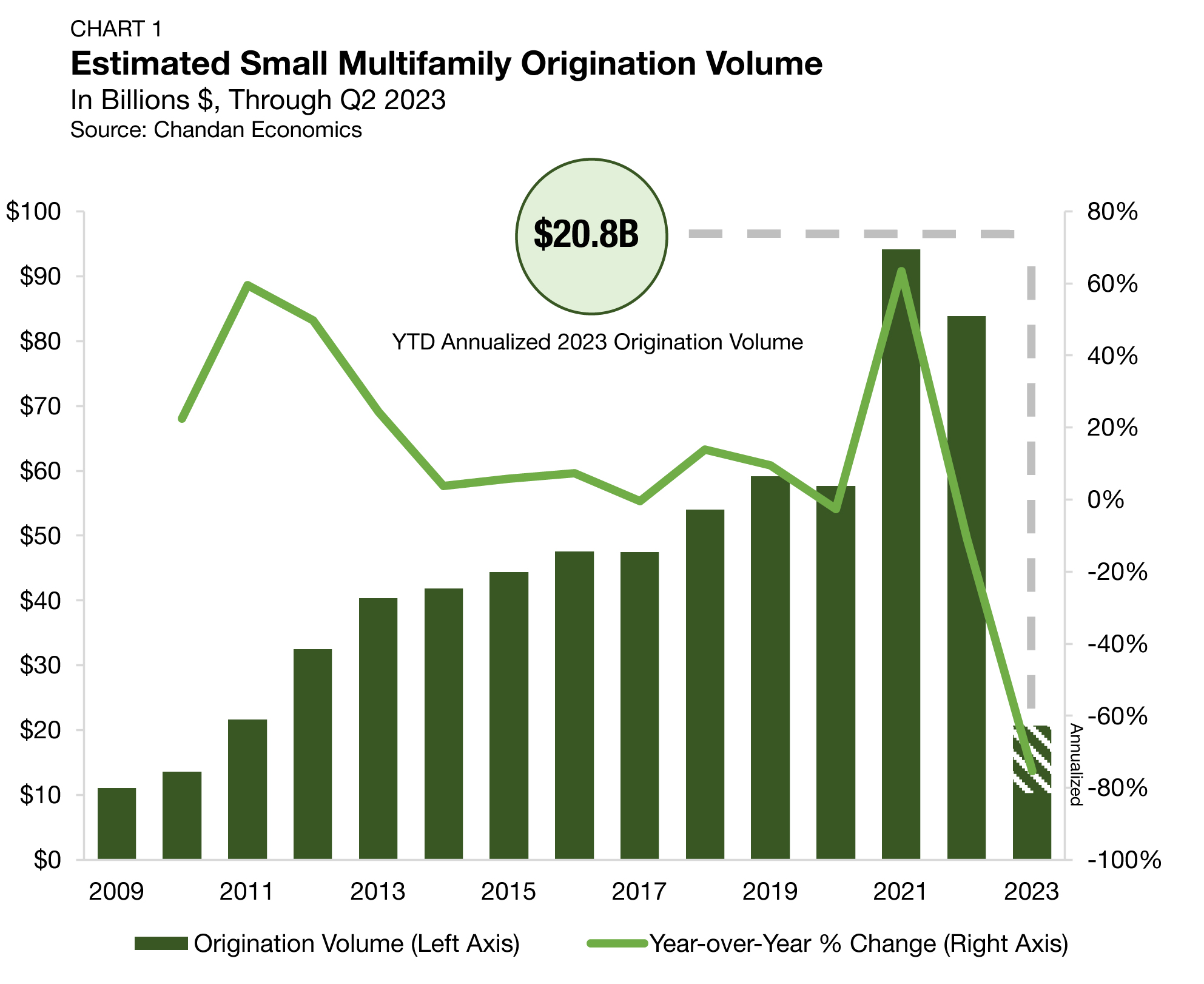
The $83.9 billion year-end 2022 estimate of new multifamily lending volume on loans with original balances between $1 million and $7.5 million1 — including loans for apartment building sales and refinancing — represented a modest 10.9% deceleration from 2021’s record high of $94.1 billion (Chart 1).

However, the annualized 2023 total illustrates a market that is starting to show renewed signs of movement. While the current 2023 estimate of $20.8 billion still represents the slowest pace since 2010, second quarter performance was a solid improvement on the first quarter’s reading of $15.5 billion.

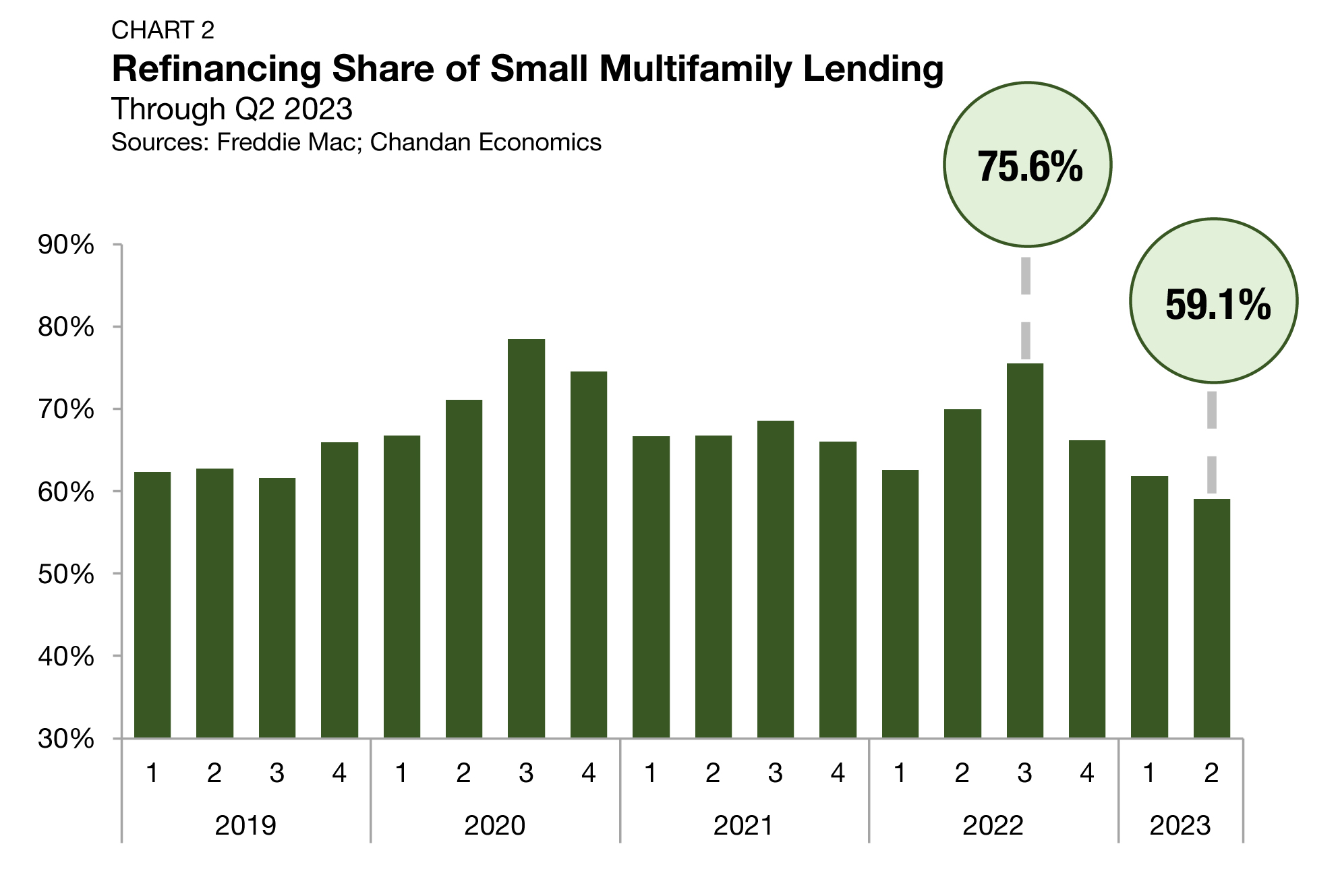
One significant factor contributing to the drop off in new small multifamily originations has been the reduced incentive for investors to pursue cash-out refinancing. When interest rates are favorable, borrowers often use accrued equity in their properties to finance subsequent acquisitions. However, in today’s higher-rate environment, a cash-out refinancing would likely result in a voluntary increase in debt servicing costs. As a result, refinancings remained slow in the second quarter of 2023, accounting for just 59.1% of tracked small multifamily originations— a total decrease of 16.5 percentage points over the previous three quarters (Chart 2).

Arbor Small Multifamily Price Index

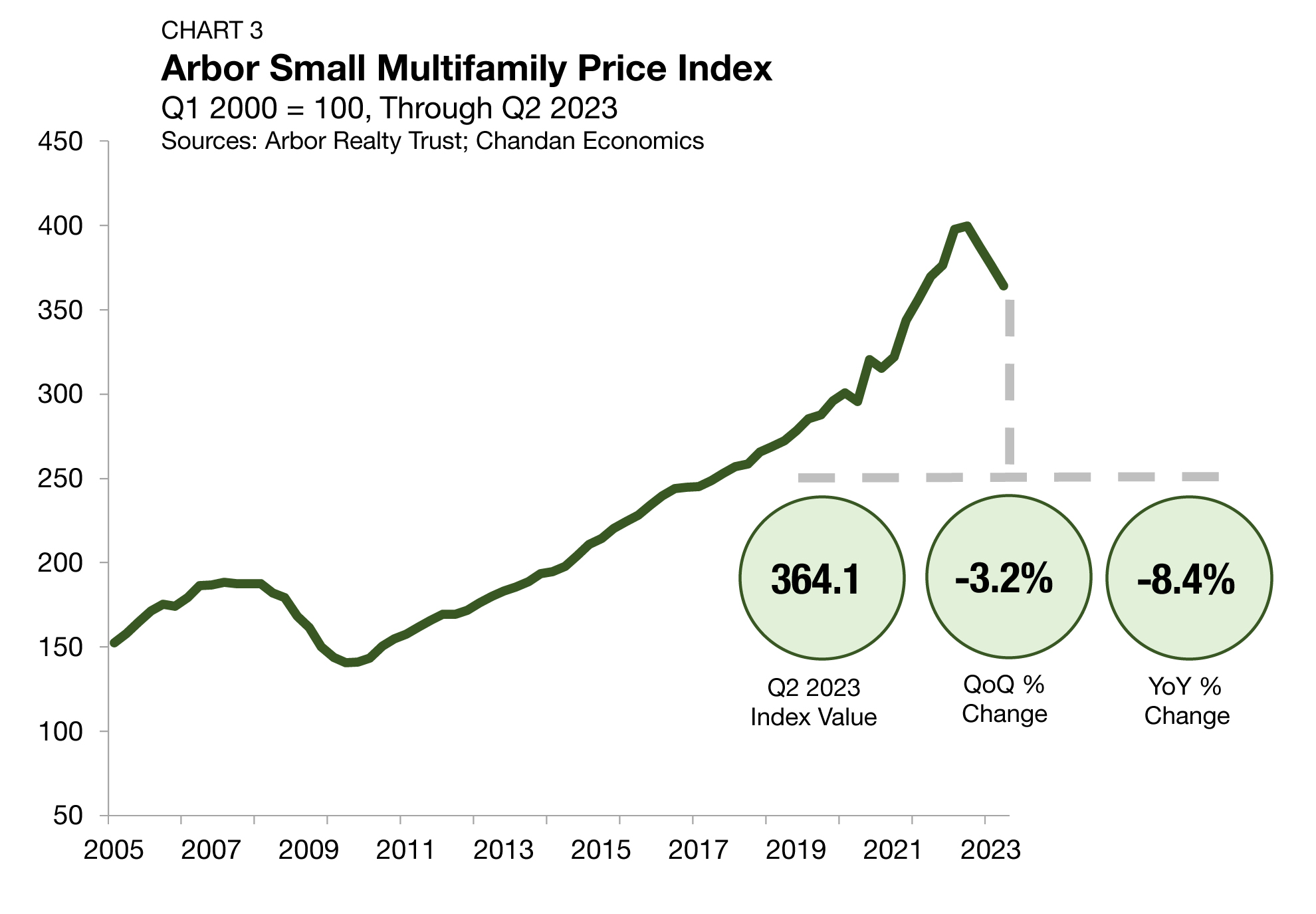
As measured by the Arbor Small Multifamily Price Index2, small multifamily asset valuations fell 3.2% quarter-over-quarter (Chart 3). Moreover, compared to the same time last year, prices were down 8.4%.

Negative pricing pressures are not unique to either multifamily or the small asset subsector in this interest rate environment. The higher cost of capital means that potential buyers of all property types have larger required yields. Data from recent quarters indicate that some seller capitulation is taking place, leading to higher cap rates and a softening of prices.

Cap Rates & Spreads

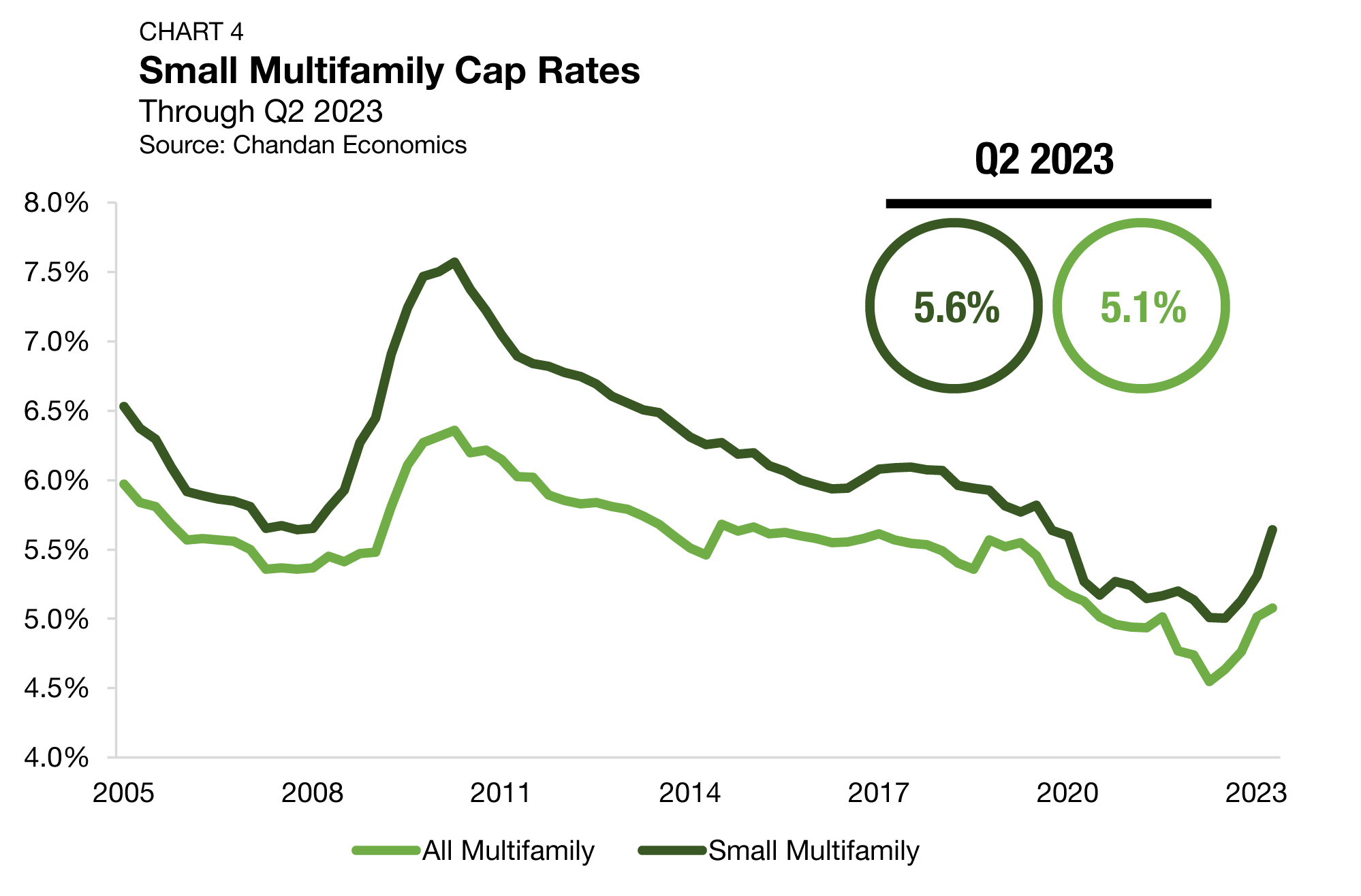
As 10-year Treasury yields continue holding at their highest levels in over a decade, cap rates across all commercial property types, including multifamily and the small asset subsector, have been rising. In the second quarter of 2023, small multifamily cap rates averaged 5.6%, reaching their highest point since mid-2019. After cap rates in this subsector reached their all-time low of 5.0% in the third quarter of 2022, they have subsequently risen in three consecutive quarters — and by a growing magnitude in each observation. Small multifamily cap rates jumped 33 bps between the first and second quarters of 2023, marking the largest single-period jump since 2009 (Chart 4).

The small multifamily risk premium, which is best measured by comparing cap rates to the yield on the 10-year Treasury, is a measurement of additional compensation that investors require to account for higher levels of risk. This risk premium rose again in the second quarter of 2023, jumping to 204 bps (Chart 5).

Between 2016 and 2021, the small multifamily risk premium averaged 372 bps and never fell below 290 bps or rose above 441 bps. These fluctuations happened as financial and real estate markets felt the ripple effects of higher interest rates. The risk premium fell as low as 130 bps in the fourth quarter of 2022 — its lowest level on record. As a result, recent premium increases represent a normalization of risk pricing as the spreads move back toward historical averages. Meanwhile, the cap rate spread between small multifamily assets and the rest of the multifamily sector, a measure of the risk unique to smaller properties, rose 26 bps during the quarter to finish at 56 bps (Chart 6).

Expense Ratios

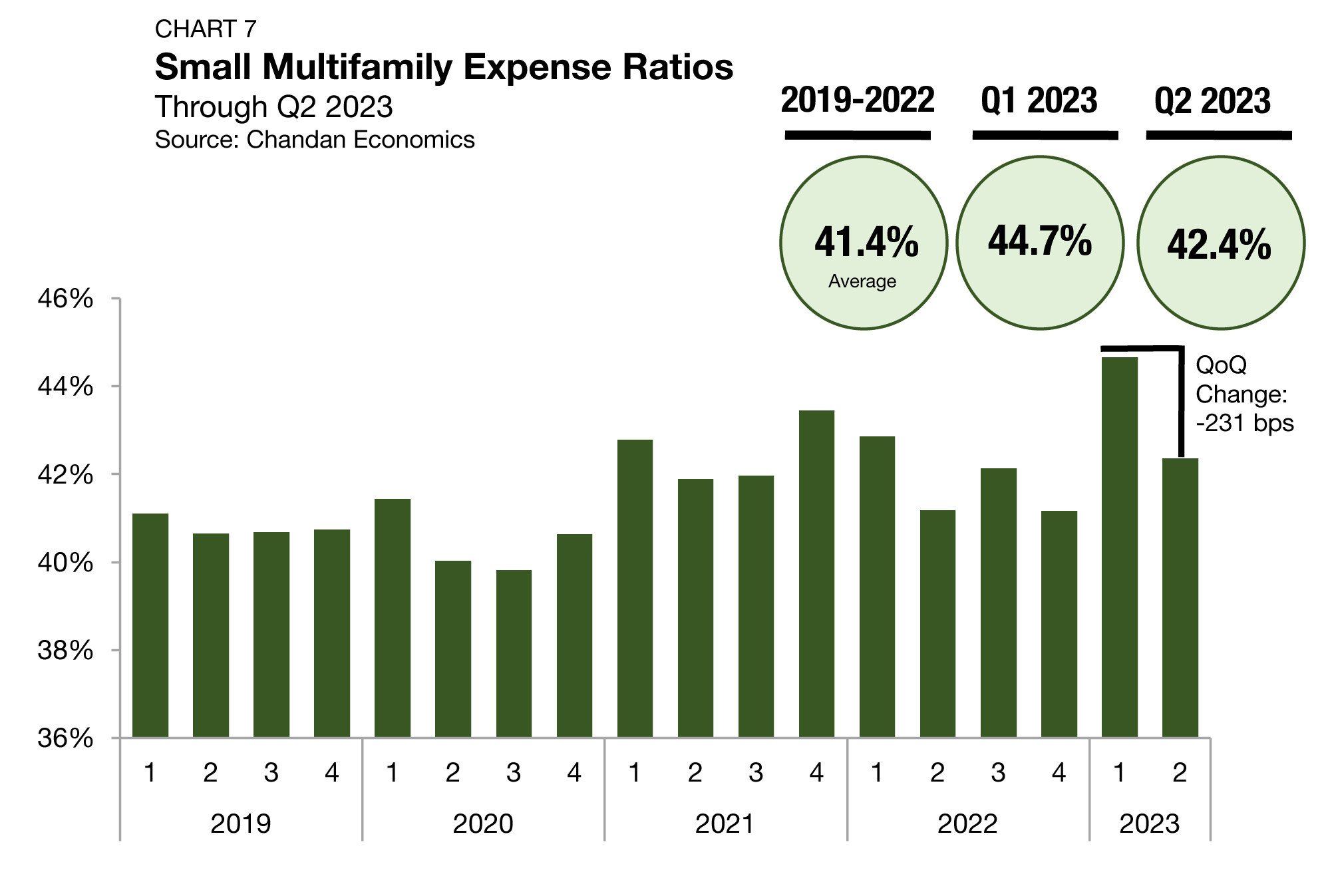
Expense ratios, measured as the relationship between underwritten property-level expenses and effective gross income, are showing signs of improvement. Driven by increases in vacancies and operating expenses, the small multifamily expense ratio surged to start the year, reaching 44.7% in the first quarter (Chart 7). However, during the second quarter, this expense ratio retreated 231 bps quarter-over-quarter to settle at 42.4%, close to its 2019-2022 average.

Rent Collections

On-time rental payment rates in small multifamily properties have consistently been robust in recent months, according to Chandan Economics and RentRedi’s Independent Landlord Rental Performance Report. In June 2023, full rent was paid on time in an estimated 82.6% of units — improving 153 bps from the same time last year (Chart 8).

Thanks to a resilient labor market, tenants’ continued ability to make on-time rental payments continues to be one of the small multifamily subsector’s biggest assets. Even in a challenging economic environment, healthy property-level cash flows will likely continue to limit small multifamily property owners and lenders from experiencing distress.

Leverage & Debt Yields

While signals are mixed, debt underwriting standards remained tight through the second quarter of this year. Loan-to-value ratios (LTVs) slid in four consecutive quarters through the first quarter of 2023. After a dramatic drop of 501 bps between the fourth quarter of 2022 and the first quarter of 2023, average small multifamily LTVs reached 59.7%. However, in the second quarter, LTVs bounced back to 63.8% (+409 bps). While the quarter-over-quarter improvement is significant and encouraging, current LTV levels remain historically low. Aside from the first quarter of 2023, which was an outlier due to low transaction activity, small multifamily LTVs were lower in the second quarter than at any point since 2013 (Chart 9).

 Average debt yields for small multifamily loans remained at 9.0% in the second quarter of 2023 (Chart 10). After debt yields jumped by 95 bps in the first quarter — the largest quarterly jump in 15 years — they edged 3 bps higher, demonstrating the effect of tight underwriting standards. The inverse of debt yields, the debt per dollar of net operating income (NOI), for small multifamily loans fell slightly. Small multifamily borrowers secured an average of $11.14 in new debt for every $1.00 of property NOI, down $0.03 from the previous quarter and the lowest level since 2015.

Together, the trends in LTVs and debt yields indicate that underwriting standards remain conservative as capital and real estate markets adjust to new economic realities.

Outlook

Like all commercial real estate asset classes, the small multifamily market will continue to be challenged over the next several months. While the Federal Reserve signaled it is near the end of its monetary tightening cycle, interest rate normalization is likely to take time. Looking a year ahead, there is a greater than 65% chance the federal funds rate will sit higher than 450 bps in July 2024, according to the CME Group’s FedWatch tool. Given the interest rate outlook, Fannie Mae forecasts that multifamily cap rates will continue rising through the rest of 2023 and into early 2024. At the same time, it forecasts that net operating growth will remain positive for the foreseeable future — underscoring the present decoupling of asset-level operations and financial market conditions. If all things remain equal, negative pricing pressures are unlikely to abate through the second half of the year. Still, small multifamily, strengthened by its healthy property-level cash flows, remains well-equipped to overcome macroeconomic headwinds.

1 All data, unless otherwise stated, are based on Chandan Economics’ analysis of a limited pool of loans with original balances of $1 million to $7.5 million and loan-to-value ratios above 50%.
2 The Arbor Small Multifamily Price Index (ASMPI) uses model estimates of small multifamily rents and compares them against small multifamily cap rates. The index measures the estimated average price appreciation on small multifamily properties with 5 to 50 units and primary mortgages of $1 million to $7.5 million. For the full methodology, visit arbor.com/asmpi-faq.

For more small multifamily research and insights, visit arbor.com/articles

Disclaimer
All content is provided herein “as is” and neither Arbor Realty Trust, Inc. or Chandan Economics, LLC (“the Companies”) nor their affiliated or related entities, nor any person involved in the creation, production and distribution of the content make any warranties, express or implied. The Companies do not make any representations regarding the reliability, usefulness, completeness, accuracy, currency nor represent that use of any information provided herein would not infringe on other third party rights. The Companies shall not be liable for any direct, indirect or consequential damages to the reader or a third party arising from the use of the information contained herein.

Small Multifamily Investment Trends Report Q1 2023

Small Multifamily Investment Trends Report Q1 2023

Cash Flows Remain Resilient as Valuations and Cap Rates Feel
Interest Rate Pressure

Key Findings

  • Small multifamily prices slid 2.6% from the previous quarter, as new purchases and originations activity slowed.

  • Cap rates posted the largest quarterly jump since 2009, finishing at 5.4%.

  • Debt yields rose and LTVs plummeted as lending standards tightened amid financial sector volatility.

State of the Market

Through the first quarter of 2023, the small multifamily subsector lies in a unique position, battling financial sector headwinds on one side while benefiting from structural tailwinds on the other.

After the failures of Silicon Valley Bank and Signature Bank in March, lenders, especially regional banks with less stringent capital requirements and greater interest rate risk exposure, have become more conservative. As a result, new purchases and originations of small multifamily properties saw much lower levels of activity than in previous quarters.

The recent banking sector distress has been primarily driven by the Federal Reserve’s ongoing monetary policy tightening cycle. In the 13 months ending in March 2023, the Federal Reserve hiked interest rates a total of 475 bps in nine different policy meetings. Over the short term, the economy must learn to adapt to higher interest rates.

At its May 2023 meeting, the Fed raised rates by 25 bps as expected. However, some relief may be on the horizon. Markets are betting that the Fed will begin cutting interest rates by the end of the summer. Similarly, the central bank has communicated that it foresees a less stringent interest rate environment in the short term, with the federal funds rate expected to average 4.3% in 2023 and come back down to an average of 2.5% over the longer run.

Despite significant headwinds, the small multifamily subsector is weathering the ongoing storm impacting the commercial real estate industry. A challenging environment for homebuyers combined with a resilient labor market has created an economic climate where there is more demand for rental housing units, and tenants are, by and large, maintaining their ability to pay rent. As noted by Freddie Mac in their 2023 multifamily outlook, so long as the labor market remains healthy, “tailwinds will keep the multifamily market performing in 2023,” albeit at “more modest levels compared with the prior few years.” While financial market conditions could restrain new activity, the structural health profile of small multifamily households remains largely intact — a factor that should allow the sector to limit distress between now and when a period of interest rate normalization arrives.

Lending Volume

The year-end 2022 estimate of new multifamily lending volume on loans with original balances between $1 million and $7.5 million1 — including loans for apartment building sales and refinancing — fell to $83.9 billion (Chart 1).

The 2022 estimate indicates there was a modest 10.9% deceleration from 2021’s record high of $94.1 billion. Initial estimates of small multifamily lending in 2023 reflect a market environment that is currently in a pause. The annualized level of small multifamily lending activity during the first quarter came in at just $15.5 billion — which would represent the lowest annual total on record since 2010.

A significant factor contributing to the drop off in new small multifamily originations has been the reduced incentive to engage in cash-out refinancing. Borrowers often use accrued equity in their properties to finance subsequent acquisitions. However, cash-out refinancings in today’s market environment would likely mean a voluntary increase in debt servicing costs. Refinancings accounted for just 53.4% of tracked small multifamily originations during the first quarter of 2023 — a 15.6 percentage point decrease from the previous quarter (Chart 2).

Arbor Small Multifamily Price Index

As measured by the Arbor Small Multifamily Price Index2 , small multifamily asset valuations fell 2.6% quarter-over-quarter. Still, thanks to a runup in prices through mid-2022, prices were 7.4% higher than a year earlier (Chart 3).

Negative pricing pressures in the current environment are not unique to either multifamily or the small asset subsector. An effect of the Federal Reserve’s fight against inflation is higher costs of capital. As a result, potential buyers of all property types have higher required yields that need to be met before a deal can begin to make sense. While multifamily owners seemed content to hold firm on pricing last year, late-2022 and early-2023 data indicate that some seller capitulation is taking place, leading to higher cap rates and a softening of prices.

Cap Rates & Spreads

For the first time in over a decade, cap rates across all commercial property types are rising, including multifamily and the small asset subsector. The Federal Reserve is in the midst of one of its most rapid monetary tightening cycles in history and its full effects are still filtering through the economy. Multifamily cap rates are just one of the many risk pricing measures that investors are re-evaluating in real-time. After small multifamily cap rates reached a record low of 5.0% in the third quarter of 2022, they have since risen in two consecutive quarters, rising to 5.4% during the first quarter of 2023 (Chart 4). Measured quarter-over-quarter, small multifamily cap rates rose by 25 basis points — the largest single increase on record since 2009.

The small multifamily risk premium, which is best measured by comparing cap rates to the yield on the 10-Year Treasury, is a measurement of additional compensation that investors require to account for higher levels of risk. In the first quarter of 2023, this metric rose for the first time in a year and a half, increasing to 173 bps (Chart 5).

Quarter-over-quarter, the small multifamily risk premium jumped by 43 bps — its largest increase since mid-2019. The cap rate spread between small multifamily assets and the rest of the multifamily sector, a measure of the risk unique to smaller properties, fell 6 bps during the quarter, to finish at 30 bps (Chart 6).

Expense Ratios

Expense ratios, measured as the relationship between underwritten property-level expenses and effective gross income, jumped significantly, rising 427 bps quarter-over-quarter to 45.5% (Chart 7). This sharp increase likely reflects a recent slowdown in rent growth, which was flat for multifamily properties during the quarter, according to Yardi Matrix. A slowdown in rent growth has historically impacted the amount of income a property generates — putting downward pressure on effective gross income and increasing expense ratios. 

Rent Collections

On-time rent payments in small multifamily properties reached their highest levels since the onset of the pandemic, according to Chandan Economics and RentRedi’s Independent Landlord Rental Performance Report. In March 2023, full rent was paid on time in an estimated 85.5% of units — improving 197 bps from the month prior (Chart 8).

More on-time rent payments signal that, despite financial market turbulence, economic distress has not substantially filtered down to rental households. Tenants have maintained their ability to pay rent, and as a result, property-level cash flows appear to be secure.


In this environment of economic uncertainty, the resilient underlying health of rental households is among the most reassuring factors for the small multifamily sector. As long as the cash flow ecosystem between tenants, property owners, and lenders remains intact, the probable range of downside scenarios will remain limited.

Leverage & Debt Yields

While the equity side of the capital stack has shifted to reflect economic and financial market volatility over the past half-year, the debt side has maintained a conservative stance since the onset of the pandemic. Even so, the first quarter of 2023 showed that underwriting standards have room to tighten further. Loan-to-value ratios (LTVs) have slid in each of the past four quarters as lenders are increasing their requirements for how much capital borrowers need to have at risk. Small multifamily LTVs fell to 60.6%, dropping by a substantial 439 bps from the prior quarter (Chart 9).

Debt yields for small multifamily loans averaged 9.0%, rising 99 bps from the previous period — the largest quarterly jump in the history of Chandan Economics’ post-global financial crisis tracking (Chart 10). The inverse of debt yields, the debt per dollar of net operating income (NOI), fell for small multifamily loans. Small multifamily borrowers secured an average of $11.18 in new debt for every $1 of property NOI, down $1.38 from the previous quarter and reaching the lowest level since 2015.

Together, these LTV and debt yield trends indicate that underwriting standards remain conservative amid heightened economic uncertainty and financial sector volatility. To protect against distress, lenders are working in larger equity and property-income cushions.

Outlook

The small multifamily subsector will continue to be tested over the next several months. However, the asset type has developed structural fortification to ensure it will bend rather than break. The Mortgage Bankers Association found that delinquencies in the multifamily sector have remained negligible, reporting a mere 20 bps increase during the first three months of 2023. Moreover, according to the Federal Reserve Bank of New York’s recently released 2023 SCE Housing Survey, the share of renters who anticipate buying a home in the next three years has fallen to a nine-year low (42.2%) — a factor that should continue to support demand for rental housing. The intersection of the small multifamily subsector and naturally occurring affordable housing (NOAH) is a potential tailwind to watch. With every state in the U.S. not having enough affordable housing to meet demand, public support for the small multifamily subsector is substantial and growing, including from Fannie Mae and Freddie Mac. All things being equal, balance sheet asset valuations and new deal volume will likely continue to show sensitivity to sustained higher interest rates over the short term, although the intact structural demand profile of the sector will enable it to absorb downside pressures better than many other commercial real estate asset classes.

For more small multifamily research and insights, visit arbor.com/articles

1 All data, unless otherwise stated, are based on Chandan Economics’ analysis of a limited pool of loans with original balances of $1 million to $7.5 million and loan-to-value ratios above 50%.

2 The Arbor Small Multifamily Price Index (ASMPI) uses model estimates of small multifamily rents and compares them against small multifamily cap rates. The index measures the estimated average price appreciation on small multifamily properties with 5 to 50 units and primary mortgages of $1 million to $7.5 million. For the full methodology, visit arbor.com/asmpi-faq.

Disclaimer
All content is provided herein “as is” and neither Arbor Realty Trust, Inc. or Chandan Economics, LLC (“the Companies”) nor their affiliated or related entities, nor any person involved in the creation, production and distribution of the content make any warranties, express or implied. The Companies do not make any representations regarding the reliability, usefulness, completeness, accuracy, currency nor represent that use of any information provided herein would not infringe on other third party rights. The Companies shall not be liable for any direct, indirect or consequential damages to the reader or a third party arising from the use of the information contained herein.